
Tony Gilroy Returns to the Director’s Chair with Behemoth!: A Symphony of Thrills, Trauma, and Mundane Chaos
By Cinematic Arts Correspondent
After a fourteen-year hiatus from directing original feature films, Academy Award-nominated filmmaker Tony Gilroy is stepping back behind the camera. Known for anchoring some of modern cinema’s most taut, intellectually rigorous espionage and legal thrillers—from writing the genre-defining Bourne trilogy to directing the masterclass corporate drama Michael Clayton—Gilroy is pivoting away from high-stakes geopolitical operatives and boardroom corruption. Instead, his latest cinematic venture, Behemoth!, trains its sharp lens on a surprisingly domestic, yet no less frantic target: the day-to-day existence of a master cellist.
Premiering to considerable buzz at the 64th New York Film Festival ahead of its official theatrical release on December 4, Behemoth! promises an eccentric, metatextual, and deeply musical journey. Blending his signature tension-building mechanics with the atmospheric cadence of a sprawling character study, Gilroy’s latest effort has already ignited conversations among critics and cinephiles alike.
Main Facts: A Maestro’s Mid-Life Maze
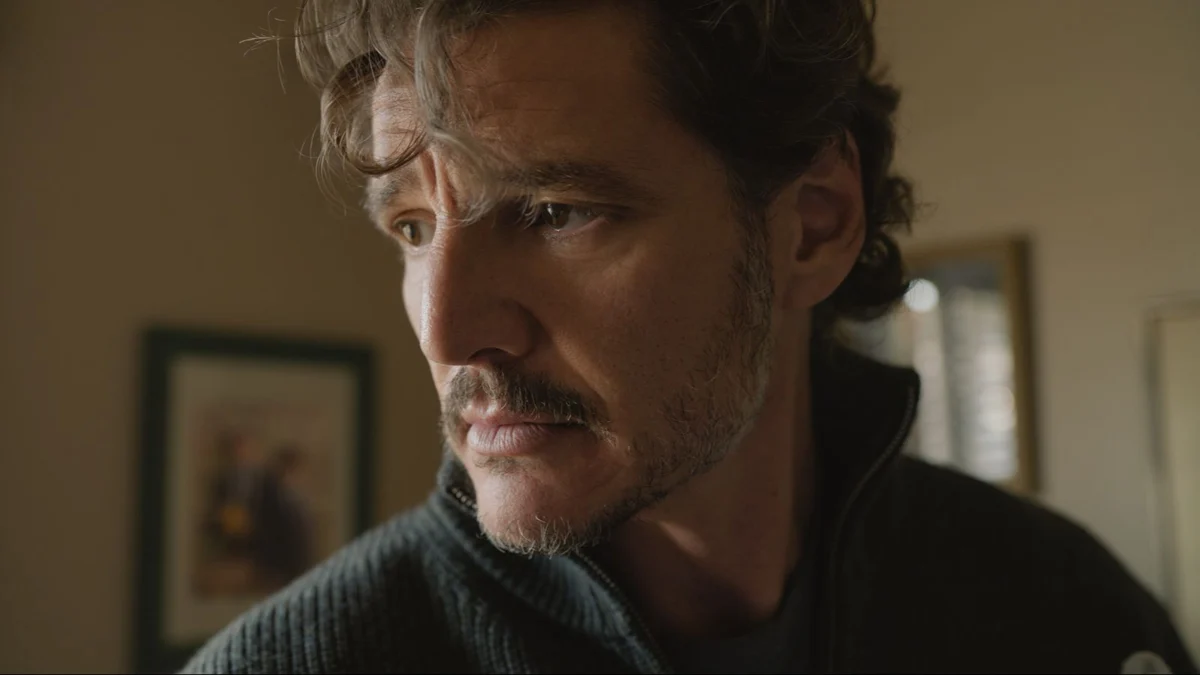
At its core, Behemoth! follows Alex Serian (played with weary intensity by Pedro Pascal), a principal cellist for the prestigious Chicago Symphony. Alex’s world is in a state of carefully orchestrated collapse. He has temporarily relocated to Los Angeles for a trio of high-stress mandates: to care for his rapidly declining mother, to re-establish himself in the cutthroat world of session work on orchestral film scores, and, crucially, to escape the gravitational pull of an ex-partner who redefines the term "overbearing."
Described by early reviewers as a "love letter to the music of the movies and the people who make it," Behemoth! eschews a traditional, linear narrative arc. Instead, it unfurls like a collection of intimate diary entries.
Yet, the film’s narrative engine is turbo-charged by its standout antagonist: Carol Spedding, portrayed with unhinged comedic brilliance by Olivia Wilde. Described as a "behemoth" in her own right, Carol is a wealthy, institutional string-puller and top-tier patron of the Chicago Symphony. She functions as a living jump scare throughout the film, popping out of lurking SUVs, breaching restricted studio areas, and tracking Alex down with relentless, stalker-like persistence.
When Alex finally threatens to involve the authorities, Carol casually fires back, "My driver is an off-duty sheriff," wholly unfazed by the concept of legal boundaries. Wilde’s performance—her third extraordinary cinematic outing of 2026—infuses the project with a sharp, absurd comedic edge that offsets the heavier emotional currents of Alex’s grief and professional burnout.
Chronology of Production and Release
The journey toward Behemoth! has been a long time coming for fans of Tony Gilroy’s singular directorial voice.
- The Pre-Production Phase (2023–2024): Following his acclaimed work developing the universe of Star Wars through the critically lauded Disney+ series Andor, Gilroy began quietly assembling concepts for a project that would return him to his auteur roots. Eschewing galactic empires, he zeroed in on the claustrophobic, intense environment of Hollywood and Chicago recording studios.
- Casting and Principal Photography (2025): The production secured powerhouse casting, bringing in Pedro Pascal hot off a string of massive blockbusters, alongside Olivia Wilde, Alia Shawkat, Hank Azaria, Will Arnett, Eva Victor, and Thomas Kretschmann. Filming took place across key musical hubs, utilizing authentic symphony spaces in Chicago and studio lots in Los Angeles.
- Post-Production and Metatextual Soundscaping (Late 2025 – Early 2026): During post-production, the film reportedly went under the covert working title Open World, a nod to its video-game-like structural pacing.
- Festival Circuit Debut (Fall 2026): Behemoth! made its world premiere at the prestigious 64th New York Film Festival, drawing wide-ranging discussions for its avant-garde approach to film scores and metanarrative commentary.
- Theatrical Launch (December 4, 2026): The film opens nationwide, distributed by major backers looking to capture both arthouse prestige and mainstream audience curiosity.
Supporting Data: An Avengers-Level Score Assembled by Masters
Perhaps the most innovative element of Behemoth! lies in its musical construction. Rather than relying on a single composer to drive the narrative, Gilroy orchestrated a unprecedented collaboration. The film’s soundscape is a rich, sprawling mosaic crafted by a "supergroup" of cinema’s finest contemporary composers:
- Michael Giacchino
- James Newton Howard
- Alan Silvestri
- Henry Jackman
- Michael Abels
- Emily Bear
- Lukas Frank
- Nami Melumad
- Brandon Roberts
This powerhouse ensemble contributed material spanning four fictional movies embedded within the film, cello practice etudes, fictional television theme songs, and compositions written by Alex’s fictional father.
Blurring Diegetic and Non-Diegetic Lines
Gilroy uses this musical mountain not merely as background noise, but as a dynamic storytelling tool. In Behemoth!, the boundary between diegetic music (music characters can hear within the scene) and non-diegetic music (the traditional cinematic score) constantly dissolves.
A scene will begin with session musicians tuning up and playing inside a recording booth for a fictional crime thriller. As the music swells, it seamlessly transitions into the non-diegetic score of an internal memory triggered within Alex’s mind—perhaps whisking him away to past chapters of his life in Boston, Dallas, or Chicago. The music then snaps back into the recording studio with effortless precision. It functions as an endless cinematic magic trick, keeping the audience’s neurological adrenaline high even when the on-screen developments are deeply mundane.
Official Responses and Critical Reception
Reactions from the 64th New York Film Festival have illuminated a film that is as divisive as it is daring. Critics have been quick to praise Gilroy’s audacity in subverting thriller expectations.
Industry analysts note that while Gilroy is working in a much lower gear compared to the high-octane vehicular chases of The Bourne Identity or the corporate life-or-death stakes of Michael Clayton, the DNA of a paranoid thriller remains stubbornly present. Everywhere Alex goes in Los Angeles, individuals from his past and present crowd him—agents, lovers, family members, and, of course, Carol Spedding.
"You’d think Alex Serian was Barack Obama or Scarlett Johansson with how desperately everyone is trying to get his time," noted one festival reviewer. Whether escaping through underground staff tunnels or dodging frantic text messages, Alex moves through Los Angeles like a player character in an open-world sandbox game—completing objectives such as “Escape Carol Spedding,” “Train Underling,” and “Hit All Marks in Studio Session.”
However, not all feedback has been universally glowing. Some critics have pointed out that the episodic, "quest-log" nature of the narrative can occasionally render parts of the film sluggish or uncompelling. Furthermore, questions have been raised regarding whether Pascal’s world-weary exhaustion occasionally outpaces the organic charisma required to anchor every single frame, though this is largely mitigated by a brilliant supporting ensemble.
Performances by Alia Shawkat, Hank Azaria, and Will Arnett have received high marks for grounding the film’s more eccentric comedic flights in authentic human interaction.
Implications: A New Chapter for Tony Gilroy and Musical Dramas
The release of Behemoth! carries significant implications for the trajectory of contemporary cinema.
- Redefining the Auteur Drama: For Tony Gilroy, Behemoth! proves that a master thriller-maker does not need car crashes or gunfire to maintain blistering pacing. By treating a scoring session with the exact same editorial tension and rhythmic framing usually reserved for a ticking-time-bomb sequence, Gilroy has invented a brand-new subgenre: the procedural emotional thriller.
- The Evolution of Film Scoring Collaborations: The unprecedented teaming of nine distinct, high-profile composers could set a new precedent for ensemble-driven cinematic soundscapes. It challenges the traditional singular-composer model, demonstrating how multiple musical voices can successfully collaborate to reflect a fractured protagonist’s psyche.
- The Streaming-Era Theatrical Experience: As studios increasingly rely on intellectual property and franchise familiarity, a mid-budget, original dramedy about a classical cellist backed by an A-list cast and visionary director represents a vital counter-programming lifeline for theatrical distribution.
As Behemoth! hits theaters on December 4, audiences will have the opportunity to step inside Gilroy’s open-world symphony. Whether audiences are prepared for Carol Spedding’s unhinged pursuit or the breathtaking emotional depth of the film’s multi-composer score, one thing is certain: Tony Gilroy has proven once again that he plays by entirely his own rules.
