
The Evolution of the Blade: A Definitive Retrospective of the Greatest Slasher Movies Ever Made
By Entertainment Desk
Updated for the Horror Season

Main Facts: Deconstructing the Slasher Subgenre
For decades, the slasher film has occupied a complex and often misunderstood space within cinematic history. Long dismissed by conservative critics as disreputable, misogynistic, and overly reliant on cheap shocks, the subgenre has frequently been accused of punishing female sexuality while feeding the most prurient, voyeuristic impulses of its audience. These films have traditionally leaned heavily into the "male gaze," damning all who fall under its lens—with the notable exception of the resourceful, resilient, and typically virginal "Final Girl."

Yet, to write off the slasher movie as mere exploitation is to ignore its profound cultural resonance. In many ways, slashers bear a striking, uncomfortable kinship with true-crime storytelling. The anxieties, moral panics, and fascination with brutality reflected in these narratives often reveal as much about a society hungry to consume beastly criminality as they do about the filmmakers bringing the nightmares to life.

The finest slasher movies are driven by complex ideas about morality, surveillance, and human vulnerability. They challenge audiences to look inward and confront a deeply unsettling question: Where is the exact line between passively watching a horrific act unfold on screen, and finally looking away?

Chronology: From Silent Stalkers to the Modern Mainstream
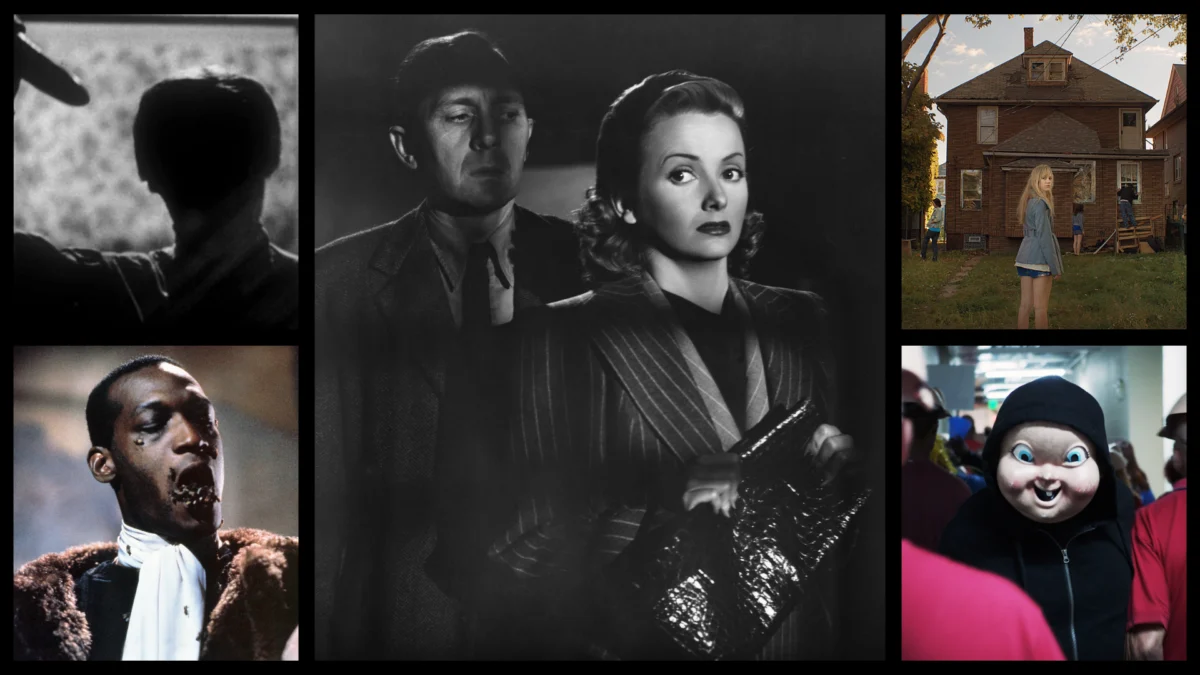
To understand how the slasher evolved into a cinematic powerhouse, one must trace its lineage across nearly a century of filmmaking. The genre’s roots stretch far back into the 1940s with formative psychological thrillers like Alfred Hitchcock’s The Lodger and Robert Wise’s The Leopard Man. These early works introduced a chilling and enduring cinematic trope: the silent, unseen stalker lurking in the shadows, waiting to pounce.

The Giallo Wave and Global Influences
Before the modern American slasher was codified, Italian filmmakers revolutionized suspense and stylized violence through the giallo film movement of the late 1960s and 1970s. Auteurs such as Dario Argento and Mario Bava terrified international audiences with their signature cinematic grammar: mysterious murderers clad in tight black leather gloves, elaborate and operatic set pieces, and a unprecedented escalation of on-screen gore. These stylish thrillers served as essential foundational texts for the American slasher boom that followed.

The 1970s: The Grungy Indie Birth of Modern Horror
The contemporary slasher as we know it was officially born in the mid-1970s. Independent American filmmakers shattered traditional boundaries and introduced iconic horror villains who would haunt popular culture for generations. Tobe Hooper’s grimy, sun-drenched masterpiece The Texas Chainsaw Massacre (1974) and John Carpenter’s suburban nightmare Halloween (1978) established the blueprints for narrative structure, pacing, and terror that countless films would mimic for decades.

The 1980s and 1990s: Franchises and Meta-Commentary
During the 1980s and 1990s, the genre transformed into a commercial juggernaut driven by long-running franchises and supernatural extensions of the slasher archetype. Villains like Freddy Krueger (A Nightmare on Elm Street), Jason Voorhees (Friday the 13th), and the pint-sized killer doll Chucky (Child’s Play) kept the box office thriving.

By 1996, the genre was in desperate need of rejuvenation. Wes Craven delivered that vital spark with Scream, a film that injected a sharp, self-referential, and meta-textual streak into the canon. While Scream successfully mocked the very tropes it relied upon, many lesser imitators struggled to capture its clever balance of satire and genuine suspense.

Supporting Data: The Cultural and Commercial Impact of Slashers
While contemporary horror discourse is frequently dominated by "elevated horror"—intellectual, atmospheric triumphs like Ari Aster’s Hereditary or Jennifer Kent’s The Babadook—the slasher remains the ultimate gateway drug for cinema fans. It is the subgenre most capable of transforming a casual horror skeptic into a passionate, lifelong devotee of the macabre.

According to long-term box office tracking across major horror studios, slasher franchises consistently yield some of the highest return-on-investment (ROI) ratios in the entire entertainment industry. For example:

- Low Budgets, Massive Returns: Seminal films like the original Halloween were produced on shoestring budgets of roughly $325,000 and went on to gross over $70 million worldwide, sparking one of the most enduring independent franchises in film history.
- Resilience Across Decades: Unlike ephemeral trends that fade after a single box-office cycle, slasher properties have proven remarkably adaptable. They survive through continuous reboots, legacy sequels, and shifting generational perspectives on violence and morality.
- The "Final Girl" Archetype as Cultural Study: Film scholars have published thousands of papers analyzing the socio-political evolution of the Final Girl, noting a steady shift from passive victims to active, vengeful heroines who reclaim agency in narratives originally designed to exploit them.
Official Responses and Critical Perspectives
As IndieWire revisits its definitive list of the greatest slashers ever made—curated through editorial contributions from critics including Tambay Obenson, Christian Blauvelt, Eric Kohn, Anne Thompson, and Alison Foreman—industry experts continue to debate the artistic merit and societal function of the subgenre.

Speaking on the enduring appeal of the form, contemporary horror historians point out that slashers serve as a safe societal outlet for processing collective fears. "When the world feels chaotic, unpredictable, and genuinely dangerous, the slasher movie offers a controlled environment where terror has a face, a set of rules, and, crucially, a vanquisher," notes one prominent film archivist.

Furthermore, modern filmmakers working within the space have actively sought to subvert the genre’s historical missteps. Contemporary slashers increasingly dismantle the traditional puritanical moral code—where characters engaging in premarital sex or substance use are automatically targeted for slaughter—turning the formula on its head to offer more nuanced, inclusive, and socially conscious storytelling without sacrificing the visceral thrills that fans demand.

Implications: Why Slashers Still Matter Today
The enduring vitality of the slasher film holds profound implications for the future of cinematic horror. Far from being a relic of 1980s VHS culture or late-night cable blocks, the subgenre continues to mirror our deepest cultural anxieties regarding surveillance, privacy, and community safety.

In an era defined by ubiquitous digital tracking devices, true-crime podcasts, and a 24-hour news cycle saturated with real-world violence, the cinematic slasher touches a very modern nerve. It literalizes the feeling of being watched, hunted, and misunderstood.

As studios continue to mine the canon for legacy sequels and innovative indie filmmakers find fresh ways to reinvent the bloody wheel, the slasher proves that it cannot be easily killed off. Whether serving as a midnight-movie staple for teenagers sneaking into theaters or as a subject of rigorous academic analysis, the blade of the slasher remains as sharp, necessary, and provocative as ever.
