
Immortality on Film: Tracing the Century-Long Cinematic Legacy of Cinema’s Most Enduring Predators
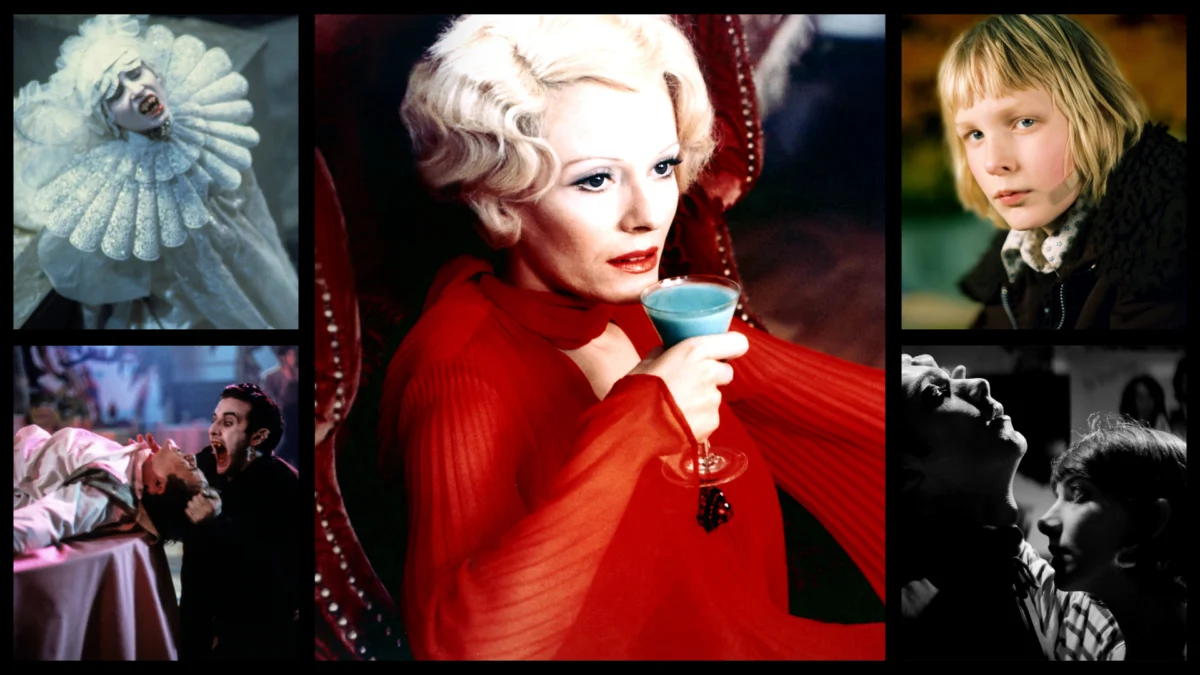
While ghosts haunt the margins of cinema and zombies have enjoyed cyclical waves of mainstream dominance, no classic horror monster holds a cinematic legacy as rich, diverse, and enduring as the vampire. Nearly as old as the medium of motion pictures itself, the bloodsucker has morphed from a symbol of repressed Victorian dread into a multifaceted canvas for romance, social satire, feminist subversion, and high art.

As film critics and cinephiles prepare for the holiday season release of Robert Eggers’ highly anticipated Nosferatu remake, the broader cultural fascination with the undead remains as vital as ever. To understand why vampires continue to cast such a long shadow over the cinematic landscape, it is necessary to examine their century-long evolution on the silver screen—a trajectory marked by visionary directors, international masterpieces, and relentless reinvention.

Main Facts: The Eternal Appeal of the Undead
The vampire genre occupies a unique space in film history because it transcends traditional horror. While a slasher film relies on visceral shock and a creature feature on primal terror, the vampire is inherently theatrical, intellectual, and sensual. They are monsters with whom audiences are invited to empathize—creatures burdened by immortality, isolated by their hunger, and reflective of the societal anxieties of the eras in which they are created.

The cinematic lineage of the vampire began in earnest with F.W. Murnau’s silent masterpiece Nosferatu (1922). An unauthorized adaptation of Bram Stoker’s Dracula, Murnau’s film established the visual vocabulary of cinematic terror: elongated shadows, gaunt figures, and the looming dread of the plague brought by the night. Though legal battles nearly destroyed the film—with a court ordering all prints to be burned—surviving copies preserved a foundational text of horror cinema.

Since those shadowy silent beginnings, the mythos has expanded exponentially. Major studios, independent auteurs, and international visionaries have continuously reinterpreted the archetype. From Universal Pictures’ classic monster era in the 1930s to the campy Hammer Horror productions of the mid-20th century, and onward to modern arthouse deconstructions, the vampire remains cinema’s most adaptable predator.

Chronology: A Century of Blood on the Silver Screen
To trace the history of the vampire in film is to trace the evolution of cinema itself. The genre’s century-long timeline reveals how different decades utilized the creature to process contemporary fears and desires.

The Silent Era and Universal Monarchy (1922–1930s)
Following Nosferatu, the genre found its definitive voice in Tod Browning’s Dracula (1931), starring Bela Lugosi. Lugosi’s hypnotic gaze, European accent, and aristocratic bearing defined the vampire for a generation. While Browning’s direction was stage-bound, Karl Freund’s cinematography and Lugosi’s iconic performance cemented the vampire as a figure of dark, seductive elegance. Universal’s monster monopoly paved the way for sequels and crossovers, embedding the vampire into American pop culture.

The Hammer Horror Renaissance (1950s–1970s)
After a post-war lull, British studio Hammer Film Productions resurrected the genre in glorious Technicolor. Christopher Lee donned the cape in Horror of Dracula (1958), opposite Peter Cushing’s Van Helsing. Hammer injected the genre with unprecedented levels of blood, violence, and overt eroticism, transforming the monster into a visceral, hyper-sexualized threat that challenged post-war British conservatism.

The Modernization and Subversion of the Mythos (1980s–1990s)
As the 20th century waned, filmmakers began dismantling the traditional gothic framework. Kathryn Bigelow’s neo-Western vampire thriller Near Dark (1987) blended horror with gritty Americana, while Joel Schumacher’s The Lost Boys (1987) infused the mythos with youth culture and MTV aesthetics.

In 1992, Francis Ford Coppola returned to the source material with Bram Stoker’s Dracula. Embracing lush, practical effects, operatic romance, and Gary Oldman’s tragic portrayal of the Count, Coppola reframed the monster not merely as a villain, but as a tragic, soul-broken romantic doomed by grief. Around the same time, Anne Rice’s literary adaptations, beginning with Interview with the Vampire (1994), further humanized the undead, exploring the psychological torment of eternal life.

International Perspectives and Indie Deconstructions (2000s–Present)
As the 21st century dawned, the genre expanded globally. Park Chan-wook’s erotic South Korean masterpiece Thirst (2009) explored faith, morality, and desire through the lens of a Catholic priest turned vampire. Meanwhile, Tomas Alfredson’s Swedish film Let the Right One In (2008) offered a poignant, melancholic look at loneliness and bullying through a chillingly innocent lens.

Indie filmmakers also found fresh angles for satire and arthouse expression. Taika Waititi and Jemaine Clement’s mockumentary What We Do in the Shadows (2014) modernized the genre through comedy, detailing the mundane domestic struggles of immortal roommates. Simultaneously, Ana Lily Amirpour’s Iranian-American indie film A Girl Walks Home Alone at Night (2014) utilized the vampire as a feminist avenger prowling the desolate streets of "Bad City."

Supporting Data: The Critical Consensus
While 2024 has been a relatively quiet year for high-art horror—highlighted primarily by the fun, high-concept, but ultimately silly bloodsucking thriller Abigail—critics and audiences frequently look back to canonical masterpieces to define the genre’s high-water marks.

In tracking the critical consensus, industry roundups—such as IndieWire’s regularly updated compendium of the greatest vampire movies of all time—consistently highlight a diverse cross-section of styles that prove the genre’s versatility:

- Arthouse Introspection: Films like Claire Denis’ Trouble Every Day (2001) and Abel Ferrara’s The Addiction (1995) use vampirism as a metaphor for addiction, existential philosophy, and human depravity.
- Camp and Cult Classics: European contributions like Daughters of Darkness (1971) showcase how the genre has historically pushed boundaries regarding gender, sexuality, and European arthouse aesthetics.
- Blockbuster Scale: High-budget studio spectacles continue to draw massive audiences, proving that the primal fear of being bitten never truly goes out of style.
Official Responses and Industry Outlook: The Return of Count Orlok
The current landscape of vampire cinema is poised for a massive resurgence, anchored entirely by Focus Features’ upcoming Christmas release of Robert Eggers’ Nosferatu.

Eggers, known for his meticulously researched, atmospheric historical horrors (The Witch, The Lighthouse, The Northman), has spent years developing his personal dream project. Starring Bill Skarsgård as the terrifying Count Orlok, alongside a powerhouse ensemble cast featuring Nicholas Hoult, Lily-Rose Depp, Aaron Taylor-Johnson, Emma Corrin, and Willem Dafoe, the film aims to strip away the glossy romanticism of late-90s and 2000s depictions—such as the Twilight phenomenon—and return the vampire to its roots as a disease-bringing, monstrous entity of pure dread.

Industry insiders note that Eggers’ adaptation represents a growing Hollywood appetite for elevated, auteur-driven horror. Focus Features executives have expressed high confidence in the project, positioning it as both a prestige awards contender and a crowd-pleasing holiday fright fest.

"Robert Eggers is uniquely suited to resurrect this specific nightmare," notes one industry analyst. "By returning to the expressionistic roots of 1922 while injecting his own peerless command of tension and historical authenticity, Nosferatu could redefine how contemporary audiences view cinematic monsters."

Implications: Why the Vampire Endures
As cinematic trends come and go—shifting rapidly from superhero fatigue to franchise exhaustion—the vampire remains a reliable mirror for human anxieties.

Why do we keep returning to the creatures of the night? The implications are deeply tied to our relationship with time, mortality, and desire. Vampires embody the ultimate paradox: they possess eternal life, yet they are trapped in a state of arrested development, forever feeding on the living to sustain an unlivable existence. They represent the allure of forbidden power, the sting of social ostracization, and the terrifying beauty of giving in to one’s basest instincts.

Whether viewed through the lens of early German expressionism, feminist indie cinema, bloody South Korean thrillers, or upcoming high-profile Hollywood reimaginings, the vampire’s cinematic legacy is secure. As long as filmmakers find new veins to tap within the mythos, the creatures of the night will continue to rise from their coffins, ready to seduce and terrify generations to come.
