
The Power of Specificity: Seth Rogen and the Animated Poignancy of Tangles
Seth Rogen has built an illustrious career on the foundations of the surreal and the satirical. From the apocalyptic camaraderie of This Is the End to the existential, grocery-aisle debauchery of Sausage Party, his brand has long been synonymous with high-concept comedy. However, his latest venture as a producer—the hand-drawn, black-and-white animated drama Tangles—marks a profound departure into the deeply personal. A poignant exploration of a daughter returning to her conservative hometown to care for her mother, who is navigating the harrowing decline of Alzheimer’s disease, Tangles represents a new, vulnerable chapter for the filmmaker.
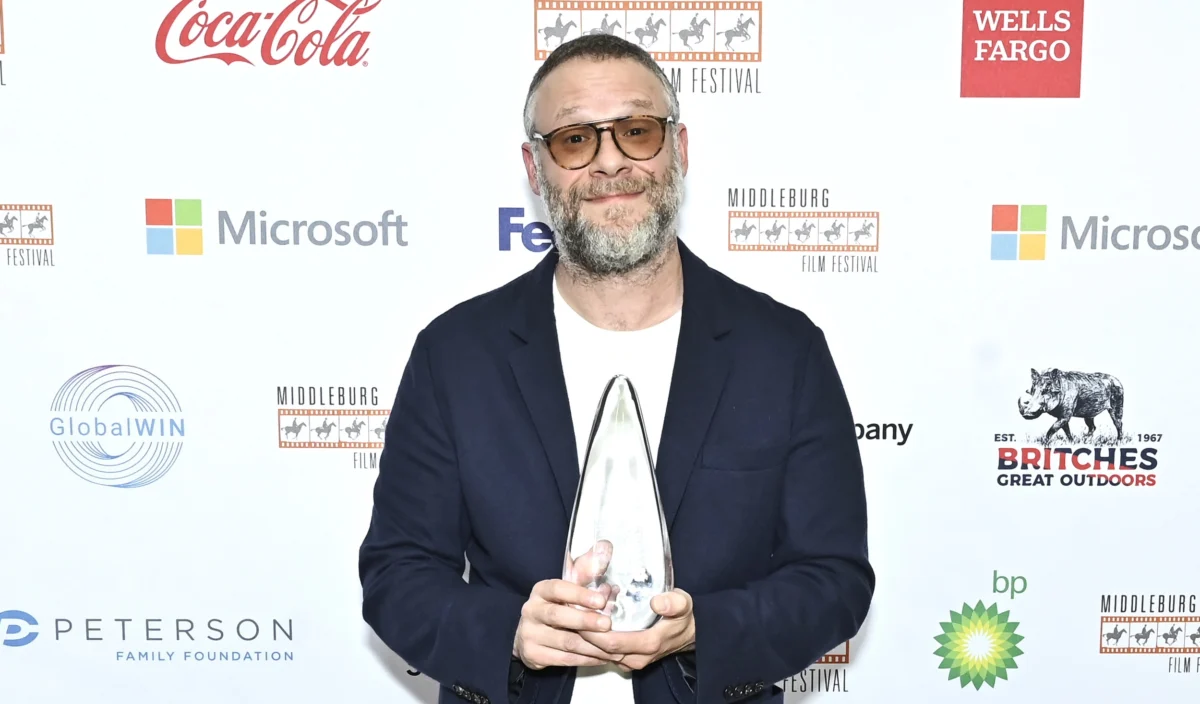
During a candid discussion at the Middleburg Film Festival, Rogen shed light on why this particular project, an adaptation of Sarah Leavitt’s acclaimed graphic novel Tangles: A Story About Alzheimer’s, My Mother and Me, stands as perhaps the most significant creative endeavor of his career.
The Genesis of an Unconventional Adaptation
The path to bringing Tangles to the screen was not paved by traditional Hollywood deal-making, but by shared advocacy. Seth Rogen and his wife, director and producer Lauren Miller Rogen, have become prominent voices in the fight against Alzheimer’s, dedicating significant time and resources to research and awareness. It was through this philanthropic network that the couple crossed paths with director Leah Nelson and graphic novelist Sarah Leavitt.
What began as a meeting at a charity event evolved into a multi-year creative collaboration. Rogen and Miller Rogen were immediately struck by the raw, visceral honesty of Leavitt’s source material. The challenge, however, lay in translating the static, visual language of a graphic novel into a cinematic medium that could capture the internal, often fractured, reality of the Alzheimer’s experience. The decision to maintain a stark, hand-drawn, monochrome aesthetic was not a production constraint—it was the heart of the project.
The Philosophy of Specificity
For Rogen, the "why" behind the animation is the core of the film’s success. In a landscape often dominated by hyper-realistic CGI and broad, market-tested visuals, Tangles demands attention through its deliberate artistic choices.

"To me, animation is a medium, and it is my instinct to trust the creative ambitions and instincts of the people that I work with and to not question them too much," Rogen explained to the audience at Middleburg. "If anything, I have tried to train myself to really go on the journey with people’s creative instincts, even if they are not my own or even if they seem like you could argue against them."
Rogen acknowledged that in the hands of a more traditional studio, the project might have been steered toward live-action. After all, the film utilizes surreal, dreamlike sequences—a wave crashing into a room, for example—that could be rendered with high-end visual effects in a live-action setting. Yet, Rogen argued that such a choice would have fundamentally altered the spirit of the story.
"You probably could have talked them out of this," he admitted. "You could have argued there are surreal sequences you could do in live-action if you really wanted to. It’s not impossible. But they came to us wanting it to be animated. They had a look, they had a vision. And rather than try to poke holes in that, we all chose to support it."
This philosophy—which Rogen labels "specificity"—has become the guiding principle of his production house. He posits that the more granular and uncompromising the artistic vision, the more universal the resonance.
"The more I make things, the word ‘specificity’ is the thing that I am telling the people I work with the most to seek," Rogen noted. "What makes it specific to you and to this? What makes it different from what anyone else would do to tell this story? What makes it distinct? And so all those things—animation, that’s specific. Black and white, that’s specific. Hand-drawn, that’s specific. And I think in art, the more specific art is, the more it seems to resonate."

Comparing Artistic Visions: From Warhol to Tangles
To illustrate his point, Rogen drew parallels between Tangles and the works of iconic visual artists. He argued that greatness in art is rarely defined by technical perfection or mass-market appeal, but by an instantly recognizable, idiosyncratic fingerprint.
"Andy Warhol isn’t the best painter," Rogen remarked. "He’s one of the most specific painters. Jackson Pollock, you can argue, is not even a good painter, but it’s unbelievably specific. You see it, you know who did it right away. That is the key of specificity. And I think with this, you see one frame of it, and you know what it is."
For Rogen, the aesthetic choices in Tangles serve as a protective barrier around the story’s integrity. If the film were placed in a lineup of ten other movies, the stark, hand-drawn lines of Tangles would distinguish it instantly. This "visual signature" is not merely stylistic; it creates an emotional shorthand for the audience, allowing them to engage with the traumatic and chaotic nature of Alzheimer’s without the distraction of polished, cinematic artifice.
Official Responses and Industry Reception
The industry’s reaction to this unconventional approach has been overwhelmingly positive. Following its world premiere at the Cannes Film Festival in May, the film garnered critical acclaim for its bravery and emotional intelligence. The film features a powerhouse voice cast, including Julia Louis-Dreyfus, Abbi Jacobson, Bryan Cranston, and Beanie Feldstein, all of whom have lent their talents to elevate the narrative’s intimacy.
In August, the film was acquired by IFC, a move that signaled the studio’s intent to position Tangles as a serious contender in the upcoming awards season. The acquisition underscores a growing appetite among distributors for "prestige animation"—films that utilize the medium not just for family entertainment or spectacle, but for mature, character-driven storytelling.

Implications for the Future of Animation
The success and critical positioning of Tangles have significant implications for the future of the animation industry. As technology continues to lower the barriers to entry for independent animators, we are likely to see an increase in projects that lean into "specificity" rather than mass-market appeal.
- Breaking the "Animation as Genre" Myth: Tangles reinforces the idea that animation is a medium, not a genre. By utilizing the medium to tell a grounded, heartbreaking story about a degenerative disease, the production team is helping to dismantle the long-standing stigma that animation is exclusively for younger audiences.
- The Shift Toward Independent Aesthetics: Rogen’s advocacy for hand-drawn, monochromatic storytelling suggests that there is a growing market for tactile, imperfect art in a digital age. This could influence future production slates at mid-to-large studios, encouraging them to take risks on non-traditional art styles.
- The Producer’s Role in Creative Autonomy: Rogen’s approach to mentorship—encouraging directors to trust their instincts rather than "poking holes" in their vision—serves as a model for how high-profile producers can foster authentic, singular voices. By providing the resources and the platform, but stepping back from the creative control, Rogen is allowing the specificity of the source material to dictate the form of the final product.
As Tangles moves toward its wide release and Oscar campaign, it stands as a testament to the power of artistic conviction. It is a film that dares to be small, slow, and monochromatic in a world that often rewards the loud and the colorful. For Seth Rogen, the journey of making Tangles has been an education in the value of staying true to the vision, no matter how "unconventional" that vision might seem to the outside world.
"What can you do to make this specific?" Rogen asked, reflecting on his role in the project. "What are all the things you could do, all the parameters you can put on it that will set it apart from anyone else’s version of this were they to do it?"
In answering that question, Rogen, Nelson, and Leavitt have created something that is not just a film, but a distinct piece of art—one that captures the fragmented, beautiful, and devastating nature of memory itself.
