Directing Through the Chaos of Conflict: An In-Depth Interview with Wen Muye on the Masterpiece Once Upon a Time in the Middle East
By Robert Ewing
Main Facts: A Cinematic Triumph of 2026
In the evolving landscape of international cinema, Chinese filmmaker Wen Muye has quietly cemented his status as a major voice to watch. Having previously impressed audiences with his contributions to the anthology My People, My Country, alongside acclaimed feature films Dying to Survive and Nice View, Wen has returned with what many critics are calling an outright masterpiece. Released in 2026, Once Upon a Time in the MiddleEast has quickly emerged as one of the most powerful, emotionally resonant, and visually striking films of the year.
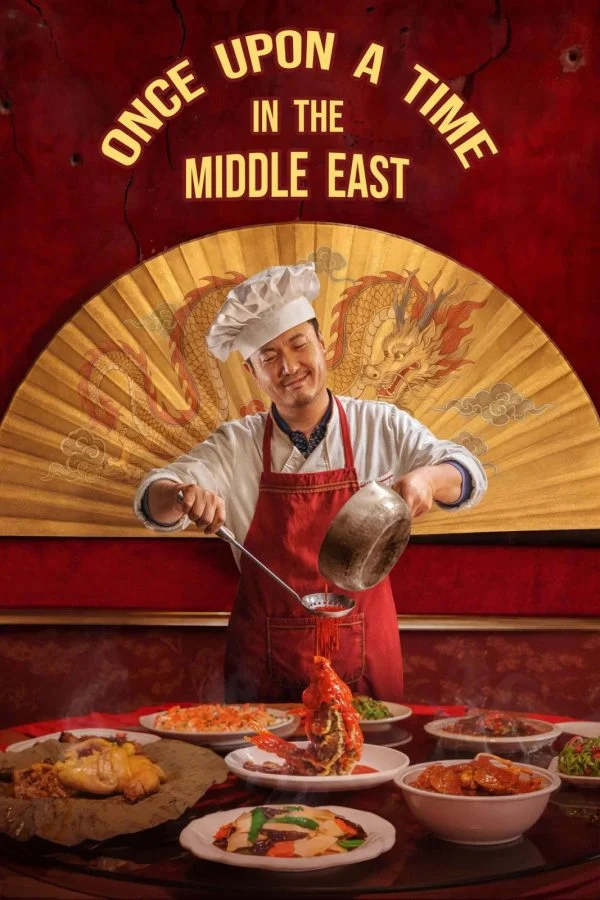
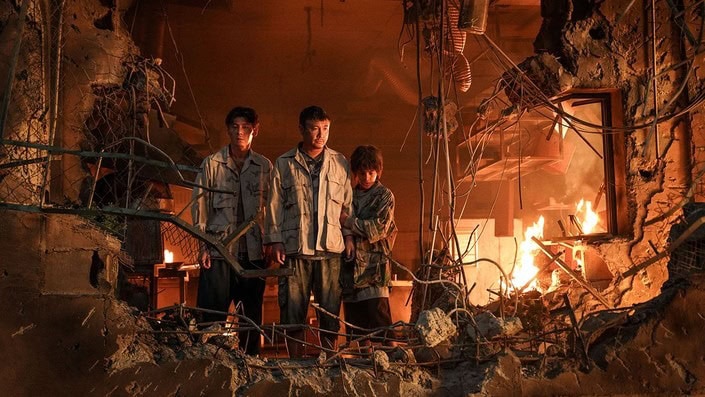
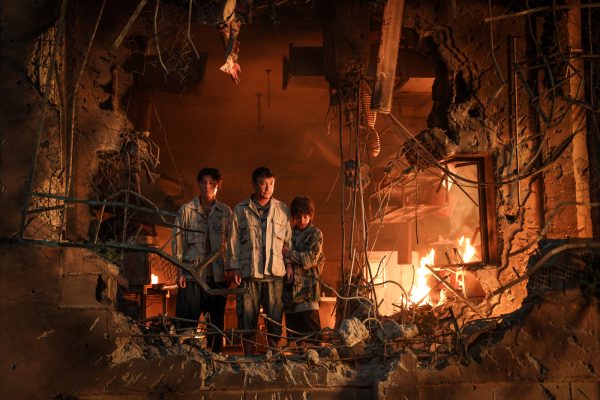
The narrative centers on Xu Fu, portrayed with profound vulnerability by acclaimed actor Shen Teng. Burdened by heavy debts, Xu travels to the Middle East seeking economic salvation. His path crosses with Ma Junsheng (played by Jiang Qiming), a fellow expatriate working at a struggling local Chinese restaurant that desperately needs a culinary revival. Xu steps into the role of chef, breathing new life and unexpected prosperity into the establishment. However, the fragile peace of their new lives is shattered when military strikes—unleashed by the United States—plunge the region into violent chaos.
In this exclusive interview, co-writer and director Wen Muye sits down to discuss the immense moral complexities woven into his film, his dynamic collaboration with leading man Shen Teng, the intricate methods required to direct child actors through harrowing war sequences, and the symbolic power of food as a universal language of peace.
Chronology: The Evolution of a Visionary Director
To fully understand the weight of Once Upon a Time in the Middle East, it is necessary to look back at the trajectory of Wen Muye’s career. Over the past decade, Wen has built a reputation for grounding sweeping socio-economic narratives in deeply human, character-driven stories.
Early Successes: With Dying to Survive and Nice View, Wen established a distinct knack for balancing commercial appeal with sharp social commentary. His short segment in the patriotic anthology My People, My Country further proved his ability to manage ensemble casts and high-stakes emotional beats.
The Development of Once Upon a Time in the Middle East: Moving away from domestic settings, Wen turned his lens toward international geopolitics, specifically focusing on the turbulent conflicts that swept the Middle East during the early 2000s. Rather than relying on standard geopolitical tropes, Wen and his long-time cinematographer, Wang Boxue, conceptualized a story that viewed war not through the grand lens of military strategy, but through the microscopic, terrifying perspective of an ordinary civilian caught in the crossfire.
The 2026 Release and Critical Acclaim: Upon its release, the film immediately captured the attention of international film festivals and global audiences alike, earning rave reviews for its technical mastery, narrative nuance, and stellar performances.
Supporting Data: Behind the Scenes of a Masterpiece
The technical and artistic achievements of Once Upon a Time in the Middle East are built upon meticulous planning, innovative filmmaking choices, and deep-seated creative partnerships.
Visual Storytelling and Aspect Ratio Shifts
One of the most striking formal choices in the film occurs during the harrowing prison sequence, where the aspect ratio deliberately shifts from the standard 1.85:1 used throughout the rest of the film to a tighter 2.43:1. Wen explains that this was a deliberate narrative choice:
"Psychologically, it feels as though the characters are wearing shackles; they are under control. So, we tightened the frame."
Conversely, when epic action sequences and moments of massive scale unfold, the frame opens up, delivering a visceral impact that mirrors the overwhelming nature of disaster rather than traditional, glorified war cinema.
The Cinematography of Wang Boxue
Collaborating with cinematographer Wang Boxue for nearly a decade has allowed a rare shorthand to develop between director and DP. Eschewing standard war-film aesthetics, Wang’s camera mimics the style of a disaster film. Because Xu Fu is a neutral third party, the war is experienced entirely as an environmental cataclysm—a series of continuous long takes that force the audience to run alongside the characters through the dust and rubble.
The Art of Cinematic Cuisine
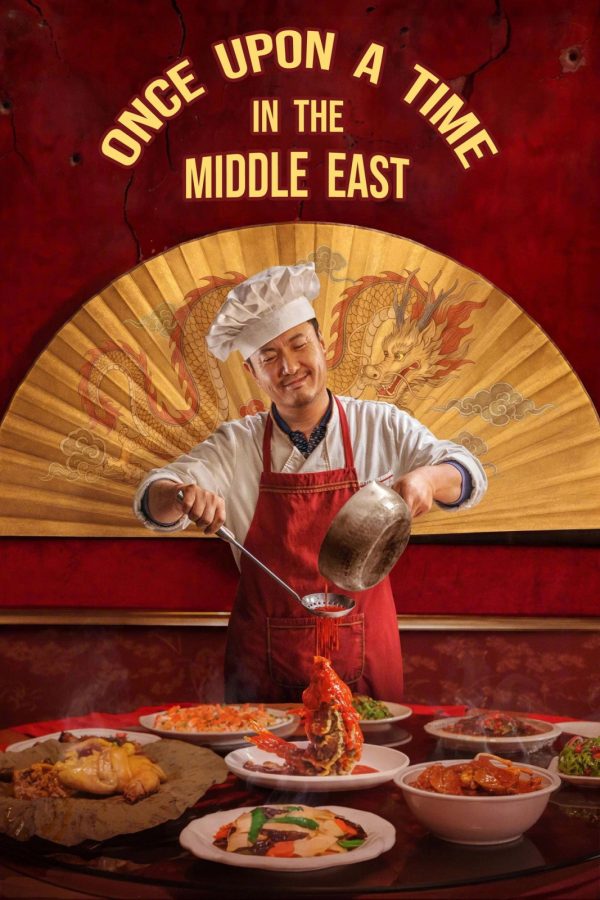
Food acts as a silent character throughout the runtime. To capture the preparation of these meals without falling into repetitive waste, the production team relied on multi-camera setups, rigorous pre-planning, and detailed shot lists. As Wen notes, food ultimately serves a thematic purpose:
"Food represents peace, and we wanted to make peace seem more desirable."
Official Responses: Wen Muye on Character Complexity, Casting, and Morality
In our extended conversation, Wen Muye opened up about the philosophical underpinnings of his script and the unique methodologies he used to draw career-best performances from his cast.
Navigating the Nuances of War
When asked about the challenges of depicting a complex geopolitical conflict without resorting to one-sided moralizing, Wen emphasized his focus on internal human struggles over external politics:
"We still wanted to focus more on people. What concerns us more is the conflict within people themselves… Why does someone who appears to be kind commit evil? Why does someone who seems gentle and refined kill? Why might someone who appears to have violent tendencies also be a boy who loves his family and his cat? What we wanted to portray was the inner, emotional conflict in people that is brought about by external conflict."
Unlocking Shen Teng’s Dramatic Range
Best known for his comedic work—including his standout performance in Pegasus 3 earlier this year—Shen Teng delivers a stunningly vulnerable dramatic turn as Xu Fu. Wen expressed immense joy in working with the versatile star:
"Shen Teng is among the very best in China, whether in terms of his overall ability as an actor or his gift for comedy… As the director and screenwriter, when it comes to fully shaping a character, we creators behind the scenes may only be able to reach seventy or eighty per cent. A character ultimately depends on what the actor brings to the screen… Shen Teng could take that seventy or eighty per cent and bring it almost to one hundred per cent."
Working with child actors in a heavy, mature war setting requires immense sensitivity. Wen detailed his philosophy on eliciting authentic performances from young talent:
"With them, I think you need more patience, more non-technical guidance, more attention, and above all, a sufficient sense of safety… Children have this sensitivity and natural way of perceiving things. More often, what we need is to help them concentrate. A director’s role is more about guiding them to focus, trusting them, giving them a greater sense of security, and then waiting for them to reach the point you need."
The Tragic Humanity of Zaid
Addressing the emotionally complex antagonist Zaid—a caring father pushed by tragedy into the dark depths of terrorism—Wen stressed that such narrative arcs are rooted in the grim realities of historical observation:
"In war, many people are changed by hatred and become people they would never otherwise have become. To me, that is not something merely dramatic; on the contrary, it is more real… Most importantly, at the final moment, we see the person he originally was—for example, in the moment when he lets Xu Fu go. That is very important. When he finally tells Xu Fu to open his mouth, he is, in effect, saving Xu Fu’s life. It allows us to see that Zaid still has his conscience."
Implications: A Cultural and Artistic Milestone
The success of Once Upon a Time in the Middle East carries significant implications for the global film industry:
Expanding the Boundaries of Chinese Cinema: While Chinese box offices have historically been dominated by domestic historical epics, hyper-stylized action, or broad comedies, Wen Muye’s work proves there is a thriving, globally relevant market for politically nuanced, human-centric international dramas.
Redefining Genre Tropes: By framing modern warfare through the lens of a disaster film and focusing on the psychological erosion of ordinary people rather than nationalist heroics, Wen has set a new storytelling standard for international war cinema.
The Power of Universal Themes: Ultimately, the film’s central metaphor—using a simple bowl of hui fan (a comforting meal made from basic, gathered ingredients) to bridge cultural divides—reminds global audiences of cinema’s ultimate purpose: fostering empathy across borders. As Wen beautifully summarizes when asked what meal he would cook to bring people together:
"The Chinese character hui (会) in the dish’s name has the sound of hui (会), meaning ‘to gather together.’ We wanted to bring everyone together, and that is why we chose Xu Fu’s hui fan at the end… It fulfills food’s most basic function."
Many thanks to Wen Muye for taking the time for this exclusive interview.