
The Eternal Cost of a Second Chance: Why John Frankenheimer’s Seconds is the Ultimate Mirror for Modern Obsession
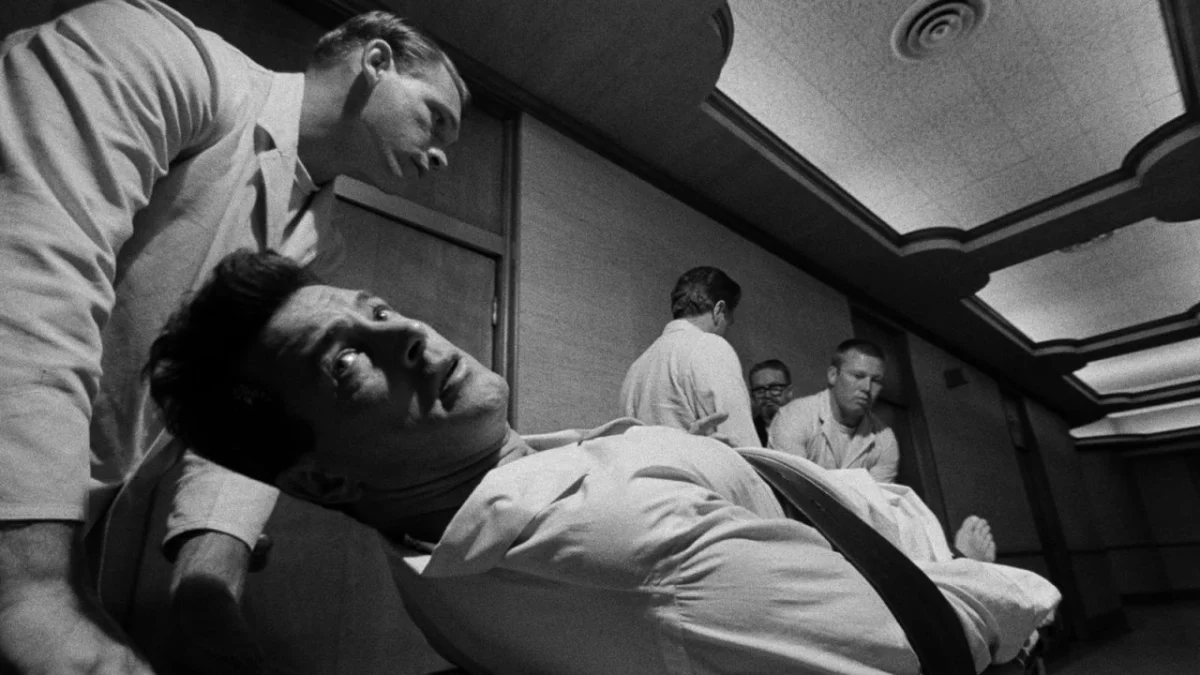
In the operating room, the lights are not warm; they are clinical, piercing, and unforgiving. The camera lens pushes against the skin, capturing the raw geometry of a human face—eyes, nose, and lips—as they are prodded, measured, and eventually carved away. This is not the opening sequence of a contemporary A24 body-horror breakout; it is the haunting, visceral prologue to John Frankenheimer’s 1966 masterpiece, Seconds.
While today’s discourse is saturated with the horrors of aging—fueled by the rise of "Instagram face," the normalization of extreme cosmetic surgery, and the billionaire-led crusade to "hack" biological mortality—Seconds arrived decades before its time. It is a film that peered into the soul of the American mid-life crisis and found not a mid-life awakening, but a terminal, mechanical nightmare.
The Anatomy of a Forgotten Classic
Seconds follows Arthur Hamilton (John Randolph), a 52-year-old bank executive suffocating under the weight of his own suburban existence. His life is a gray mosaic of tepid marital intimacy, a distant daughter, and the hollow ache of unfulfilled ambition. His salvation, he is told, lies in "The Company," a shadowy organization that promises the ultimate consumer luxury: a completely new life.
Through a clandestine process involving facial reconstruction and a faked death, Hamilton is transformed into Antiochus "Tony" Wilson, portrayed by a career-defining Rock Hudson. However, the film quickly pivots from a sci-fi thriller into a psychological descent. The transformation does not grant Wilson happiness; it merely relocates his ennui into a younger, more physically capable vessel. The film’s tragedy lies in its central thesis: that if you hate your life, changing your face will not change your fate.
Chronology of a Misunderstood Masterpiece
To understand the trajectory of Seconds, one must look at the climate of mid-1960s Hollywood.
- 1966 (The Release): Frankenheimer was coming off the critical success of The Manchurian Candidate (1962) and Seven Days in May (1964). Seconds was intended to be the crown jewel of his "paranoia trilogy." Instead, the film was a catastrophe. Audiences, accustomed to Rock Hudson as the archetypal romantic lead, were repulsed by his portrayal of a hollow, lost soul. The film was booed at the Cannes Film Festival, and a demoralized Frankenheimer famously refused to attend the press conference.
- 1966–1997 (The Wilderness Years): For three decades, the film languished. It was dismissed as an over-stylized, overly bleak failure. It was rarely screened, and its legacy was relegated to the fringes of film history.
- 1997 (The Laserdisc Revival): The release of a laserdisc edition sparked a long-overdue critical reassessment. Scholars began to peel back the layers of its cinematography and social commentary.
- 2013–Present (The Criterion Era): With its inclusion in the Criterion Collection, Seconds has finally been cemented as a foundational text in the genre of dystopian sci-fi, influencing everything from Blade Runner to the works of David Lynch and Yorgos Lanthimos.
Supporting Data: The Craft of Paranoia
The film’s endurance is largely owed to the visionary collaboration between Frankenheimer and cinematographer James Wong Howe. Howe, a pioneer of the wide-angle lens, utilized custom camera rigs attached to the actors, forcing the viewer into a suffocating, "sickeningly close" proximity to the protagonist.
The visual language of Seconds is one of distortion. By using fisheye lenses and erratic, claustrophobic framing, Howe mirrored Arthur Hamilton’s internal fragmentation. The set design, featuring Byzantine hallways reminiscent of Terry Gilliam’s Brazil, underscores the absurdity of a world where one can buy a new identity but remains fundamentally unable to escape the self.
Furthermore, the film’s inclusion of John Randolph—a brilliant actor who had been blacklisted by the House Un-American Activities Committee (HUAC) in the 1950s—adds a meta-textual layer of "second chances." The actor playing a man seeking a redo was, in reality, fighting for his own professional resurrection.

Official Responses and Cultural Implications
The failure of Seconds in 1966 was not a failure of quality, but a failure of audience expectation. Post-war America was not yet ready to confront the dark side of consumerist self-reinvention. The film’s depiction of the "Company" as a pyramid scheme—where every "new" life is eventually sold as a commodified product—was years ahead of its time.
The "Rock Hudson" Factor
The most significant barrier to the film’s initial success was Rock Hudson himself. Hudson was a pillar of the Hollywood establishment, a man whose screen presence was built on charm, stability, and rugged heteronormative appeal. By casting him as a man coming apart at the seams, Frankenheimer stripped away the "mask" of the movie star.
Hudson’s performance—particularly his harrowing final scene, where he is restrained by real-life medical attendants because he fought so violently—is a masterclass in vulnerability. He was, in effect, playing a version of his own repressed reality. Hudson reportedly considered this his finest work, despite the public’s rejection of his departure from his "Doris Day" persona.
A Mirror for the 21st Century
Today, Seconds feels less like a cautionary tale and more like a documentary of our current era. We live in a time where:
- The Aging Crisis: Wealthy figures spend millions on biological age-reversal, treating death as a technical bug to be patched out rather than a natural conclusion.
- The Digital Mask: The "Instagram Face" phenomenon and the prevalence of filters have created a society where, like Arthur Hamilton, we are increasingly detached from our own physical reality.
- The Commodity of Identity: The film’s "pyramid scheme" structure mirrors the modern gig economy and the influencer complex, where even our personal narratives are rebranded and sold to the highest bidder.
Conclusion: The Finality of Time
The title Seconds is a masterstroke of irony. It refers to the "second chances" offered by the Company, but it also evokes the literal ticking of the clock—the seconds we cannot get back. The film’s most devastating moment occurs when the founder of the company asks the protagonist, "Find your dream come true?" and Arthur Hamilton, now trapped in the hollow shell of his new life, replies, "I guess I never had a dream."
That line resonates with a terrifying clarity in the 21st century. We are a culture obsessed with the "next version" of ourselves—the next diet, the next aesthetic upgrade, the next digital transformation. Seconds serves as the cold, hard reminder that when you strip away the mask, the face underneath is still the same, and the time you spent trying to escape it is time that has been lost forever.
John Frankenheimer was right: the film was never a success, yet it became a classic. It didn’t change the minds of 1966 audiences, but it successfully predicted the existential dread of our own time. In a world that is constantly trying to buy its way out of the human condition, Seconds remains the ultimate, unflinching mirror.
