
Through the Vortex at 25: Richard Kelly Reflects on the Cult Legacy and Future of Donnie Darko
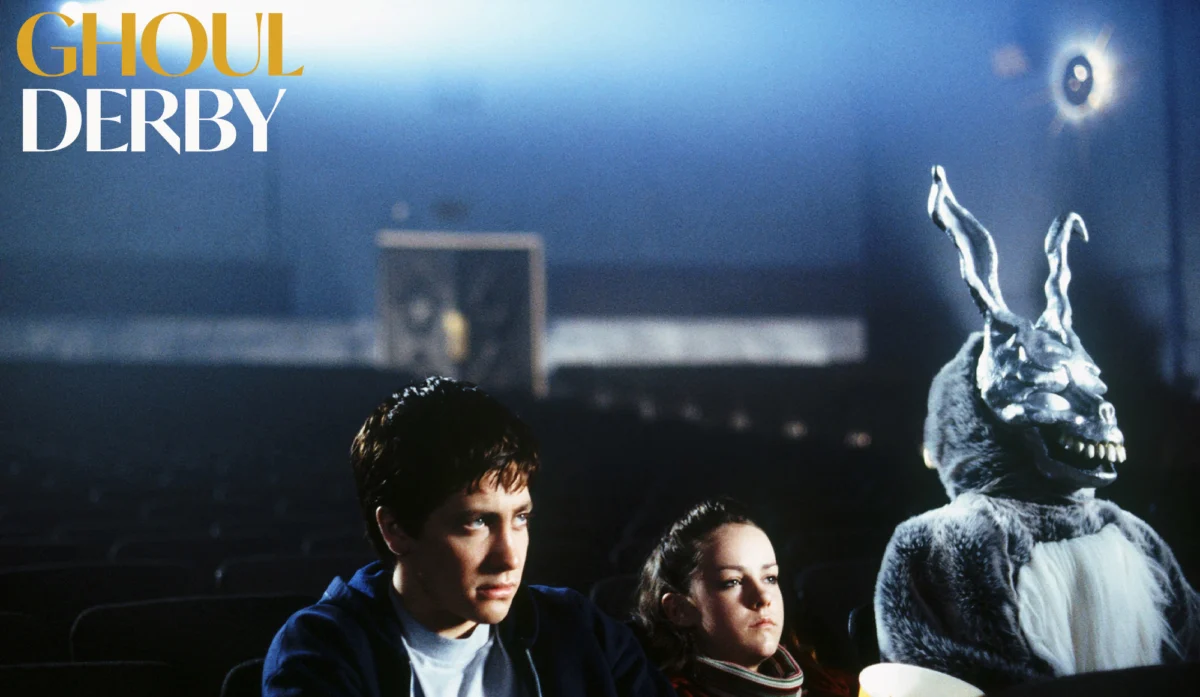
Twenty-five years ago, writer-director Richard Kelly altered the landscape of American independent cinema with a surreal, genre-bending debut that explored suburban angst, existential dread, and temporal mechanics. Released on October 26, 2001, Donnie Darko introduced audiences to a troubled high school student navigating a 28-day countdown to the end of the world, guided by a grotesque, six-foot-tall rabbit named Frank.
Though initially plagued by a quiet box office run and distribution hurdles—exacerbated by the post-9/11 cultural climate—the film gradually metastasized into a defining cult classic. It launched Jake Gyllenhaal into Hollywood A-lister status, showcased an eclectic supporting ensemble, and birthed a dense, multi-layered mythology centered on tangential universes and predestination.
Now, as the film celebrates its Silver Anniversary, Kelly is not merely looking backward at past glories. He is actively expanding the Darko-verse, preparing for the December publication of a massive 600-page sequel novel, The Philosophy of Time Travel, and eyeing an ambitious cinematic future. In a wide-ranging retrospective interview with Gold Derby, the filmmaker opens up about the turbulent journey of making his masterpiece, the behind-the-scenes alliances that saved it, and why the universe he created two and a half decades ago is poised for a massive resurgence.
Main Facts: The Anatomy of a Cult Phenomenon
At its core, Donnie Darko follows its titular protagonist (Jake Gyllenhaal), an alienated teenager in a sleepy suburban California town who narrowly escapes death when a jet engine inexplicably plummets from the sky and crashes into his bedroom. Guided by Frank, Donnie is drawn into a series of nocturnal crimes while unraveling complex concepts of theoretical physics, nihilism, and destiny.
The production is widely recognized for several key pillars:
- The Launchpad: It established Jake Gyllenhaal as a premier dramatic talent and featured early career turns by his sister Maggie Gyllenhaal, Jena Malone, Seth Rogen, Ashley Tisdale, and a memorable villainous role for Patrick Swayze as predatory motivational speaker Jim Cunningham.
- The Aesthetic: Set deliberately in October 1988 against the backdrop of the impending George H.W. Bush presidential election, the film captured a moody, hyper-stylized transitional era bridging the 1980s and the 1990s.
- The Music: Michael Andrews’ haunting score and the iconic cover of Tears for Fears’ "Mad World," performed by Gary Jules, became permanently etched into cinematic history, functioning as the emotional heartbeat of the film’s tragic climax.
Chronology: From USC Post-Grad to Sundance and Beyond
Genesis in the Late ’90s
The conceptual architecture of Donnie Darko was born out of Kelly’s own youth in the 1980s, compounded by his fascination—and subsequent intimidation—by Stephen Hawking’s seminal science book, A Brief History of Time. While working as a minimum-wage runner at a post-production facility in Los Angeles—where he crossed paths with high-profile artists like Madonna during the VFX work for "Ray of Light"—Kelly hammered out the screenplay.
"I was around all these super-famous successful people, and here I was making minimum wage," Kelly recalls. "Eventually, I was able to latch onto the idea of a jet engine falling from the sky, and the Twilight Zone-style mystery of that laid out the architecture of the whole script for me."
The 2000 Shoot and the SAG Strike
Securing the cast was aided heavily by unusual industry circumstances. Thanks to a Screen Actors Guild (SAG) strike that restricted shooting options throughout much of the year 2000, combined with the advocacy of Drew Barrymore—who starred in the film and produced it through her company, Flower Films—and Jason Schwartzman, Donnie Darko became a magnet for prominent young actors.

"People came in agreeing to be featured extras, and they had incredible resumes," Kelly notes. "They just wanted to work… Otherwise, we would’ve been forced to go to Toronto, and the entire cast of the movie would’ve been different."
The Sundance Stumble and the Christopher Nolan Intervention
The film made its world premiere at the 2001 Sundance Film Festival to polarizing reactions. Traditional distributors balked, fearing its dark themes and complex narrative structure. Executives suggested slashing it to a 90-minute runtime and stripping out the 1980s needle drops, relegating it to a straight-to-DVD fate.
Salvation arrived via Newmarket Films—the boutique distributor that had recently broken out with Christopher Nolan’s sophomore feature, Memento. Nolan and his wife, producer Emma Thomas, caught an early screening of Donnie Darko and urged Newmarket executives to acquire it. Thomas even supplied crucial editorial notes, including the insertion of a subtle shot of Frank unmasked during the "Mad World" montage.
Despite this backing, the theatrical run yielded a paltry $2 million domestically. However, the film found an explosive second life in the burgeoning DVD market.
Supporting Data: Digital Poneering and the Cult Awakening
Long before modern indie powerhouses like A24 revolutionized viral, multi-platform promotional campaigns, Donnie Darko utilized the nascent power of the internet. Kelly collaborated with a London-based digital marketing team to build an interactive website. It featured early, incomplete pages of the in-universe text, The Philosophy of Time Travel, inviting fans to decode the film’s labyrinthine lore.
"People really went through those pages of the book, so all that stuff has been marinating in my mind for decades now," Kelly says.
When reflecting on the film’s enduring footprint, Kelly notes that modern data analytics provided by literary and film publishers show a clear, upward trajectory in the property’s popularity. Each passing year introduces a fresh cohort of younger viewers to the vortex, transforming a once-obscure financial disappointment into a generational touchstone.
Official Responses and Creative Evolution
For years, fans parsed the theatrical cut versus Kelly’s preferred Director’s Cut (released in 2004), which leaned heavier into the explicit mechanics of the in-universe book. While a direct-to-DVD sequel, S. Darko, was released in 2009 without Kelly’s participation, the auteur has finally returned to expand his universe on his own terms.

The upcoming release of The Philosophy of Time Travel novel in December marks a massive expansion of the lore. Picking up just two days after the events of the original film—on October 4, 1988—the 600-page book chronicles the lives of the Darko family across 14 tumultuous months.
"All this stuff was only hinted at in the text of the movie because it’s only two hours long and takes place in a dreamlike world," Kelly explains. "It was a really therapeutic experience writing it, as well as an enormous amount of work."
Implications: The Future of the Darko-Verse
As Kelly celebrates the silver anniversary of his directorial debut, his sights are firmly set on translating the massive narrative canvas of his new book back to the screen.
The author envisions turning the rich material—which he estimates holds enough narrative scope for roughly three cinematic sequels—into reality through modern innovation. Because a quarter-century has elapsed since the original actors aged out of their teenage roles, Kelly suggests utilizing motion-capture animation as a viable pathway to preserve the characters’ iconic appearances and continue the saga seamlessly.
With Gen Z audiences fueling a massive resurgence in reading habits via digital literary communities, Kelly believes the timing for a transmedia revival couldn’t be better. "Books are very powerful engines for cinema," Kelly states. "It seems like Gen Z are reading books. We’ve got them on #BookTok, and they’re going to see those movies."
Twenty-five years after a jet engine crashed into a suburban bedroom, the wormhole is opening once again, proving that some cinematic mysteries never truly die—they merely find a way to loop back around.
