
Expanding the Occult: Tom Mabe and Kato Kaelin Board the Historic Found-Footage Installment Witchcraft: The Lanterne of Light
Main Facts
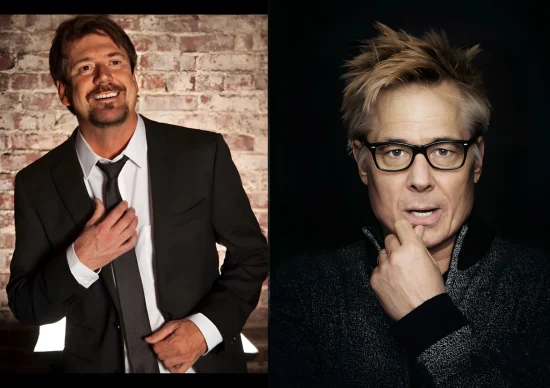
The long-running, cult-classic Witchcraft horror franchise is undergoing a massive paradigm shift. In a major production update, viral video pioneer, comedian, and producer Tom Mabe, alongside actor, television personality, and producer Kato Kaelin, have officially boarded Witchcraft: The Lanterne of Light as Executive Producers.
This latest entry into the decades-spanning supernatural series breaks new ground by utilizing the found-footage style for the very first time in the franchise’s history. Spearheaded by Deathstalker Productions, the film is directed by Carissa Pierson and written by Andrew Pierson.
Unlike traditional, lower-budget found-footage projects, Witchcraft: The Lanterne of Light sets itself apart by blending the raw, visceral realism of the subgenre with a robust, recognizable Hollywood ensemble. The narrative dives headfirst into sinister occult lore, centering on a mysterious 15th-century manuscript called The Lanterne of Light and a dangerous secret society known as The Children of the Hollow, whose malevolent beliefs are tied directly to the Seven Deadly Sins.
The star-studded cast features veteran screen talent such as Eric Roberts, Lisa Wilcox, Sandy Johnson, Marc Price, Vernon Wells, Andrew Pierson, newly appointed executive producer Kato Kaelin, and legendary original Studio 54 DJ Rockin’ Ronnie. Furthermore, the production boasts authentic paranormal credibility through the involvement of Chris McKinnell—grandson of world-renowned demonologists Ed and Lorraine Warren and founder of the Warren Legacy Foundation for Paranormal Research.
Chronology: The Evolution of the Witchcraft Franchise and the Genesis of The Lanterne of Light
To understand the weight of this new installment, one must look at the unprecedented longevity of the Witchcraft cinematic universe. Launched decades ago, the franchise has quietly amassed a dedicated cult following through dozens of sequels, making it one of the most persistent indie horror properties in film history. For years, the series relied on traditional narrative framing, focusing heavily on modern-day witchcraft, occult detectives, and supernatural legal battles.
The developmental timeline for Witchcraft: The Lanterne of Light represents a bold pivot:
- Conception & Writing: Writer Andrew Pierson conceptualized a story that bridges historical occultism with modern terror, anchoring the plot to the real-world historical mythos of The Lanterne of Light—a 15th-century manuscript associated with heresy and forbidden enlightenment.
- Directorial Vision: Director Carissa Pierson stepped in to helm the project, making the daring choice to transition the legacy franchise into the found-footage format—a style popularized by films like The Blair Witch Project and Paranormal Activity, but rarely attempted with such an extensive, recognizable ensemble cast.
- Casting & Credibility: The production steadily accumulated a diverse slate of genre icons, mainstream actors, and real-life paranormal investigators, culminating in the recent high-profile additions of Tom Mabe and Kato Kaelin to the executive producing team to help steer the project through its final production phases and toward distribution.
Supporting Data: Cast, Crew, and Producer Profiles
The success of any indie-to-mainstream horror crossover lies in the strength of its personnel. Witchcraft: The Lanterne of Light features a heavily decorated roster spanning multiple sectors of the entertainment industry.
The Executive Producers
- Tom Mabe: A powerhouse in digital and broadcast media, Mabe brings over two decades of production and audience-engagement experience. Famous for his viral prank calls, hidden-camera videos, and the television series Mabe in America, Mabe’s work has been highlighted by major platforms, including NBC, ABC, The People magazine, and The New York Times. His commercial instincts and digital savvy provide the project with a distinct marketing edge.
- Kato Kaelin: A ubiquitous pop culture fixture, Kaelin’s career spans decades across film, television, and radio. From his memorable big-screen appearances in BASEketball, Pauly Shore Is Dead, and National Lampoon’s Dorm Daze 2, to his reality television stints on Celebrity Big Brother and hosting duties on Tailgating with Kato, Kaelin adds mainstream appeal and robust industry networking power to the production team.
The Ensemble Cast and Paranormal Advisors
- Eric Roberts & Lisa Wilcox: Mainstays of cinematic and horror history who lend high-level dramatic gravity to the occult proceedings.
- Sandy Johnson & Marc Price: Genre favorites who bring beloved nostalgic horror energy to the screen.
- Vernon Wells & Rockin’ Ronnie: Adding international screen presence and unique cultural flavor, respectively.
- Chris McKinnell: Bringing institutional paranormal legitimacy, McKinnell’s participation as a consultant and contributor connects the fictional horrors of The Children of the Hollow with decades of real-world ghost-hunting and demonological research inherited from his grandparents, Ed and Lorraine Warren.
Official Responses and Statements
The fusion of classic franchise lore with modern digital and cinematic minds has generated considerable excitement among the creative team.
Director Carissa Pierson emphasized the groundbreaking nature of the project in a recent statement regarding the production’s trajectory:
"With Witchcraft: The Lanterne of Light, we’re taking this franchise into new territory. Bringing the story to life through found-footage filmmaking while assembling such a recognizable cast and experienced executive producing team makes this an exciting new chapter for the series."
The inclusion of Mabe and Kaelin has also signaled a broader ambition for Deathstalker Productions. Rather than treating this entry as a standard, low-budget direct-to-video sequel, the leadership team is positioning The Lanterne of Light as a high-concept crossover event. By uniting veterans of comedy, reality television, traditional Hollywood drama, and real-life paranormal investigation, the production has cultivated a multi-disciplinary think tank designed to maximize both the authenticity of the horror elements and the commercial viability of the release.
Implications: Redefining Found-Footage Horror and the Future of Legacy Franchises
The release of Witchcraft: The Lanterne of Light carries several notable implications for both the horror genre and the independent film landscape at large.
1. Elevating the Found-Footage Subgenre
For years, the found-footage format has been associated with ultra-low-budget productions utilizing unknown actors to maximize the illusion of reality. While this approach has birthed masterpieces of terror, it has also occasionally suffered from a lack of polished performances. By integrating a seasoned Hollywood cast—featuring industry veterans like Eric Roberts and Lisa Wilcox alongside multi-faceted producers like Mabe and Kaelin—The Lanterne of Light attempts to break the mold. It aims to prove that high-level acting talent can enhance, rather than detract from, the gritty realism required of found-footage storytelling.
2. Revitalizing Long-Running IP
Many long-running horror franchises eventually exhaust their creative momentum, leading to diminishing returns and direct-to-streaming obscurity. By completely shifting the stylistic framework of the Witchcraft series into found-footage—while simultaneously weaving in deep historical lore about the 15th-century manuscript and the Seven Deadly Sins—the creators have found a way to honor the past while offering something entirely fresh. It serves as a blueprint for how legacy indie franchises can reinvent themselves for modern audiences raised on digital-first content and immersive media.
3. The Power of Cross-Industry Collaboration
The involvement of figures like Tom Mabe (digital media and comedy) and Kato Kaelin (pop culture and television hosting), alongside a real Warren family descendant in Chris McKinnell, highlights a growing trend in modern filmmaking: cross-pollination. Modern horror no longer relies solely on traditional horror filmmakers; instead, it draws creators from comedy, digital platforms, and real-world investigations to build broader cultural footprints.
As post-production continues on Witchcraft: The Lanterne of Light, horror fans and industry analysts alike will be watching closely to see how this ambitious experiment in format, casting, and occult storytelling pays off when the cameras finally stop rolling and the tape is played back for the world to see.
