
The Accidental Icon: Brent Spiner on Data’s Enduring Legacy and the Neurodivergent Experience
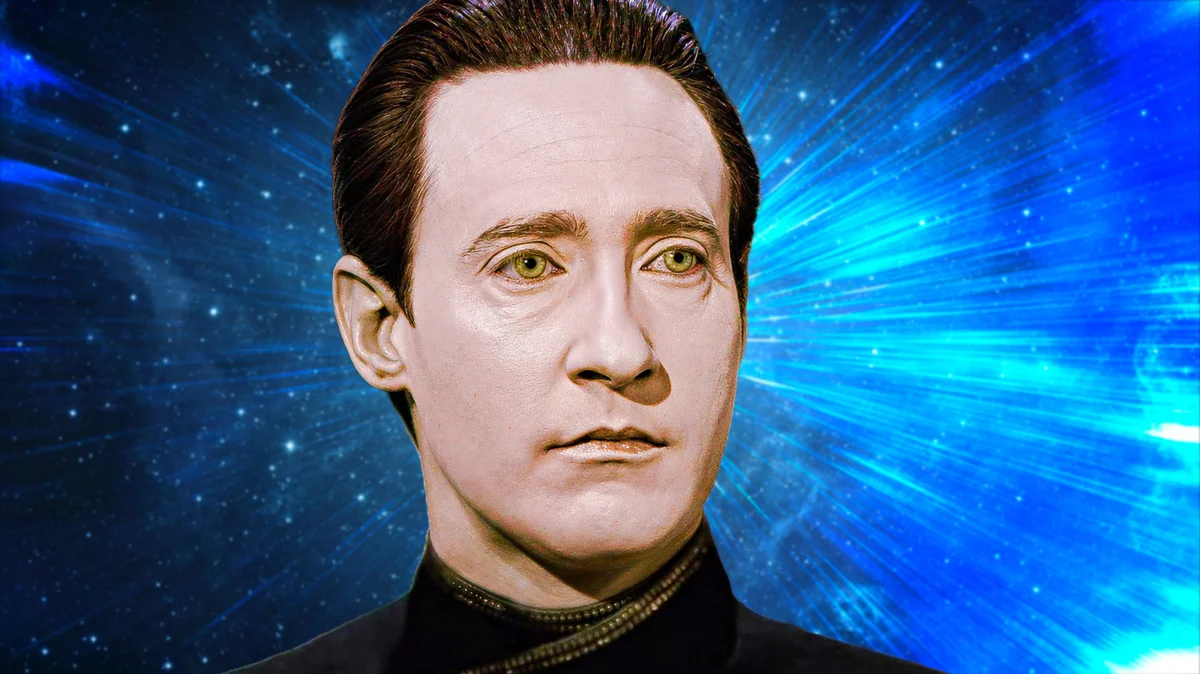
In the vast, sprawling tapestry of science fiction, few archetypes have resonated as profoundly as the "outsider looking in." While franchises like Blade Runner have long garnered critical acclaim for their existential inquiries into what it means to be "more human than human," the Star Trek universe has consistently served as the genre’s most poignant laboratory for these themes. At the center of this exploration stands Lieutenant Commander Data, the positronic-brained android from Star Trek: The Next Generation, portrayed with meticulous grace by Brent Spiner.
Though decades have passed since Data first graced the bridge of the USS Enterprise-D, his cultural footprint continues to expand. Beyond his canonical status as a triumph of robotics, Data has evolved into a vital touchstone for the neurodivergent community. Fans frequently cite the character’s struggle to decode human social cues, his literal-minded interpretation of language, and his profound desire to belong as reflections of their own lived experiences. However, in an exclusive conversation at this year’s New York Comic Con, Brent Spiner offered a humble, grounded perspective on his character’s accidental role in the global conversation surrounding neurodiversity.
The Evolution of the "Outsider" Archetype
To understand the significance of Data, one must look at the lineage of the Star Trek franchise. The Original Series relied heavily on Leonard Nimoy’s Spock to challenge viewers to view humanity through a lens of pure logic. Spock was the initial blueprint for the "other"—a character whose internal conflict between his Vulcan heritage and his human instincts served as a mirror for the audience’s own eccentricities and societal frictions.
When Gene Roddenberry introduced Data in 1987, the premise shifted from a hybrid of biology to a purely synthetic consciousness. Data was not merely "logical"; he was a blank slate attempting to assemble a cohesive personality from the chaotic, often contradictory inputs of his organic colleagues. His arc—spanning seven seasons of The Next Generation and four feature films—was defined by a relentless, intellectual pursuit of "humanity." For many viewers, this was not just a science fiction trope; it was a deeply relatable roadmap for navigating a world that often felt nonsensical or exclusionary.
A Legacy Beyond the Screen
The impact of Data on the neurodivergent community is both profound and well-documented. For individuals on the autism spectrum or those who process reality through a non-neurotypical framework, Data’s constant, methodical attempt to learn the "rules" of social interaction provided a rare sense of validation.
"I’ve met a lot of kids who were autistic or had Asperger’s and have told me, ‘Oh, you helped me so much when I was young, because I couldn’t relate to the human experience, and there was Data going through the same thing,’" Spiner shared during the interview.
This connection stems from the authenticity of the struggle. Unlike other characters who were written to be "quirky," Data was written as a sentient being genuinely grappling with his lack of inherent social intuition. His success in finding his place within the crew of the Enterprise—a group that accepted him not in spite of his differences, but because of his distinct contributions—offered a hopeful blueprint for real-world social inclusion.
The "Unknowing Conduit": Brent Spiner’s Perspective
Despite the overwhelming consensus that Data served as a beacon for neurodivergent representation, Brent Spiner remains staunchly resistant to claiming credit for this cultural shift. In the era of performative advocacy, Spiner’s candidness provides a refreshing, if modest, counter-narrative.
"Well, I wouldn’t be so arrogant as to say I had anything to do with the acceptance of neurodivergence, or anything else for that matter," Spiner remarked. "It was a role. A really sweet, good role, and I’m glad if it did have that effect, but I know it wasn’t intentional."
Spiner views his contribution not as an act of social engineering, but as a byproduct of a collaborative process. He positions himself as an "unknowing conduit"—a vessel through which the writing, the production design, and the fans’ own projections coalesced into something greater than the sum of its parts. To Spiner, the character’s longevity is a testament to the power of the Star Trek platform itself, rather than any singular performance choice.
"I had nothing to do with that," he insisted, "except that I was there, and I’m glad I was. I was just an unknowing conduit for people just to feel better about themselves. And that’s all I—that makes me really happy."
Chronology of an Icon
- 1987: Star Trek: The Next Generation premieres, introducing Data as a curious, naive, and highly intelligent android seeking to understand humanity.
- 1990s: As the show progresses, Data’s "humanity" becomes the central theme, culminating in the controversial installation of an emotion chip in Star Trek: Generations.
- 2000s: Post-series life sees the character cemented in pop culture. The rise of the internet allows fans to articulate the parallels between Data’s experiences and neurodivergence, creating a robust community dialogue.
- 2020s: With the release of Star Trek: Picard and the franchise’s continued expansion, the discussion regarding the character’s legacy as an avatar for neurodiversity reaches a wider, mainstream audience.
- 2026: As Star Trek celebrates its 60th anniversary, the release of the documentary The Sixty-Year Mission: How Star Trek Changed Television and the World highlights the enduring influence of the franchise’s philosophical core.
The Role of the Emotion Chip
A critical turning point in the discussion of Data’s nature was the introduction of the emotion chip. While some purists argue that the chip diminished the character’s struggle—making his journey toward humanity more "attainable" through a hardware upgrade—others argue it deepened the metaphor.
The chip represents the overwhelming, often erratic nature of human emotion. By forcing a logical mind to process these "errors," the series mirrored the experience of many neurodivergent people who must manually process sensory or emotional data that others handle intuitively. Spiner’s performance during these moments—switching between the stoic, measured android and the erratic, over-stimulated being—captured the sheer labor involved in "performing" neurotypicality.
Broader Implications: Why It Still Matters
The enduring resonance of Data is indicative of a larger truth about media: audiences do not always need intentional representation to find themselves in a character. Often, the most powerful symbols are those that emerge organically from a collaborative artistic process.
The "Trek" lineage—from Spock’s stoicism to Data’s curiosity, to Robert Picardo’s The Doctor in Voyager (who struggled with the limitations of his own artificial nature)—demonstrates that the franchise has consistently provided a space for the "other." In a world that is becoming increasingly aware of the spectrum of human cognitive styles, Data remains a foundational figure.
As the documentary The Sixty-Year Mission makes clear, Star Trek is not just a show about space travel; it is a show about the necessity of diversity in all forms. Whether the intent was to build a bridge for the neurodivergent community or simply to create an interesting television character, the result remains the same. Brent Spiner may not want to take the credit, but he acknowledges the profound happiness that comes from knowing his work provided a mirror for those who, for too long, saw no reflection of themselves in the stars.
As we look toward the future of the franchise, the legacy of Lieutenant Commander Data stands as a reminder that science fiction at its best does not just predict the future—it creates a more inclusive present. Through his "unknowing" performance, Spiner helped foster a culture where being different is not a deficit, but a fundamental part of the human—and android—experience.
