
The Art of the Psychological Trap: 7 Masterclass Thriller Novels That Subvert Narrative Expectation

By Scott Simone
Published October 25, 2026
At any given moment, a dedicated reader of suspense fiction knows the distinct, exhilarating vertigo of a well-crafted psychological thriller. A truly great thriller plays a profoundly nasty trick on its audience: you begin reading comfortably, convinced the plot is straightforward. You sympathize with one character, harbor quiet contempt for another, and settle into the rhythm of the narrative. Then, a subtle shift occurs. A character utters a line that rings just slightly false. For a fleeting second, you wonder if your moral compass is calibrated incorrectly. You shrug off the unease and turn the page.
And then—boom.
An earth-shattering revelation drops squarely onto your cognitive landscape. Your brain rattles as you frantically flip backward through dog-eared pages, hunting for the microscopic clues you sleepwalked right past.
Remarkably, the genre’s finest authors do not necessarily need to bury their clues deep beneath layers of obfuscation. In fact, the absolute benchmark psychological thrillers begin playing psychological chess with the reader within the very first few pages. Sometimes, they present all the raw data openly, allowing arrogant readers to make complete fools of themselves in interpretation. Other times, they weaponize perspective, transforming monstrously devious characters into seemingly reasonable, sympathetic protagonists. Whatever the specific mechanism, there is scarcely a wasted page between these novels’ deceptive beginnings and their often dreadful, unforgettable conclusions.

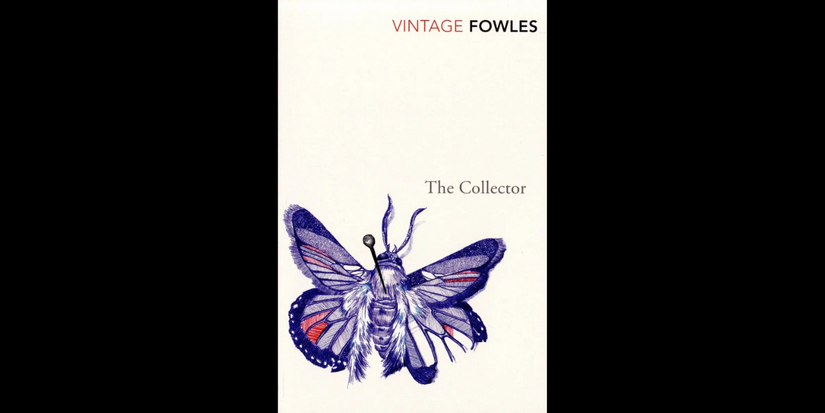
1. The Collector by John Fowles (1963)
John Fowles initiates The Collector inside the deeply troubled, compartmentalized mind of Frederick Clegg. A reclusive, unremarkable clerk, Frederick spends his days cataloging butterflies and watching a young art student named Miranda Grey from his office window. He records her comings and goings with clinical precision, his obsession metastasizing into toxic possessiveness. When she interacts with other men, he seethes with unwarranted jealousy, eventually fantasizing about inflicting physical violence upon her.
And he has still never spoken a single word to her.
Just a few pages—and countless leering, predatory glances—into the narrative, Miranda is already captured in his mental web. Once Frederick abducts Miranda and confines her to a reinforced subterranean basement, Fowles pulls off his most unsettling magic trick: he subjects the reader to Frederick’s warped, chillingly rationalized logic.
From Frederick’s perspective, Miranda is ungrateful, hostile, and utterly refusing to appreciate the "fine hospitality" he has provided. Bizarrely, this framing occasionally renders Frederick sickeningly sympathetic, provoking an instinctual revulsion toward the text that forces readers to question their own psychological stability.
Just as this cognitive dissonance peaks, Fowles shifts the narrative lens to Miranda’s diary entries. The grievances Frederick dismissed as petulant outbursts suddenly crystallize into desperate, terrifying survival tactics. Fowles’s ultimate malice lies in the realization that Frederick never strictly lied about the unfolding events; instead, he omitted, distorted, and reframed reality just enough to make his monstrous worldview sound entirely convincing.

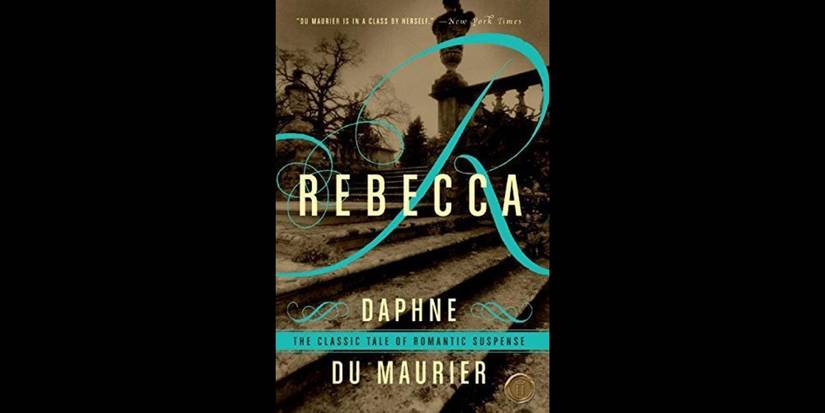
2. Rebecca by Daphne du Maurier (1938)
Daphne du Maurier’s gothic masterpiece opens in a reverie. The unnamed narrator drifts through a nocturnal dreamscape, standing once again at the overgrown wrought-iron gates of Manderley, the magnificent English country estate she once called home. Nature has reclaimed the driveway, swallowing the tarmac, yet the manor itself remains eerily illuminated from within.
It is a devastating illusion. Manderley is nothing more than a burnt-out shell.
The narrator awakens hundreds of miles away, deliberately withholding the dream from her older, brooding husband, Maxim de Winter. Du Maurier exposes the smoking aftermath of the tragedy before introducing the human catalysts responsible, immediately instilling a pervasive sense of dread.
As the narrative loops backward to chronicle the narrator’s precipitous rise to become the second Mrs. de Winter, every innocuous interaction is soaked in foreboding. Then looms the specter of Rebecca, the enigmatic, deceased first wife. Du Maurier denies her narrator a Christian name, granting Rebecca an insidious psychological monopoly over every square inch of Manderley.
The insecure second Mrs. de Winter spends countless hours measuring herself against a ghost she never met, dragging the reader into her vortex of paranoia. Du Maurier achieves the unthinkable: she makes the reader actively resent a murdered woman, relying entirely on the fragile insecurities of an unreliable protagonist. Consequently, when the devastating truth about Rebecca finally detonates, the emotional collateral damage is catastrophic.
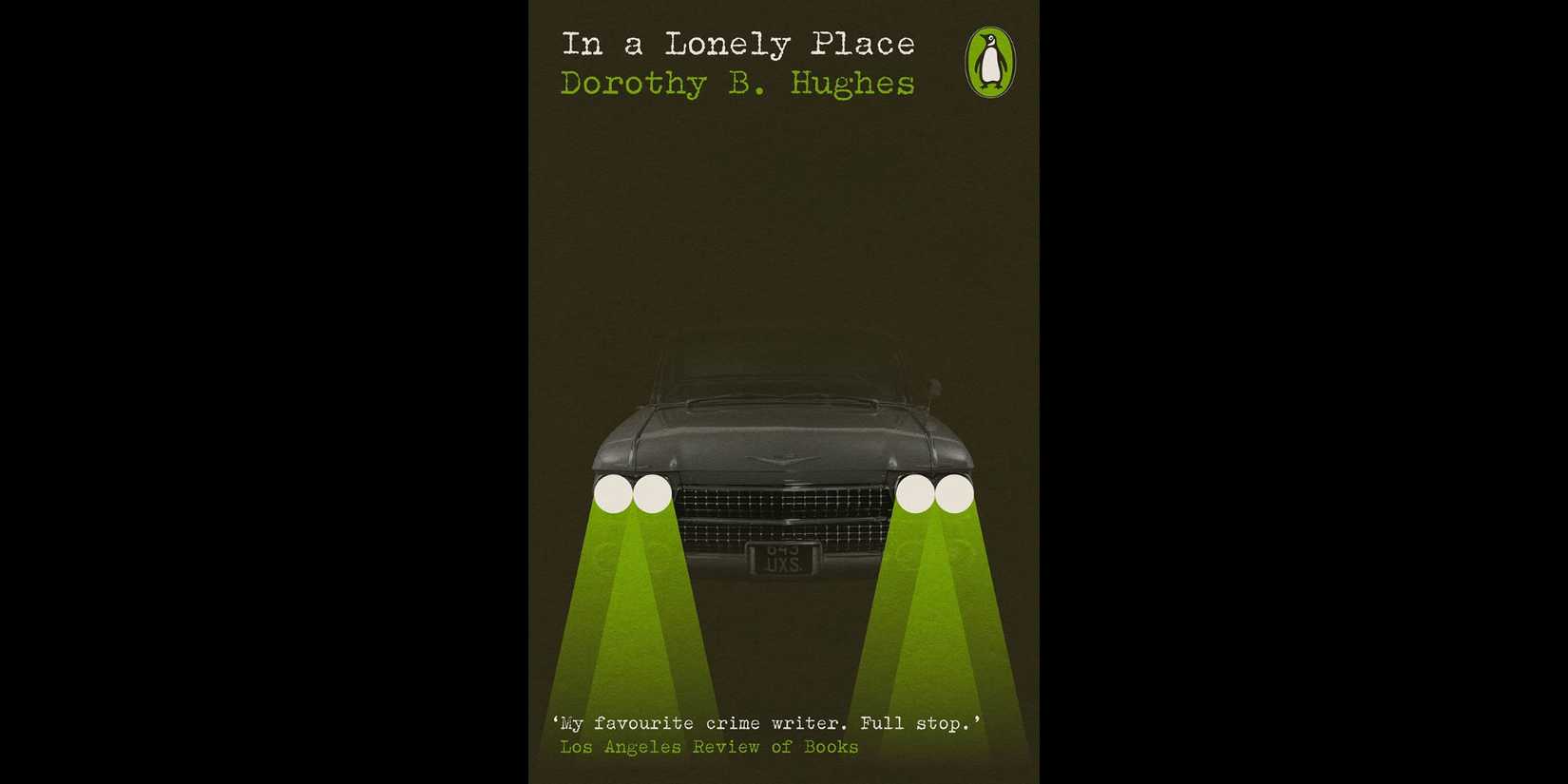
3. In a Lonely Place by Dorothy B. Hughes (1947)
Dixon Steele misses the violent adrenaline of the Second World War. He yearns for nocturnal flights that conferred an intoxicating sense of raw power and absolute freedom—emotions entirely absent from his drab civilian existence. When readers meet Dix in Dorothy B. Hughes’s noir-psychological landmark, he is standing atop a coastal bluff overlooking the Pacific, basking in thick coastal fog that triggers fond memories of navigating heavy cloud cover.
A young woman steps off a municipal bus. Dix observes her, trailing her down an unlit residential corridor. Hearing his heavy footsteps closing in, she quickens her pace.
Dix deliberately slows his stride, thoroughly relishing her mounting terror. When sudden, intrusive headlights shatter his sadistic game, he flies into a blind rage.
Hughes has barely introduced the protagonist, yet every instinct screams at the reader to warn every vulnerable woman in Los Angeles. Hughes compounds this psychological claustrophobia by locking us firmly inside Dix’s fractured consciousness. He blames women for inevitable disappointments, seethes with class resentment toward wealthier men, and flatters himself as an intellectual titan surrounded by intellectual inferiors.
The tension escalates exponentially when Dix reconnects with an old military comrade, Brub Nicolai, who has since joined the police force as a detective investigating a brutal string of serial murders. Dix inserts himself directly into the homicide investigation, developing an arrogant fascination with outsmarting the authorities. Meanwhile, Brub’s perceptive wife, Sylvia, watches Dix with quiet, unyielding suspicion. The central, agonizing irony of Hughes’s novel is sustained through this exact dynamic: we are trapped inside the mind of a deranged killer, yet we remain entirely as blind as Dix to the counter-surveillance net tightening around him.
4. One Deadly Summer by Sebastien Japrisot (1977)
Florimond Montecciari—universally known by his absurd moniker, "Ping-Pong"—opens Sèbastien Japrisot’s labyrinthine French thriller by casually admitting he agreed to commit an unspecified, catastrophic act. What was the nature of this pact? He refuses to clarify.
Instead, he readily confesses to slapping a volatile young woman named Elle and subjecting her to physical abuse on multiple occasions, though he pivots away from accountability to recount how frequently he capitulates to her capricious demands. He drifts into rambling tangents concerning his brother’s fanatical obsession with cycling legend Eddy Merckx, his aging father’s quixotic attempts to earn a living playing a mechanical pianola, and a thousand trivialities completely divorced from his ominous opening confession.
Japrisot deliberately constructs an erratic, unreliable narrator whose thoughts cascade uncontrollably, leaving the reader disoriented and questioning the narrative’s structural integrity. However, once Ping-Pong finishes projecting his warped romantic pathology onto Elle, Japrisot executes a breathtaking structural pivot, granting Elle and other key villagers the floor to speak.
The two-dimensional caricature we initially perceived through the eyes of an obsessed narrator fractures into a deeply complex, tragic human being. As competing memories and buried grievances collide, Japrisot reveals that the entire community has been operating under fatal misconceptions. When the narrative finally loops back to Ping-Pong’s vague opening agreement, the true horror of the circumstances comes into stark, terrifying focus.
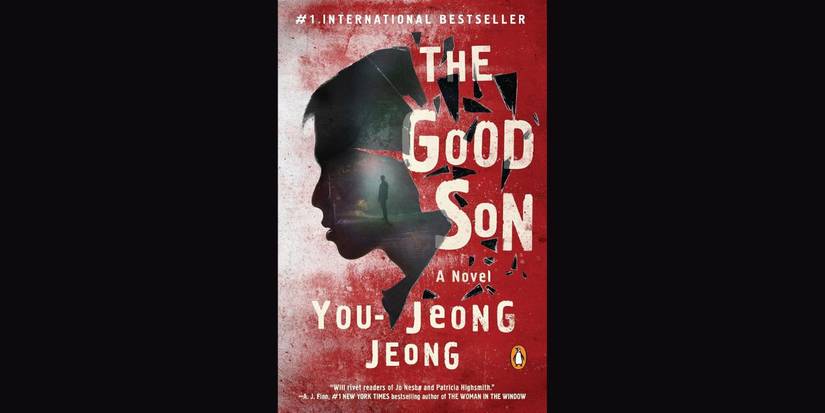
5. The Good Son by You-Jeong Jeong (2016)
The sharp, metallic tang of fresh blood shocks Yu-jin awake. His immediate cognitive reflex is not panic over a homicide, but rather the terrifying realization that he is hurtling toward a major epileptic seizure. He has deliberately stopped taking his anticonvulsant medication. While he acknowledges the profound biological peril of this choice, he is addicted to the sensory enhancement it provides—his hearing sharpens, his thought processes accelerate to blinding speeds, and he feels invincible.
Then, fragmented memories pierce the fog: a frantic dash through torrential midnight rain, and a fleeing girl clutching an umbrella. Little else remains accessible. You-Jeong Jeong traps the reader from chapter one inside the consciousness of an unreliable narrator who cannot account for his own physical movements during the critical window of a murder.
Jeong continuously layers the psychological architecture: Yu-jin’s domineering mother ruthlessly controlled his life, sabotaging his competitive swimming career and infantilizing him well into adulthood. As Yu-jin airs these grievances with chilling articulation, readers find themselves perversely identifying with his resentment. Yet, a creeping sense of unease permeates every paragraph. Because Yu-jin openly admits his memory is compromised, his transparency paradoxically makes him appear more reliable—a masterclass in psychological manipulation.
Jeong forces the audience to hunt for objective reality alongside a narrator who may possess a vested interest in erasing it. As the missing architectural fragments of Yu-jin’s childhood snap into place, the ultimate, terrifying question emerges: Has Yu-jin genuinely forgotten what transpired on that rainy night, or has his subconscious engineered a far more convenient narrative to protect his ego?
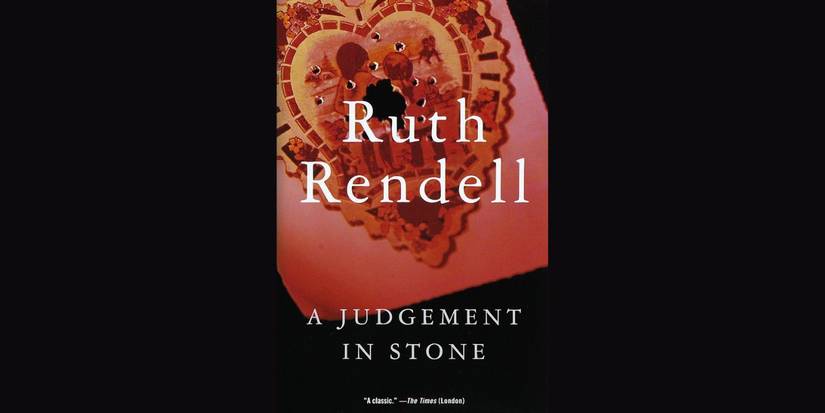
6. A Judgement in Stone by Ruth Rendell (1977)
British suspense icon Ruth Rendell commits an audacious literary taboo in the opening sentence of A Judgement in Stone: She explicitly names the killer of the affluent Coverdale family.
It was Eunice Parchman, their unassuming domestic housekeeper. Furthermore, Rendell reveals the motive instantly—she committed the massacre because she was illiterate.

Without missing a beat, the author proceeds to strip away any residual mystery: the murders secured Eunice zero financial gain, completely exposed the humiliating secret she had successfully guarded her entire life, and permanently destroyed her own future. Rendell even identifies the accomplice and specifies that all four family members were systematically executed within a brutal 15-minute window on Valentine’s Day.
Reading through the opening pages feels counterintuitive; it appears Rendell has completely defused her own novel. Yet, the reader remains instantly, viscously hooked, paralyzed by the paradoxical challenge of understanding how a simple inability to read could logically culminate in a four-person execution.
Rendell spends the remainder of the psychological autopsy dissecting the accumulation of micro-aggressions that formed Eunice’s internal reality. Rather than relying on traditional cinematic clues, Rendell forces us to scrutinize utterly ordinary domestic interactions, highlighting how easily human communication collapses. An innocent, well-meaning question posed by an employer morphs inside Eunice’s brain into a venomous insult; a friendly gesture is processed as calculated condescension.
By allowing the reader to observe both perspectives, Rendell illustrates the tragic chasm of mutual misunderstanding separating the characters. Yet, no single friction point ever feels potent enough to justify mass murder. This unbearable tension sustains the narrative, watching petty resentments accumulate like tectonic pressure plates until they inevitably snap.
7. The Vanishing (Het Spoor achterlaten) by Tim Krabbé (1984)
Rex Hofman and his devoted girlfriend, Saskia, are motoring through the picturesque French countryside when an argument erupts over a mundane metric: the vehicle’s fuel gauge. Saskia is paralyzed by the terror that they will run out of petrol—a legitimate phobia born of a past trauma where Rex abandoned her by the roadside to forage for assistance.
That forgotten roadside abandonment triggered a recurrent childhood nightmare in which Saskia floated endlessly through the cosmos, trapped inside an impenetrable golden egg with zero hope of rescue. Eventually, they reconcile at a bustling motorway service station, and Saskia steps inside the convenience store to purchase refreshments.
Rex waits in the car. And waits.
When he finally ventures inside to locate her, she has vanished completely. No trace, no witness, no ransom note. Tim Krabbé weaponizes an ordinary couple’s petty road-trip squabble, mutating it into an unfathomable psychological abyss within the opening pages.
Years bleed into one another, yet Rex remains psychologically shackled to Saskia’s disappearance. Though he eventually enters a new relationship, his obsession metastasizes; he cannot achieve closure without discovering the truth of her fate.
Krabbé parallels Rex’s descent by introducing Raymond Lemorne, a seemingly respectable French schoolteacher and family man who harbors a chilling, clinical curiosity: Is he intellectually and psychologically capable of committing a flawless, motiveless crime simply to prove that he can?
The novel ultimately converges into a devastating intellectual collision between two men utterly consumed by an unbearable, terminal need to know the unknowable.
Comparative Matrix: Structural Deception in Masterclass Thrillers
| Title & Author | Primary Narrative Trick | Nature of the Unreliable Perspective | Core Psychological Theme |
|---|---|---|---|
| The Collector (John Fowles, 1963) |
Weaponized rationalization of a stalker and abductor. | The kidnapper presents his grotesque crimes as acts of misplaced romance and logical grievance. | The terrifying capacity of the human mind to self-justify absolute evil. |
| Rebecca (Daphne du Maurier, 1938) |
Weaponization of reader insecurity against a ghost. | The protagonist projects her acute social anxieties onto a deceased, idealized figure. | The tyranny of memory and the destructive power of internalized inadequacy. |
| In a Lonely Place (Dorothy B. Hughes, 1947) |
First-person immersion inside a predatory misogynist. | The killer rationalizes his violent impulses while viewing himself as a misunderstood intellectual. | The terrifying cognitive dissonance of living alongside hidden domestic predators. |
| One Deadly Summer (Sébastien Japrisot, 1977) |
Deliberate narrative fragmentation via an erratic narrator. | The primary narrator rambles through trivialities while concealing a foundational pact. | The blinding nature of obsession and the distortion of historical truth. |
| The Good Son (You-Jeong Jeong, 2016) |
Amnesia driven by biochemical indulgence (seizure induction). | The protagonist openly admits his memory is compromised, paradoxically building trust. | The subconscious rewriting of personal history to evade ultimate accountability. |
| A Judgement in Stone (Ruth Rendell, 1977) |
Anticlimactic premise disclosure in the opening sentence. | The narrative dissects the internal, distorted logic of a deeply alienated criminal mind. | The lethal consequences of class alienation and functional illiteracy. |
| The Vanishing (Tim Krabbé, 1984) |
Sudden, motiveless abduction that shatters sequential logic. | Dual perspectives exploring the mechanics of obsession across captor and victim. | The unbearable human intolerance for unresolved ambiguity and missing answers. |
Analytical Implications and Legacy
The enduring brilliance of these seven psychological thrillers lies in their collective rejection of cheap, superficial plot twists. Contemporary thriller writing often relies on structural sleight-of-hand—unreliable narrators who withhold basic physical realities solely to dupe the reader during the final chapter. In stark contrast, masters like Fowles, du Maurier, Hughes, Japrisot, Jeong, Rendell, and Krabbé lay their psychological cards face-up on the table from page one.
The horror does not derive from discovering what happened, but rather understanding why human beings are uniquely wired to misinterpret, rationalize, and normalize catastrophe. By locking readers inside the minds of kidnappers, sociopaths, traumatized partners, and repressed housekeepers, these authors dismantle the comforting illusion of objective reality. They remind us that the most terrifying monster in any narrative is never the shadow lurking in the woods, but the intricate, self-deceiving architecture of the human ego.
