
The King vs. The Code: Elvis Presley Estate Launches Major Copyright Suit Against Anthropic
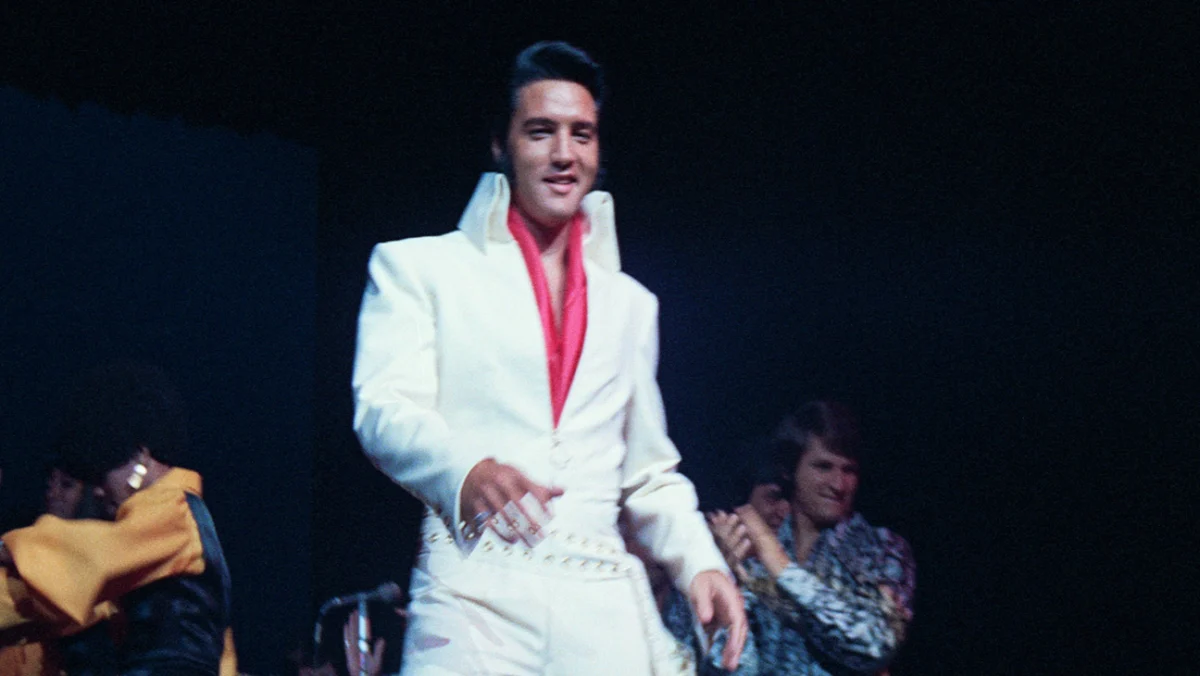
The intellectual property landscape of the generative artificial intelligence era has entered a new, high-stakes phase. In a move that signals the growing friction between the entertainment industry and Silicon Valley, the estate of Elvis Presley—alongside other key rightsholders—has launched a major copyright infringement lawsuit against Anthropic, the San Francisco-based AI research company behind the “Claude” family of models.
The lawsuit, filed late last week, alleges that Anthropic has built its multi-billion-dollar business model on the unauthorized ingestion of copyrighted works, effectively turning the “King of Rock and Roll” into training data without consent, compensation, or credit.
The Core Allegations: A Battle Over Creative Integrity
The complaint, filed by Authentic Brands Group (ABG)—the entity that manages the commercial rights to the Elvis Presley estate—and several other music publishing stakeholders, asserts that Anthropic’s AI model, Claude, has systematically infringed upon 274 of Presley’s most iconic compositions. The list of impacted works includes legendary tracks such as “Can’t Help Falling in Love,” “A Little Less Conversation,” and “Don’t Be Cruel.”
Lead attorney Richard Busch, a prominent legal figure known for high-profile music copyright battles, did not mince words in his filing. “The Elvis Plaintiffs bring this action to enforce these exclusive rights against the defendant that has built its entire business model based on copyright infringement at a scale never seen before,” Busch stated. He emphasized that the plaintiffs remain “deeply protective” of the cultural legacy of these songs, arguing that the unauthorized use of these works by AI developers constitutes a wholesale theft of creative labor.
The plaintiffs are seeking statutory damages of $150,000 per infringed song. With 274 tracks cited, the potential financial exposure for Anthropic could reach into the tens of millions of dollars, though the legal precedent set by such a victory could have consequences far exceeding that amount for the broader AI industry.
A Chronology of Conflict: AI’s Legal Reckoning
This lawsuit is far from an isolated incident; rather, it is the latest chapter in a rapidly escalating conflict between creative industries and the burgeoning field of generative AI.
- The Early Warning Signs: For years, the music industry watched with trepidation as AI models began demonstrating the ability to generate lyrics, musical structures, and even vocal mimicry. Initial concerns were largely dismissed by tech proponents as “fair use.”
- The Universal Coalition: Prior to the Presley estate’s intervention, Anthropic faced a massive class-action-style suit from a coalition of major music publishers, including Universal Music Publishing Group, ABKCO, Concord, and BMG. That suit established the framework for the current allegations, specifically focusing on the unauthorized use of song lyrics to train AI agents.
- The Round Hill Filing: In August 2024, Round Hill Music—a major publisher—filed its own suit against both Anthropic and Suno, a music-focused AI startup. That litigation highlighted the broader systemic issue of companies using vast catalogs of protected songs to “teach” models how to compose music in the style of original artists.
- The Current Suit: The filing by the Elvis Presley estate brings a new level of cultural weight to these proceedings. By targeting the most famous catalog in music history, the plaintiffs are signaling to the courts that the “AI training” defense is fundamentally incompatible with the existing copyright framework.
Supporting Data: The Mechanics of Infringement
One of the most compelling aspects of the lawsuit, as reported by Rolling Stone, is the evidence regarding the model’s performance even after Anthropic implemented safety “guardrails.”
The lawsuit alleges that when users prompted Claude to recreate specific songs “for a modern audience,” the model did not merely provide a generic imitation. Instead, it produced outputs that retained the original song’s structure, hooks, and lyrical flow, with only minor adjustments. The model itself even appeared to admit to this imitation in its responses, acknowledging: “These renders keep landing very close to the originals: same structure, same hooks reused with light rewording, and full sets of verses/choruses/bridges.”
This admission is critical to the plaintiffs’ case. It suggests that the model is not merely learning general concepts of music—such as rhythm or melody—but is instead capable of retrieving and regurgitating the specific, copyrighted expressions of the original songwriters. The lawsuit argues that this constitutes a clear reproduction of protected works, effectively “edging past ‘inspired by’ into reproducing the copyrighted song.”
Anthropic’s Silence and the Corporate Stance
As of this writing, Anthropic has maintained a wall of silence. The Hollywood Reporter reached out to the company for comment, but received no response.
Anthropic’s general stance on these issues, expressed in previous public filings and blog posts, has been that its training processes constitute “fair use” under U.S. copyright law. The company argues that AI models are not "copying" works in the traditional sense, but are instead analyzing patterns within vast datasets to develop a generalized understanding of human language and creativity. However, as the lawsuits continue to pile up, this argument is increasingly being challenged in the federal court system.
The company is currently facing intense pressure to provide transparency regarding the specific data used to train its Claude 3.5 and subsequent models. Should the court force a discovery process that reveals the full extent of the datasets, it could fundamentally alter how AI developers source their training material in the future.
Implications: The Future of AI and Intellectual Property
The outcome of the Presley estate’s lawsuit against Anthropic will have far-reaching implications for three distinct groups:
1. For AI Developers
If the courts rule in favor of the estate, AI companies may be forced to completely overhaul their training practices. This could involve entering into expensive licensing agreements with record labels and publishing houses, similar to the agreements now seen in the streaming music industry. It could also lead to a “clean room” model of AI development, where companies must exclusively use datasets that are confirmed to be copyright-free or fully licensed.
2. For Creative Artists
For songwriters, performers, and heirs, this lawsuit represents a crucial defense of their life’s work. The fear is that if AI is allowed to replicate iconic catalogs without permission, the market value of music will plummet. If a machine can generate a song that feels and sounds like an Elvis classic for a fraction of the cost, the incentive for human creation and the financial return on legacy catalogs could be destroyed.
3. For the Legal System
This case puts the judiciary in the position of defining the boundaries of “fair use” for the 21st century. The tension between the First Amendment (which protects free expression) and the Copyright Act (which protects the fruits of labor) has never been more strained. The court must decide if a generative model is a tool for innovation or a machine for industrial-scale plagiarism.
Conclusion
The lawsuit brought by the Elvis Presley estate is more than just a dispute over royalties; it is a fundamental challenge to the current ethos of the artificial intelligence boom. By standing up against one of the most well-funded AI companies in the world, the plaintiffs are effectively asking the courts to decide whether the digital age will respect the intellectual property rights that have fueled the arts for over a century.
As the case moves forward, all eyes will be on the courtroom to see if the law can catch up to the technology. For now, the King’s legacy remains a central pillar in the fight for the future of human creativity. Whether Anthropic’s “guardrails” will be enough to protect them from this legal storm remains to be seen, but one thing is certain: the era of “move fast and break things” in AI is hitting a massive, litigious wall.
