
The Ultimate Sci-Fi Convergence: Bestselling Author Andy Weir Proposes a Mind-Bending ‘Star Trek’ and ‘Star Wars’ Crossover
Main Facts
For decades, science fiction enthusiasts have passionately debated the hypothetical outcomes of a crossover between two of the most monumental franchises in cinematic history: Star Trek and Star Wars. From discussing whether a Galaxy-class Starfleet vessel could withstand the firepower of an Imperial Star Destroyer to comparing the philosophies of the United Federation of Planets with the autocratic Galactic Empire, fan culture has thrived on these speculative matchups.
Now, bestselling sci-fi author Andy Weir—renowned for hard-science masterpieces such as The Martian and Project Hail Mary—has thrown his hat into the ring. During a recent interview with Inverse, Weir revealed that he has conceptualized a brilliantly absurd yet structurally fascinating fan-fiction crossover between the two universes. Cheekily dubbing his conceptual mashup "Star Star," Weir’s premise relies on a synchronized cataclysm in two distinct timelines: the detonation of the Genesis Device at the conclusion of 1982’s Star Trek II: The Wrath of Khan and the destruction of the first Death Star in 1977’s Star Wars: Episode IV — A New Hope.
According to Weir’s imaginative blueprint, these simultaneous, universe-shaking explosions act as a cosmic catalyst, tearing a hole in the fabric of space-time to form the "Yavin/Mutara wormhole." This bridge permanently alters the canon of both franchises, flinging iconic characters, starships, and supernatural elements across dimensional boundaries and setting the stage for an unprecedented narrative collision.
Chronology and Narrative Mechanics: How the Universes Collide
To understand the mechanics of Weir’s proposed crossover, one must examine the specific timelines and concluding moments of the source material that serve as his narrative launchpads.
The Inciting Incidents
In Star Wars: Episode IV — A New Hope, the climax centers on the Battle of Yavin. Rebel Alliance pilots, led by Luke Skywalker, successfully exploit a thermal exhaust port vulnerability on the Galactic Empire’s moon-sized superweapon, the Death Star. The ensuing explosion obliterates the station, scattering debris and vaporizing imperial forces—including, in Weir’s scenario, nearby ships carrying key figures like Luke Skywalker and Darth Vader.
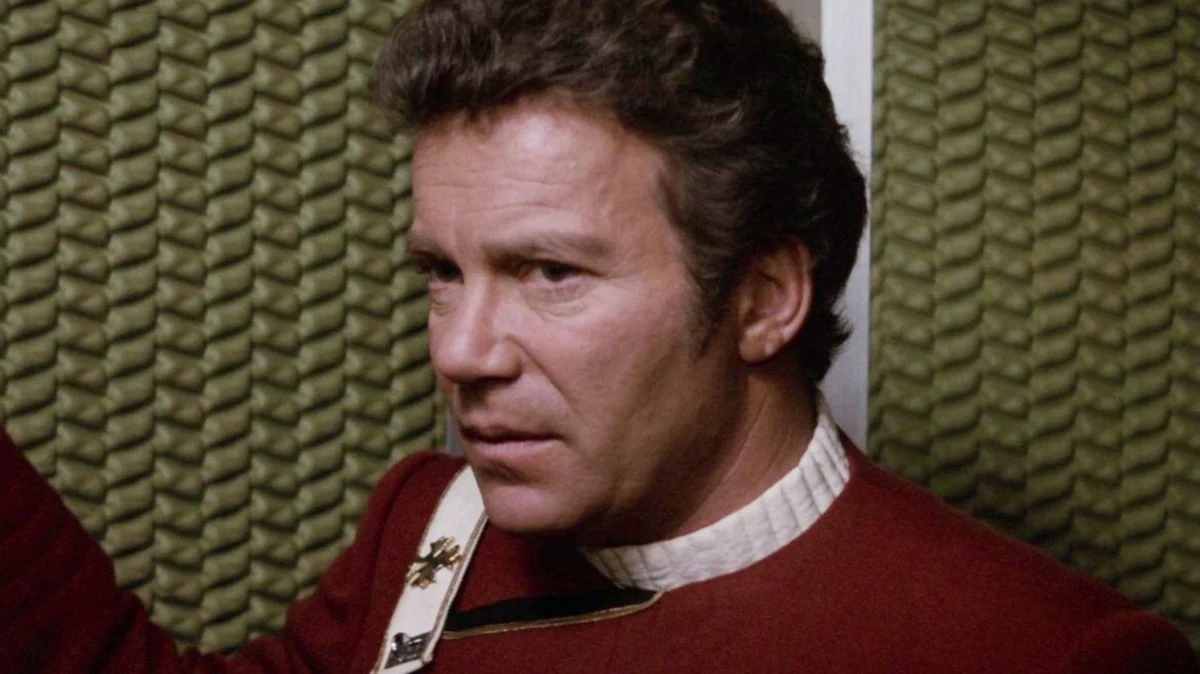
Meanwhile, in the Milky Way galaxy of the 23rd century, Star Trek II: The Wrath of Khan reaches its emotional and scientific peak in the Mutara Nebula. The genetically engineered tyrant Khan Noonien Singh activates the Genesis Device—an experimental terraforming torpedo meant to reorganize matter at a molecular level. To save the USS Enterprise, Captain Spock sacrifices himself by entering a radiation-filled chamber to repair the warp drive, leaving Admiral James T. Kirk and the crew mourning his death just as the Genesis wave triggers an unprecedented spatial anomaly.
The Formation of the Yavin/Mutara Wormhole
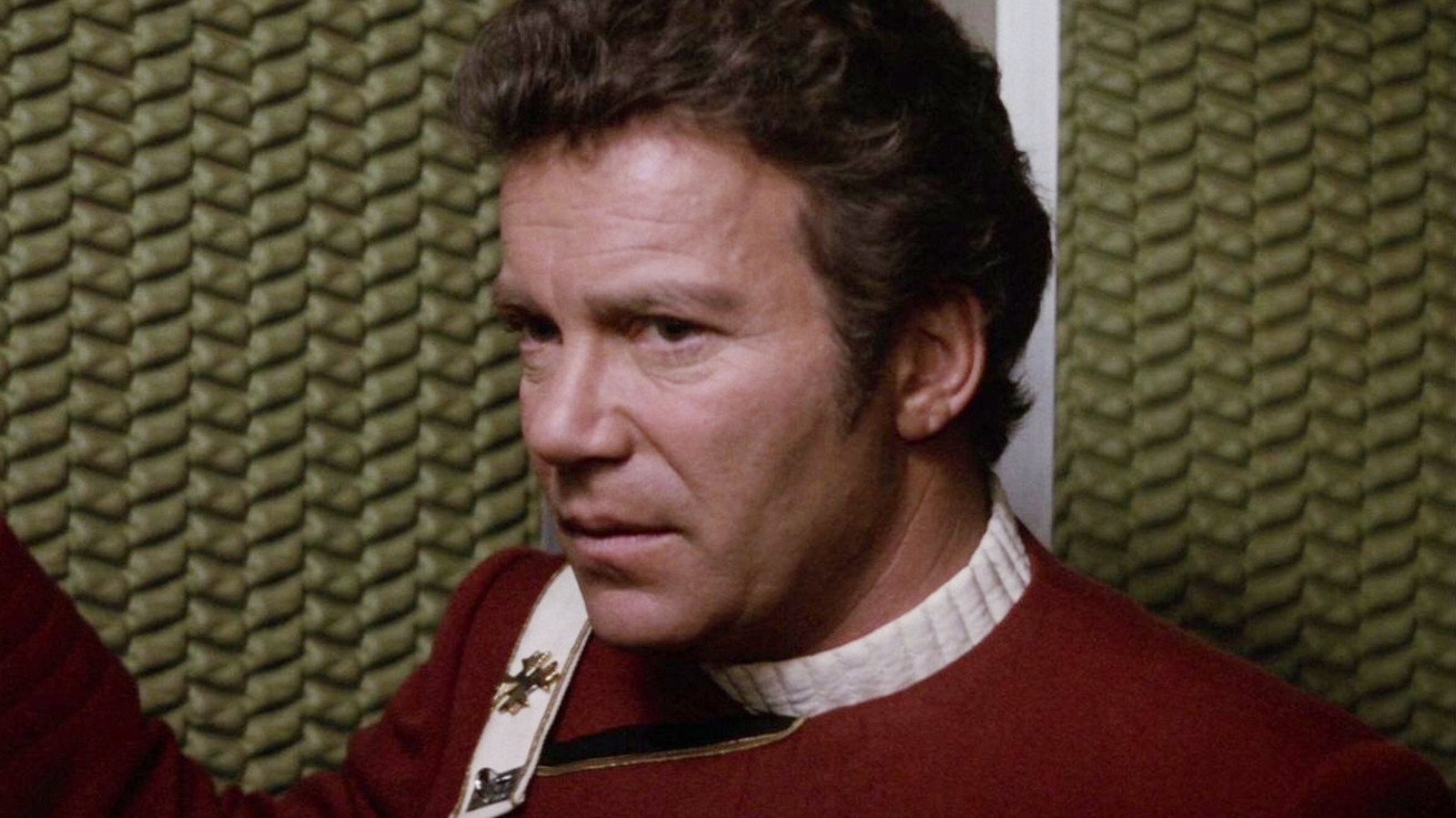
Weir posits that the immense energy output of the Genesis Device, combined with the catastrophic structural failure of the Death Star, creates a mutually induced spatial rupture. This event bridges the gap between George Lucas’s "galaxy far, far away" and Gene Roddenberry’s Milky Way.
Once the wormhole stabilizes, the USS Enterprise investigates the anomaly, crossing over into the Star Wars universe, while characters from the Galactic Civil War are simultaneously pulled into Federation space. From this juncture onward, both official canons diverge completely, paving the way for bizarre narrative permutations that blend hard science fiction with space fantasy.
Supporting Data and Creative Speculation
Weir’s conceptual sandbox does not merely stop at putting two ships in the same sector of space; he dives deep into the character dynamics and metaphysical implications of merging the two universes.
Healing the Sith Lord: Darth Vader Meets Dr. McCoy
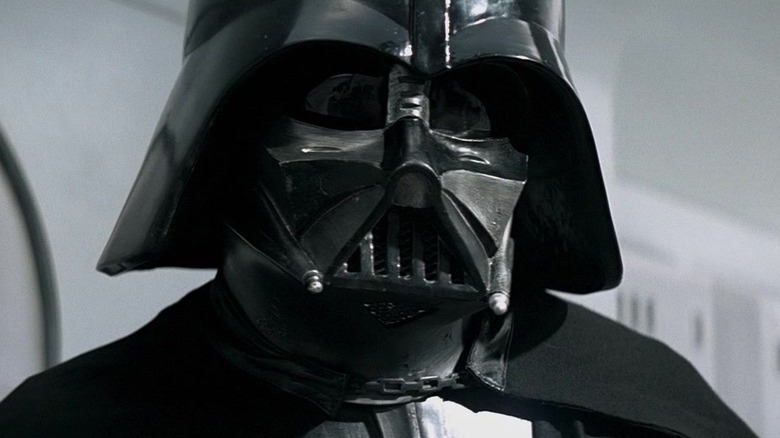
One of the most compelling ideas in Weir’s pitch involves the fate of Darth Vader. In A New Hope, Vader survives the destruction of the Death Star because his TIE Advanced fighter is launched or manages to escape just before the station blows up. However, upon being pulled through the Yavin/Mutara wormhole, Vader and a stranded Luke Skywalker end up interacting with the crew of the USS Enterprise.
In Weir’s universe, this sets up an extraordinary medical and psychological intervention. Darth Vader’s tortured, cybernetically dependent physical form—the result of his catastrophic injuries on Mustafar decades prior—could theoretically be diagnosed and treated by Starfleet’s chief medical officer, Dr. Leonard "Bones" McCoy. Utilizing advanced 23rd-century Federation medical technology, McCoy could potentially heal Vader physically.
Furthermore, Weir suggests that the inherently optimistic, empathetic, and diplomatic ethos of the Star Trek universe could prompt a spiritual healing for the fallen Anakin Skywalker. Stripped of the Emperor’s immediate influence and exposed to Starfleet’s utopian values, Vader might realize the error of his ways far earlier than he did in Return of the Jedi. This would fundamentally alter Luke Skywalker’s journey, as he would discover the truth about his father’s identity in an environment defined by rehabilitation rather than galactic civil war.
Spock as a Force Ghost and Sulu’s Latent Jedi Abilities
Perhaps the most whimsical elements of Weir’s crossover involve the intersection of Vulcan logic and the mystical energy field known as the Force.
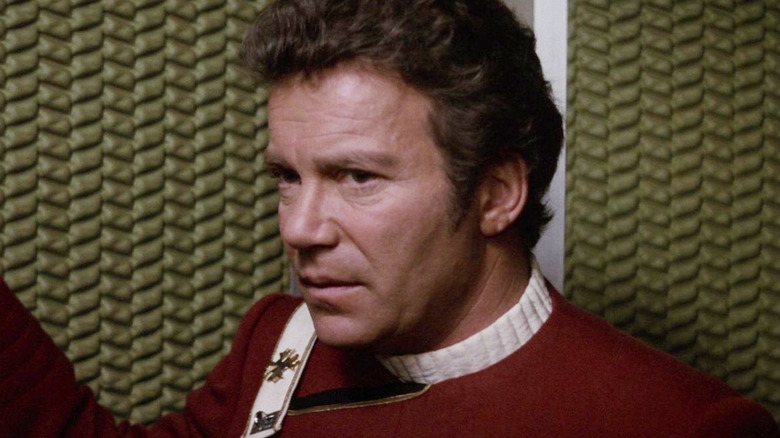
Because the crossover initiates at the exact end of The Wrath of Khan, Science Officer Spock is already deceased following his heroic sacrifice in the warp core. However, Weir points out a hilarious metaphysical loophole: if the USS Enterprise crosses into the Star Wars galaxy—where the Force is a tangible, omnipresent energy field—Spock’s consciousness could transcend physical death in a manner native to that universe. Weir envisions a scenario where Spock returns as a luminous "Force ghost," offering cryptic, logical advice to the crew from beyond the veil.
Even more amusing is Weir’s allocation of Force sensitivity among the living Enterprise crew. He specifically highlights Lieutenant Hikaru Sulu, suggesting that once Sulu enters the Star Wars galaxy, he would discover inherent, latent Jedi abilities that suddenly manifest. While the idea of Sulu wielding a lightsaber or moving objects with his mind is undeniably unorthodox, it underscores the playful, fan-fiction nature of Weir’s thought experiment.
Official Responses and Industry Context
While Andy Weir’s “Star Star” crossover exists purely in the realm of imaginative banter rather than an officially greenlit project, it highlights a broader cultural reality: even A-list science fiction creators remain enthusiastic fans of legacy properties.
Weir, whose literary career took off with self-published phenomenon The Martian before adapting into a Ridley Scott blockbuster, has never hidden his deep affection for classic sci-fi television and film. In previous interviews, the author has openly discussed his fandom for franchises like Doctor Who, frequently integrating that love of intricate plotting and speculative science into his own novels.
Executives at Paramount Pictures (home of Star Trek) and Lucasfilm (home of Star Wars) have not officially responded to Weir’s pitch—nor are they likely to, given the complex corporate barriers separating Disney and Paramount. However, official crossover media between rival mega-franchises have occasionally occurred in comic books and video games through cross-licensing deals. While a cinematic or literary collaboration between Star Trek and Star Wars remains an executive impossibility, fan-driven manifestos like Weir’s keep the dream alive within the global pop-culture consciousness.
Implications for the Science Fiction Genre
Andy Weir’s playful musings touch upon a deeper thematic dichotomy within the science fiction genre itself: the eternal tension between "hard" sci-fi and space fantasy.
Star Trek has traditionally championed a humanistic, scientifically grounded (or at least pseudo-scientifically explained) vision of the future. It relies on warp drives, transporters, and sociological examinations of humanity’s potential. Conversely, Star Wars is fundamentally a mythic space fantasy that borrows tropes from medieval chivalry, Westerns, and Eastern philosophy, anchored by a magical energy field rather than technological advancement.
By proposing a narrative bridge between the Genesis Device and the Death Star, Weir bridges this philosophical divide. He demonstrates how the structural rigidity of Star Trek‘s universe can interface with the spiritual mysticism of Star Wars.
While purists from both fandoms might argue over whether a Vulcan can process the Force or whether a Starfleet phaser can pierce stormtrooper armor, the true value of Weir’s concept lies in its sheer joy. It reminds audiences why they fell in love with speculative fiction in the first place: the boundless freedom to ask, "What if?" Whether or not "Star Star" ever makes it out of Weir’s imagination and onto a page, the idea proves that the boundaries of the cosmos are limited only by the human mind.
