
The "Crackgate" Dilemma: Analyzing the Engineering Behind the iPhone Duo’s Display Failures
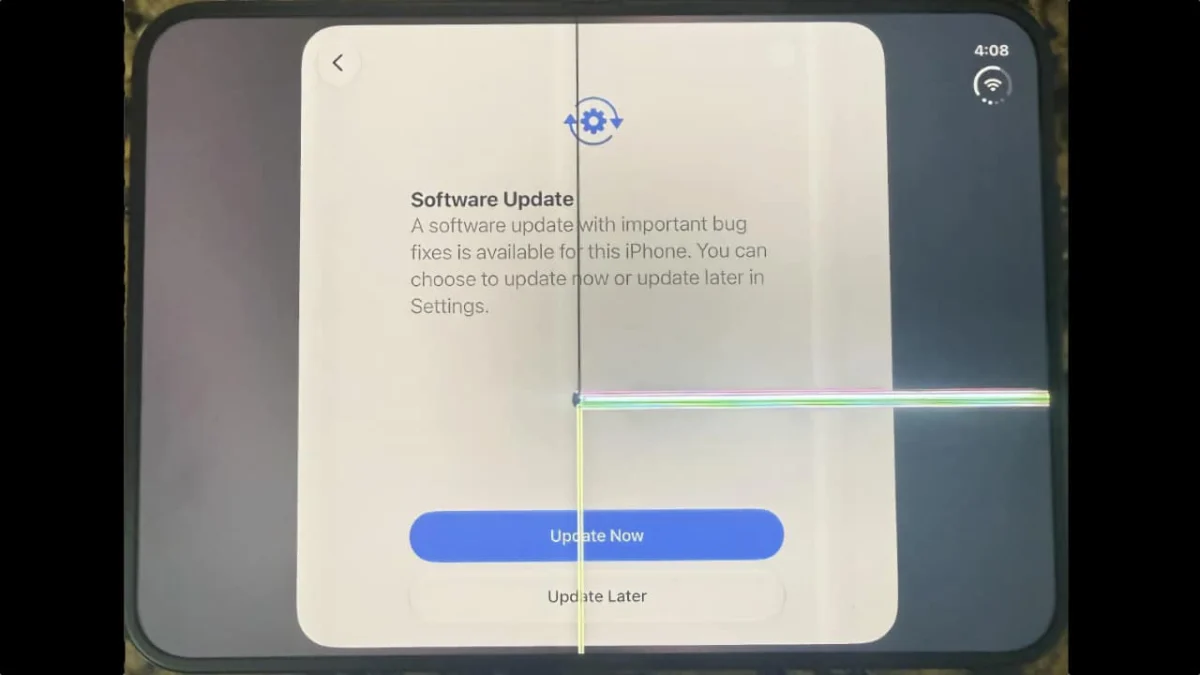
The foldable smartphone market has long been viewed as the "final frontier" of mobile hardware engineering. With the arrival of the iPhone Duo, Apple entered this high-stakes arena with the promise of refined, reliable technology. However, early adopters are now facing a growing crisis: reports of spontaneous screen cracking. As the community dubs this phenomenon "Crackgate," independent repair advocates at iFixit have conducted a deep-dive teardown, uncovering potential mechanical flaws that suggest the very engineering designed to protect the screen may be its undoing.
The Teardown: A Glimpse into Apple’s Foldable Architecture
iFixit recently completed a comprehensive teardown of the iPhone Duo, awarding it a provisional repairability score of 5/10. While a 5 might seem lackluster to the average consumer, in the context of foldable devices—which are notoriously difficult to disassemble without causing permanent damage—this is the highest score ever awarded to a folding handset.
The teardown reveals a sophisticated, albeit fragile, internal ecosystem. Beneath the surface, the iPhone Duo utilizes a matte nano-texture finish on the inner display. This finish is specifically engineered to scatter reflections, a clever strategy designed to visually mask the persistent crease that plagues foldable displays. When researchers removed this layer, the crease became more pronounced, appearing deeper than that of competitors like the Samsung Galaxy Z Fold8.
Under microscopic inspection, iFixit noted that the subpixels on the display are oval-shaped and oriented in unconventional directions. The team cross-referenced this with Apple’s existing patent library, pointing to a specific technology aimed at reducing diffraction artifacts. This suggests that Apple is employing complex optical tricks to maintain visual fidelity across a bending substrate.
The structural heart of the device is the hinge mechanism, a marvel of mechanical synchronization. It features a complex array of metal joints, tension springs, and gears that force the screen to follow a gentle, teardrop-shaped curve when closed. This ensures that the display layers—which must slide against one another to compensate for the radius of the fold—are not placed under undue tension. Despite this engineering, the system appears to have a critical point of failure.
Chronology of a Crisis: From Launch to "Crackgate"
The timeline of the iPhone Duo’s issues began almost immediately following its global release.
- Week 1 (Launch Phase): Initial reviews were largely positive, praising the device’s hinge fluidity and display clarity.
- Week 2 (The First Reports): Early adopters on forums like MacRumors began sharing images of hairline fractures appearing on the inner screen.
- Week 3 (The Pattern Emerges): A pattern became clear: users described hearing a "loud pop" before a visible crack manifested. Most of these breaks followed a consistent trajectory—a vertical line along the fold, intersected by a horizontal stress fracture on the right-hand side, just below the device’s midpoint.
- Week 4 (The Investigation): iFixit began its teardown, utilizing CT scans and 3D modeling to simulate the mechanical stresses exerted by the hinge during the opening and closing cycles.
- Current Status: Apple has remained largely silent regarding an official public statement, though retail stores are reportedly prioritizing full device replacements over modular repairs for affected users.
Supporting Data: Why the Hinge May Be the Culprit
To understand why the screens are failing, iFixit developed a 3D simulation of the iPhone Duo’s hinge mechanism. By integrating data from their physical teardown with Apple’s public patent filings, they modeled the kinetic forces at play during a fold.
The simulation produced a startling hypothesis: the device’s center support bar—a component intended to stabilize the display—may occasionally fail to retract or descend sufficiently during the closing motion. When this bar remains in a raised position while the screen attempts to curve over it, it creates a localized "stress hotspot."
This mechanical interference explains both the location of the cracks and the audible "pop" reported by users. As the screen is forced against a hard, unyielding object, the tension exceeds the structural integrity of the polymer display layers. The horizontal line reported by users aligns perfectly with the path of this center support bar. If this theory holds, the issue is not a result of "user error" or environmental damage, but a systemic flaw in the hinge’s calibration or tolerance levels.
Financial Implications and Repair Costs
The iPhone Duo’s repairability score is bolstered by the fact that the screen’s nano-texture finish is applied to a replaceable polymer cover. Apple has priced the replacement of this outer cover at $49 for standard users, or $19 for those with AppleCare+.
However, the inner display itself remains a massive financial burden. Replacing the primary foldable panel costs $999—an eye-watering sum that represents roughly half the MSRP of a brand-new device. This high cost of entry underscores the inherent risk of early adoption for foldable technology. For consumers, the fear is that the "Crackgate" issue will fall outside of standard warranty coverage, leaving them to choose between a four-figure repair bill or a device that is essentially a high-end paperweight.
Official Responses and Industry Context
Apple has not yet issued a formal press release or a technical bulletin regarding the screen failures. However, reports from Apple Store Geniuses suggest a "hush-hush" strategy of wholesale replacement. By replacing the entire unit rather than attempting a display swap, Apple is effectively preventing its technicians from conducting in-store diagnostics that might leak further information about the failure, while simultaneously keeping customers satisfied through direct hardware swaps.
This silence is reminiscent of previous industry hardware challenges, such as the infamous "Bendgate" of the iPhone 6 or the keyboard issues found in earlier MacBook Pro models. In those instances, Apple eventually acknowledged the manufacturing defects after significant public pressure and legal scrutiny.
The industry at large is watching closely. The iPhone Duo was intended to be the "gold standard" for foldable longevity. If Apple—a company renowned for its obsession with build quality—cannot overcome the physics of a folding display, it raises serious questions about whether the current generation of foldables is truly ready for the mass market. Other high-profile devices, such as the Sony FX5, have previously faced similar launch-window hardware failures, suggesting that even with extensive R&D, the complexity of these devices often hides "unknown unknowns" that only emerge once they reach the hands of millions of users.
Implications: The Future of the Foldable Form Factor
Is the iPhone Duo’s cracking issue a "one-off" manufacturing defect affecting a specific batch of devices, or is it a design flaw inherent to the current hinge architecture?
If iFixit’s hypothesis regarding the center support bar is correct, the solution may require a physical revision of the hinge mechanism. This would be a massive undertaking, potentially requiring a recall or a "silent" hardware revision in future production runs.
For the foldable smartphone industry, "Crackgate" is a sobering reminder that innovation often outpaces reliability. While consumers are clearly enamored with the idea of a phone that unfolds into a tablet, the mechanical reality—the constant flexing of materials, the precision required for internal hinges, and the vulnerability of the display surface—remains a significant engineering hurdle.
As it stands, the iPhone Duo is a masterpiece of design that is currently grappling with a crisis of physics. For prospective buyers, the recommendation is clear: invest in AppleCare+ and monitor the situation closely. For Apple, the next few months will be a test of their commitment to customer satisfaction and their ability to solve a hardware puzzle that has, so far, eluded even the most capable engineers in the industry. Whether this is a growing pain for a new product category or a systemic failure that will define the iPhone Duo, remains to be seen. One thing is certain: the world is watching, and the pressure is on for Apple to provide clarity.
