
The Creative Abyss: Inside the Psychological Horror of ‘The Block’
The horror genre has long served as a mirror for the anxieties of the artistic soul. From the descent into madness depicted in Stanley Kubrick’s The Shining to the visceral manifestations of creative frustration found in Barton Fink, the intersection of the tortured artist and the supernatural has remained a fertile, if treacherous, creative ground. Now, a new project aims to push that trope into the contemporary era.
Production has officially wrapped on The Block, a psychological horror feature that promises to deconstruct the volatile relationship between creator and creation. With an ensemble cast headlined by genre stalwarts and a thematic focus on the pressures of the AI-driven creative landscape, the film is positioning itself as a "philosophical fable" for the modern age.
The Premise: A Spiral of Obsession and Destruction
At the heart of The Block is the story of Mitch James, played by Jack Falahee (Death of a Salesman). James is established as the “golden boy” of the horror world—an artist who has achieved peak industry success. However, that success is soon threatened by the universal nightmare of the creative professional: a debilitating, career-ending case of writer’s block.
As the pressure to produce mounts, James finds himself caught in a tightening web of obsession. The catalyst for his spiral is a fan-turned-girlfriend, played by Saphira Moran (Beast), whose presence in his life quickly shifts from supportive to predatory. According to official synopses, the narrative tracks James as he enters a “mind-bending exploration of the creative process,” ultimately locking himself into a “never-ending doom-cycle of creation and destruction.”
The film seeks to answer a haunting question: What is an artist truly compelled to sacrifice—and whom are they willing to destroy—to secure their legacy?
A Titan of the Genre: The Return of Jackie Earle Haley
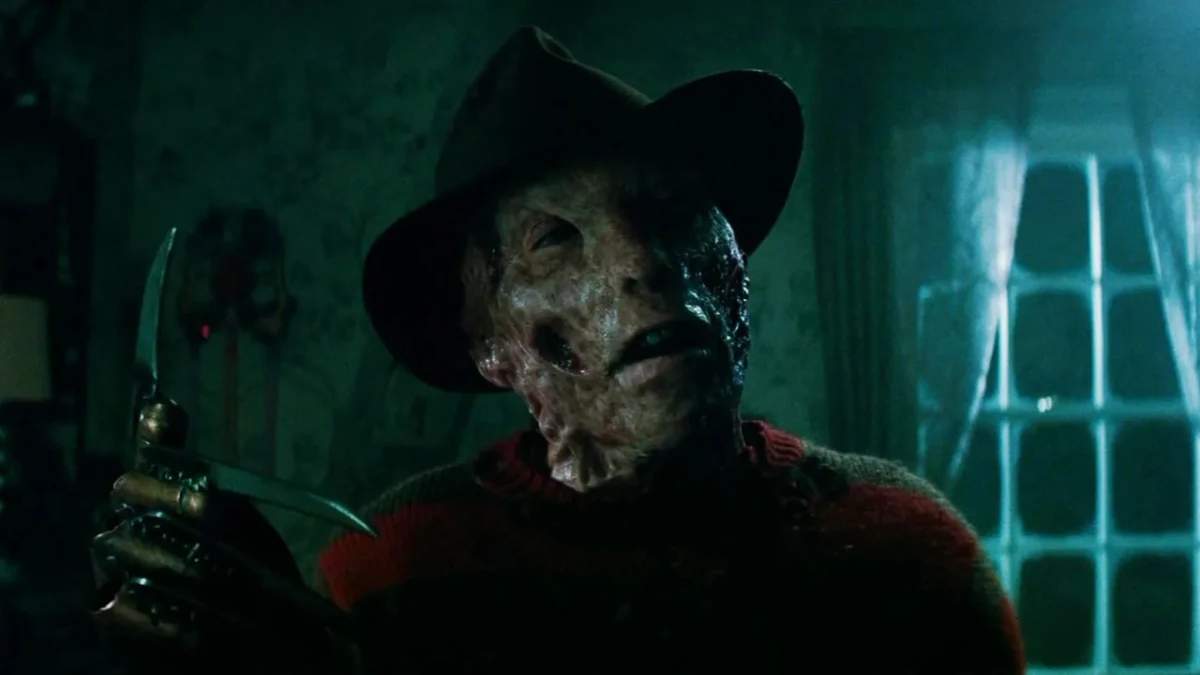
Perhaps the most compelling hook for horror enthusiasts is the involvement of Jackie Earle Haley. While Haley has had a storied career, his tenure as Freddy Krueger in the 2010 A Nightmare on Elm Street remains a point of contention for many genre fans. However, critical reappraisal has frequently pointed to Haley’s performance as the film’s singular bright spot. His portrayal of Krueger was notably darker, more grounded, and genuinely unsettling, serving as a masterclass in sinister restraint that was often overshadowed by the broader flaws of the production.
His involvement in The Block serves as a strong endorsement for the film’s quality. Haley’s presence adds a level of gravitas that suggests the project aims for more than just standard-issue scares; it requires a performer capable of navigating complex, uncomfortable psychological territory.

An Ensemble of Genre Heavyweights
Beyond the leads, The Block boasts a cast that reads like a “Who’s Who” of cult horror and prestige drama. The production has secured an impressive roster of character actors, including:
- Thomas G. Waites: Best known for his chilling work in John Carpenter’s The Thing.
- Catherine Corcoran: A rising star in the independent horror circuit, notably for her work in Terrifier.
- Elias Koteas: A veteran actor with an extensive resume, including the seminal supernatural thriller The Prophecy.
- Armen Garo: Fresh off his appearance in the critically acclaimed Dexter: New Blood.
- Michael Rodrick: A staple of atmospheric dramas like Castle Rock.
- Chris Noth: Providing a recognizable face from prestige television, adding an unexpected layer to the production’s casting.
This confluence of talent suggests that director Craig Singer has prioritized acting caliber, signaling that The Block is intended to be a character-driven study rather than a shallow slasher.
Chronology and Production Context
The road to The Block has been a long one, marked by years of development. Director Craig Singer, previously known for the genre entry 6:45, has stated that the project has been in his mind for a significant amount of time. The script, penned by Robert Dean Klein—the mind behind Dark Ride—underwent several iterations before entering production.
As of late 2026, the film has officially wrapped principal photography and has transitioned into the post-production phase. While the industry is notoriously tight-lipped regarding specific timelines, the completion of filming marks the most significant milestone for the project, as it transitions from the abstract stage to the assembly of the final cut.
The production is a collaborative effort between Singer’s own Cascrator Films and Three777 Films, an alliance that suggests a focused, independent vision that is unlikely to be compromised by studio interference.
Implications: The AI-Driven Creative Landscape
Perhaps the most intriguing aspect of The Block is its self-proclaimed relevance to the year 2026. In an era where Generative AI is capable of producing literature, screenplays, and visual art in seconds, the “creative struggle” has taken on a new, existential dimension.
Director Craig Singer has been vocal about the film’s thematic roots in this specific crisis. In a recent statement, Singer remarked:

“I’ve been developing The Block for many years. The original idea—what an artist is compelled to go through to secure their art and legacy—has always intrigued me and feels even more urgent in 2026. Today’s rapidly evolving, AI-driven creative landscape forces creators at every level to make artistic choices and face challenges on a scale we’ve never seen. The timing couldn’t be more relevant. The Block isn’t about jump scares; it’s a philosophical fable for our times.”
This shift in focus suggests that The Block intends to move away from the traditional tropes of the “mad writer” and into the territory of the “obsolete writer.” If the film successfully captures the anxiety of a human artist competing against an algorithmic void, it may well become a defining piece of media for the mid-2020s.
Philosophical Horror: Moving Beyond the Jump Scare
The current landscape of horror is often dominated by "elevated horror" or high-octane franchise installments. The Block seems to be positioning itself in the former category. By defining the film as a “philosophical fable,” Singer is signaling to his audience that they should expect a slow-burn experience.
The psychological horror sub-genre is notoriously difficult to execute. It requires a delicate balance of pacing, reliable narration, and a payoff that feels earned rather than forced. With the creative team citing the pressures of modern creation as their central conflict, the film is poised to function as an allegory. In this sense, the “writer’s block” is likely not just a narrative obstacle, but a manifestation of the protagonist’s crumbling identity in a world that no longer values the human struggle of creation.
Looking Ahead: The Road to Release
As The Block enters post-production, the industry remains in a state of anticipation. With no official release date announced, speculation is already building regarding potential festival runs or a direct-to-platform debut. Given the pedigree of the cast and the timeliness of the subject matter, the film is a prime candidate for a showcase at major genre festivals like Fantastic Fest or Sitges.
For fans of Jackie Earle Haley and devotees of the “tortured artist” sub-genre, the wait will likely be agonizing. However, the early glimpses provided by the production—featuring a tense, moody aesthetic—suggest that the wait may be worth it.
As we continue to navigate the complexities of the digital age, The Block arrives at a pivotal moment. Whether it serves as a warning, a cathartic release, or a haunting reminder of the cost of art, it is undeniably one of the most intellectually ambitious projects currently in the pipeline. The horror community will be watching closely to see if this “golden boy’s” descent into madness resonates as deeply as the filmmakers intend.
