
Beyond the X-Men: Why Hollywood Should Revisit Theodore Sturgeon’s "More Than Human"
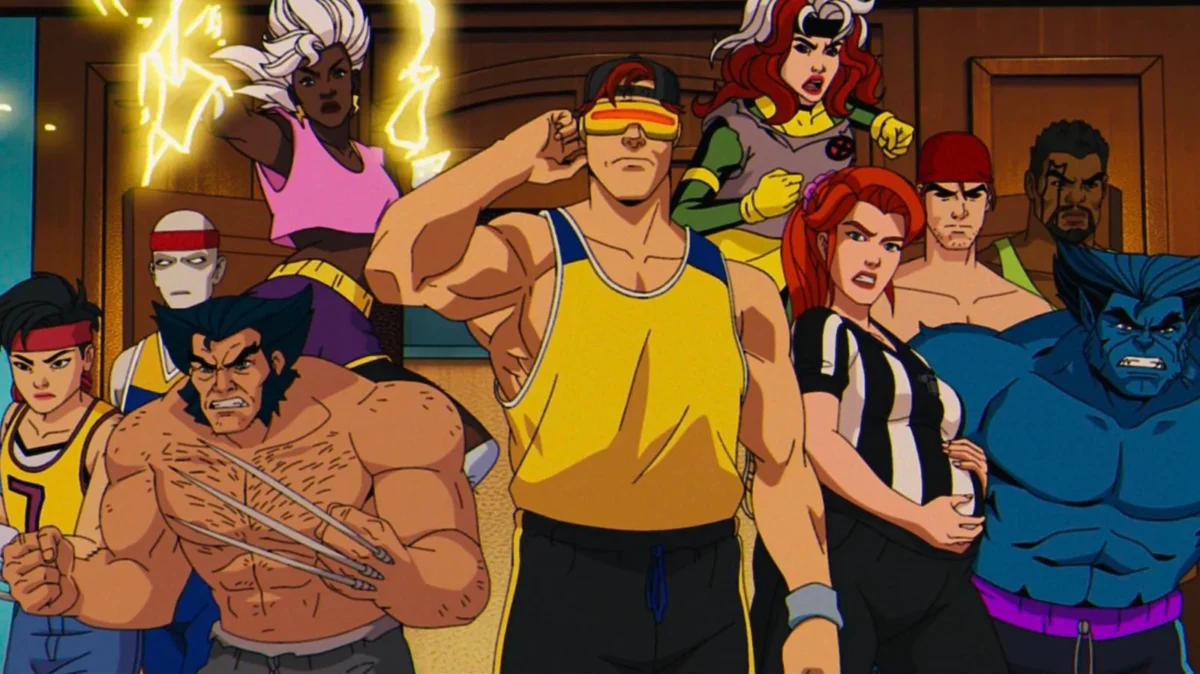
In the vast tapestry of comic book history, the X-Men occupy a singular, towering position. Since their 1963 debut, the mutant team—conceived by Stan Lee and Jack Kirby—has become a cultural monolith, representing the pinnacle of superhero storytelling. Yet, beneath the vibrant spandex and explosive spectacles lies a narrative foundation rooted in the speculative fiction of the post-war era. As the modern film industry continues to cannibalize its own intellectual property, one forgotten literary gem, Theodore Sturgeon’s 1953 novel More Than Human, remains an untapped goldmine that arguably provided the genetic code for the mutant phenomenon.
The Genesis of the Mutant Concept: Fact and Folklore
When Stan Lee introduced the X-Men to the world, he was, by his own admission, struggling with a narrative bottleneck. Developing unique, distinct origins for every new character was becoming an exhausting creative burden. As Lee famously noted in later years, the decision to label his characters "mutants" was born as much from pragmatism as it was from inspiration. By designating them as individuals born with inherent, latent powers, he effectively bypassed the need for complex "super-science" accidents—the radioactive spiders or gamma-ray experiments that defined earlier heroes.
In the world of Marvel, mutants represent the next step in evolutionary biology: Homo superior. This concept was not entirely novel in 1963; it was the culmination of a decade of mid-century anxieties regarding the atomic age and the rapid, often terrifying, acceleration of human technological and biological understanding.
Chronology of the "Evolutionary" Sci-Fi Wave
To understand the lineage of the X-Men, one must look at the literary landscape of the 1950s. The era was obsessed with the idea of humanity being superseded by its own progeny.
- 1930: Olaf Stapledon’s First and Last Men introduces the grand scale of human evolution, setting the stage for speculative biology in literature.
- 1953: Arthur C. Clarke publishes Childhood’s End. The novel depicts a humanity undergoing a forced, transcendent evolution, resulting in a new generation of children with terrifying telekinetic and psychic abilities—a direct precursor to the "Gifted Youngster" trope.
- 1953: Theodore Sturgeon publishes More Than Human. Composed of interconnected stories, it focuses on a small, ostracized group of individuals who, when combined, form a gestalt consciousness.
- 1963: X-Men #1 hits newsstands. The team of five teenagers, led by Professor Charles Xavier, establishes the tropes of the "outsider" superhero, a theme that echoes the social isolation found in Sturgeon’s work.
The Architectural Blueprint: Why "More Than Human" Matters
Theodore Sturgeon was more than just a contemporary of the early comic book pioneers; he was a titan of the science fiction genre. A prolific writer for Star Trek (most notably penning "Amok Time," the episode that introduced the Vulcan salute and the iconic phrase "Live long and prosper"), Sturgeon had a gift for humanizing the alien and the extraordinary.
More Than Human centers on a disparate group of individuals—the "homo gestalt." Each member possesses a unique, often debilitating psychic power. We see a homeless man capable of total psychic control, a traumatized young girl hiding her gifts from a hyper-religious father, and others who have been discarded by a society that fears what it cannot understand.
The thematic parallels to the X-Men are striking. Just as Professor Xavier seeks out "mutants" to protect them from a world that views them as threats, the characters in More Than Human are forced into the shadows, seeking refuge in the woods and forming a surrogate family to survive. While the X-Men eventually adopted the mantle of costumed heroes, the "homo gestalt" serves as the original template for the narrative of the persecuted evolutionist.
Implications for Modern Adaptation
The prospect of adapting More Than Human for the big screen offers a unique, albeit challenging, opportunity. Hollywood has a checkered history with "origin-adjacent" properties. Films like 2017’s Valerian and the City of a Thousand Planets and 2012’s John Carter—both based on seminal works that heavily influenced modern blockbusters like Star Wars—failed to capture the public imagination. Critics often pointed to a lack of originality in these adaptations, as audiences felt they had already seen these concepts executed elsewhere.
However, More Than Human holds a distinct advantage. Unlike the high-fantasy aesthetics of John Carter, Sturgeon’s novel is a grounded, character-driven psychological study. It is not a comic book; it is a piece of speculative literature that predates the "superhero" cinematic template.
The "Period Piece" Solution
To avoid the trap of appearing like a "derivative" X-Men film, a modern adaptation should lean into its 1950s roots. By setting the film in its original era, filmmakers could effectively "re-frame" the narrative, showing the audience that these ideas of telepathy, social ostracization, and evolutionary destiny were brewing in the cultural consciousness long before the X-Men ever donned their yellow-and-blue uniforms.
The Intellectual Property Landscape: Official Responses and Rights
While Marvel Studios has no direct control over Sturgeon’s work, the literary estate of Theodore Sturgeon has long been open to the right creative vision. The complexity of the novel—which deals with heavy themes of morality, the loss of individuality, and the terrifying responsibility of power—requires a director with the gravitas of a Steven Spielberg or an Alex Garland.
Industry analysts have noted that as the "superhero fatigue" narrative continues to gain traction, audiences are becoming more hungry for "prestige sci-fi." The story of More Than Human is not about world-saving lasers or alien invasions; it is about the internal evolution of the human soul. This distinction is precisely what would make it a compelling "experiment" for a studio looking to pivot away from the standard franchise model.
Conclusion: The Case for a New Vision
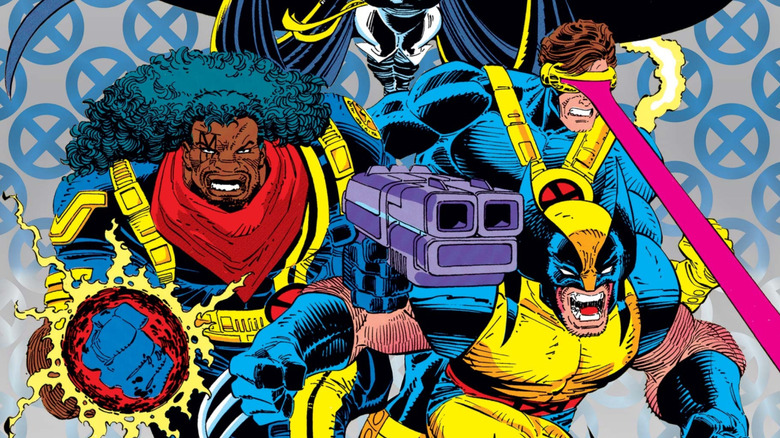
The X-Men have undoubtedly enjoyed an incredible run in the spotlight, but they are a product of their time. More Than Human offers a grittier, more philosophical perspective on the same themes that made the mutants iconic.
By adapting this forgotten classic, Hollywood has the chance to return to the source of the "super-powered outsider" trope and treat it with the maturity it deserves. It would be a cinematic homage to the roots of the genre, an exploration of what it truly means to be "more than human," and perhaps, a necessary step forward for a genre currently in desperate need of evolution. If the industry can manage to capture the eerie, poignant brilliance of Sturgeon’s prose, the result could be a landmark in speculative cinema—a film that doesn’t just mimic the superheroes of the past, but reveals the deeper, more profound truth behind why we love them in the first place.
