
The Dawn of the AI PC: NVIDIA Unveils ‘RTX Spark’ to Redefine Windows Computing
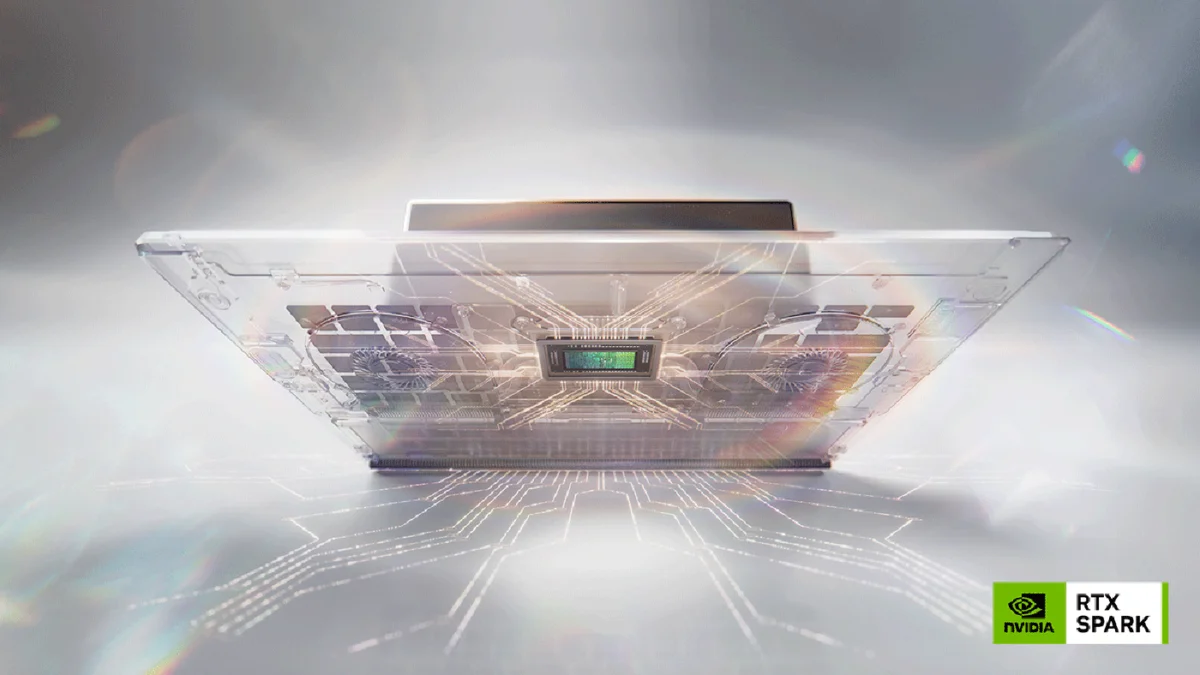
In a move that promises to fundamentally reshape the landscape of personal computing, NVIDIA has officially unveiled its new "RTX Spark" superchip. Designed to serve as the definitive engine for the next generation of Windows-based PCs, the RTX Spark represents a monumental leap in the convergence of AI, gaming, and professional content creation. By marrying the high-performance Blackwell GPU architecture with a robust Grace CPU, NVIDIA is positioning this chip as the primary catalyst for a new era of "on-device intelligence," directly challenging the dominance of Apple’s M-series silicon in the high-end laptop market.
The Architecture of Power: Main Facts
At the heart of the RTX Spark lies a sophisticated heterogeneous computing design. NVIDIA has fused a Blackwell RTX GPU with a 20-core Grace CPU, interconnected via the company’s proprietary NVLink-C2C chip-to-chip interconnect. This architecture is designed to bypass the traditional bottlenecks that plague mobile computing, allowing for massive data throughput between the CPU and GPU.
The GPU itself is a powerhouse, packing 6,144 CUDA cores and fifth-generation Tensor cores that utilize FP4 precision. This configuration allows the chip to achieve a staggering 1 petaflop of AI compute—a figure previously reserved for massive data center racks. With 128GB of unified memory at its disposal, the RTX Spark ensures that memory-intensive tasks, such as training local AI models or rendering high-resolution 3D environments, can be handled locally without relying on cloud-based latency.
A Chronology of Innovation
The journey to the RTX Spark began years ago as NVIDIA shifted its focus from being a "graphics card company" to a "data center and AI company."
- The Foundation: The development began with the success of the Grace Hopper Superchip, which proved that ARM-based CPUs could be paired with powerful GPUs to create unprecedented efficiency.
- The Collaboration: Recognizing that hardware is only as good as the software ecosystem supporting it, NVIDIA began deep-level collaboration with Microsoft. The goal was to optimize the Windows kernel and the Microsoft AI agent framework to take advantage of the massive parallel processing power of the Blackwell architecture.
- The Integration: Over the past eighteen months, NVIDIA worked alongside creative software giants—Adobe, Blackmagic Design, and Blender—to rearchitect their core software engines to tap into the unique unified memory and TensorRT software stack of the RTX Spark.
- The Reveal: Following a period of intense industry speculation, the official unveiling occurred this week, with a clear roadmap set for a consumer rollout in fall 2026.
Supporting Data and Technical Capability
The technical specifications of the RTX Spark are designed to cater to the most demanding creative and technical workflows.
AI Performance and Personal Agents
The 1 petaflop of compute power is the cornerstone of the RTX Spark’s promise. By offloading AI processing to the device, users can run advanced agents like "OpenClaw" or "Hermes Agent" with total privacy. Because these models run entirely on the laptop’s local memory, sensitive personal or professional data never needs to be transmitted to the cloud, addressing one of the primary concerns regarding enterprise adoption of AI.
Professional Creative Workflows
For video professionals, the RTX Spark features a dedicated Blackwell decoder capable of processing 12K 4:2:2 video files. This eliminates the need for expensive proxy workflows, allowing for real-time color grading and timeline scrubbing at full resolution. Furthermore, for 3D designers, the ability to render 90GB scenes using OptiX and DLSS represents a paradigm shift for mobile workstations, which were previously limited to much smaller scene complexity.
Gaming at the Edge
Gamers are not being left behind. The RTX Spark is set to bring DLSS 4.5 Ray Reconstruction to the mobile form factor, utilizing a second-generation transformer model to enhance visual fidelity in real-time. The promise of maintaining over 100 frames per second at 1440p resolution while utilizing full ray tracing on a device that is only 14 millimeters thick is an engineering feat that would have been considered impossible as recently as last year.
Official Responses and Industry Support
The industry response has been overwhelmingly positive, with over 100 software providers pledging support for the platform.
Satya Nadella, chairman and CEO of Microsoft, emphasized the broader vision behind the chip: "Our goal is to deliver unmetered intelligence to every home and every desk with Windows. RTX Spark marks a real breakthrough towards that vision, ensuring that the power of AI is an extension of the user’s intent, rather than a separate, cloud-based tool."
Grant Petty, CEO of Blackmagic Design, highlighted the impact on the creative community: "Portable, lightweight RTX Spark laptops with fantastic battery life are going to help our customers take the next leap in on-the-go production. The ability to perform complex color correction and multi-stream 12K editing on a device that fits in a backpack is going to change how films are made."
Industry titans including ASUS, Dell, HP, Lenovo, Microsoft Surface, and MSI have already committed to the hardware, with Acer and Gigabyte expected to follow shortly after launch.
Implications for the Future of Computing
The introduction of the RTX Spark carries significant implications for the PC industry.
Challenging the M-Series Hegemony
For years, Apple has enjoyed a "performance-per-watt" advantage with its M-series silicon, which has made MacBooks the de-facto standard for mobile creators. The RTX Spark is a direct shot across the bow. By providing a platform that offers comparable or superior AI performance and efficiency on Windows, NVIDIA is giving creative professionals a reason to reconsider their hardware ecosystem.
The Rise of the "Always-On" Agent
The implications for productivity are profound. If a user can run a personalized AI agent that understands their specific workflow—organizing emails, automating repetitive Premiere edits, or summarizing long-form research—the PC stops being a passive tool and becomes an active partner. The security of this "local-first" AI is the differentiator that could drive mass adoption in corporate and government sectors.
A New Standard for Hardware Design
The 2026 launch will usher in a new design language for Windows PCs. Laptops will be precision-machined from aluminum, measuring as thin as 14mm while maintaining high-fidelity, color-accurate tandem OLED displays with G-SYNC. This indicates that NVIDIA is not just selling a chip; they are enforcing a "premium experience" standard for all hardware partners who wish to use the RTX Spark branding.
Conclusion: A Turning Point
While NVIDIA has yet to disclose the final pricing, market analysts suggest that RTX Spark-powered machines will occupy the "ultra-premium" tier of the market. However, the value proposition is clear. For users whose livelihood depends on the speed of their render times, the quality of their gaming experiences, or the intelligence of their software agents, the cost of entry will be secondary to the efficiency gains.
As we approach the fall 2026 launch, the tech world will be watching closely to see if the hardware can truly match the ambitious performance metrics NVIDIA has promised. If it does, the RTX Spark will not just be another chip in the market; it will be the defining component of the next decade of personal computing, cementing the role of the Windows PC as the most versatile, powerful, and intelligent tool on the planet.
