
Breaking the Silence: Ania Winiarska’s "Good Girls" Exposes the Failures of a Punitive System
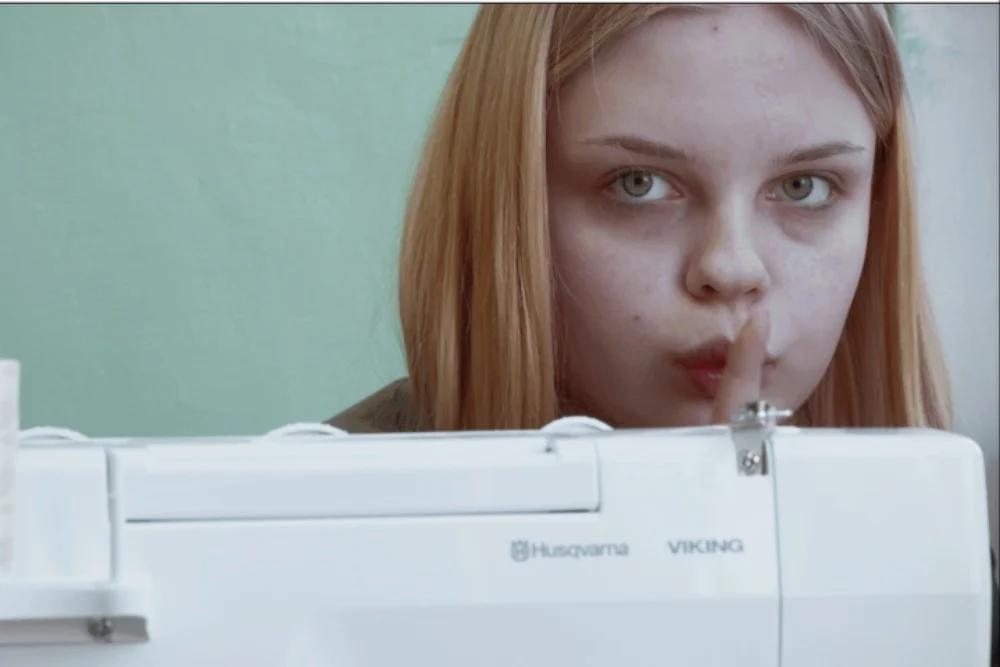
Director Ania Winiarska’s latest documentary, Good Girls, is more than a film; it is a piercing indictment of a society that chooses to cage its youth rather than nurture them. Premiering at the prestigious Ji.hlava International Documentary Film Festival, the film provides a rare, unflinching look into the life of a Polish correctional center for teenage girls. Through Winiarska’s lens, viewers are confronted with the jarring reality of young women who have been discarded by their families, their schools, and the state, only to be processed through an outdated, pseudo-correctional apparatus that emphasizes discipline over rehabilitation.
The Genesis of a Challenging Production
The path to Good Girls was fraught with professional and personal hurdles. Winiarska, a Polish director now based in Sweden, found herself in a position she had never occupied before: she was an outsider unable to gain the trust of her subjects. Having previously focused her camera on male narratives, Winiarska admits she was unprepared for the complex, internalized shame she encountered among the girls.
"After six months, I felt like I’d hit a wall," Winiarska told Variety. "It was always very natural for me to gain people’s trust, but my previous films were about boys or men. This one was about teenage girls, and even though I’m a woman, I didn’t realize how much shame they carry."
The struggle to bridge the gap between her presence as a filmmaker and the girls’ perception of her as an authority figure took two grueling years. Within the walls of the institution, the girls were accustomed to strict surveillance and a rigid hierarchy. Initially, they saw Winiarska as just another adult in the system—a component of the very machine that punished them for skipping school, drinking, or dating. It was only through persistence and a radical commitment to transparency that the dynamic shifted. Once they realized she was not a "snitch," the doors finally opened.
A Chronology of Institutional Stagnation
The correctional center featured in the documentary acts as a microcosm for a broader, systemic failure. Despite the rapid pace of 21st-century social development, the institution remains anchored in the practices of the past. Winiarska describes a world that feels as if it has been frozen in time for decades.
The Institutional Routine
- Initial Entry: Girls are processed through the center, often for "offenses" that appear minor—truancy, substance use, or behavioral issues that stem from home instability.
- The "Good Girl" Standard: The center operates on an archaic model of morality. Girls are taught outdated domestic skills, such as sewing and cooking, aimed at cultivating "quiet and obedient" behavior.
- The Two-Year Build: Winiarska spent 24 months earning the trust of the residents before the cameras could capture their authentic lives.
- The Reality of Release: Upon turning 18, the girls are released with little more than a nominal sum of money, leaving them ill-equipped to navigate a world that has largely forgotten them.
Winiarska’s observation of the facility reveals a disturbing lack of modern pedagogical or psychological support. "Rather than trying to catch up with the 21st century, the girls are taught how to cook and sew," she notes, highlighting the disparity between the girls’ actual mental health needs and the facility’s focus on manual labor and compliance.
Supporting Data and Personal Narratives
The most harrowing aspect of Good Girls is the revelation that many of the residents do not belong in a correctional facility at all. Winiarska’s documentation reveals a pattern where mental health crises are frequently mislabeled as delinquency.
She shares the story of one resident, a girl suffering from untreated clinical depression. When her mother—herself struggling with similar, unaddressed issues—was unable to provide care, the state intervened not with a doctor, but with the police. "She was lying in bed for three weeks and her mom, who has similar issues, couldn’t help her," Winiarska recounts. "Neither did her school. Instead, the police came and handcuffed her in her pyjamas."
This account serves as a primary piece of evidence for the film’s central argument: that the facility serves as a dumping ground for families and social services that are either unwilling or unable to manage the complexities of modern youth development. The staff, as Winiarska notes, are not trained as psychologists. They are custodial figures, often well-meaning but fundamentally unequipped to address the trauma, neglect, and mental health challenges that define the lives of the girls they oversee.
Official Responses and Systemic Implications
While the documentary shines a light on the specific failures of the Polish system, the implications are global. Winiarska’s film interrogates the very definition of a "good girl" in contemporary society. In many conservative frameworks, including the one prevalent in Poland, a "good girl" is defined by her silence and her adherence to tradition. When a young woman deviates from this, she is deemed a failure of the system and punished.
The irony, as Winiarska observes, is that the center can sometimes provide a twisted form of safety. For girls coming from abusive, neglectful, or chaotic homes, the facility offers a level of stability—regular meals and a structured environment—that their own families could not provide. Yet, this "safety" comes at the cost of their agency and their future.
"Many of them come from neglectful backgrounds and have experienced all sorts of abuse," Winiarska says. "At least over there they have regular meals, they go to school, and if they feel bad, there’s someone to talk to. They didn’t have that at home."
However, this is a "vicious circle." By locking up young people for developmental struggles, the state ensures that they leave the facility with even fewer resources than they entered with. They are taught to follow orders, not to think critically or build a career, leaving them susceptible to repeating the cycles of poverty, substance abuse, and trauma.
The Human Cost: A Call for Reform
The documentary captures the girls at a critical juncture: between the ages of 10 and 18. Winiarska, who is a mother herself, admits the weight of this responsibility is immense. "My daughter is 10. It’s scary to think about," she confesses.
The film serves as a testament to the resilience of its subjects. Despite the systemic barriers and the "big black hole" of despair that threatens to swallow them, the girls remain "strong" and "funny." They possess a vitality that the institution works hard to suppress. The film’s ultimate goal is to force a reckoning with the lack of sex education, the stigma surrounding mental health, and the refusal of society to engage with the realities of modern adolescence.
As Good Girls makes its festival rounds, the conversation it invites is urgent. Can we continue to allow a system to exist that punishes vulnerability? Is it acceptable to treat depression with handcuffs and obedience training?
"If this film could change something in our society, it would be so wonderful," Winiarska concludes. Her work is a plea for empathy—a reminder that these girls are not the "bad" youth the system claims they are, but rather the victims of a society that has forgotten how to care for its most vulnerable members. By bringing their stories to the screen, Winiarska has not only exposed a broken system; she has given a voice to those whom the system has worked so hard to silence.
The international rights for Good Girls are currently being managed by Stranger Film Sales, and the project is backed by a coalition of European producers, including Story, Film i Väst, and Tekele Productions, signaling a broad interest in the film’s message across borders. As it continues to screen, the film stands as a mirror to our own collective conscience, daring us to ask: What do we owe our children, and are we currently failing them?
