Disney’s High-Stakes Gamble: How “Avengers Endgame: Encore” and “Infinity Vision” Are Rewriting the Rules of the Box Office
Introduction: A Nostalgic Re-Release with a Modern Strategic Purpose
When Walt Disney Studios looked at the weekend box office tallies, executives undoubtedly smiled at the $26 million haul that captured the No. 1 spot in America. What made the feat remarkable was not just the figure itself, but the film generating it: Avengers: Endgame — Encore, a special theatrical re-release of a blockbuster that originally premiered seven years ago.
Yet, for the masterminds behind Disney’s domestic and international distribution strategies, the headline-grabbing $26 million total is secondary to a much more specific, highly scrutinized sub-metric: $13.5 million. That is the exact amount Endgame: Encore generated strictly on "InfinityVision" screens.
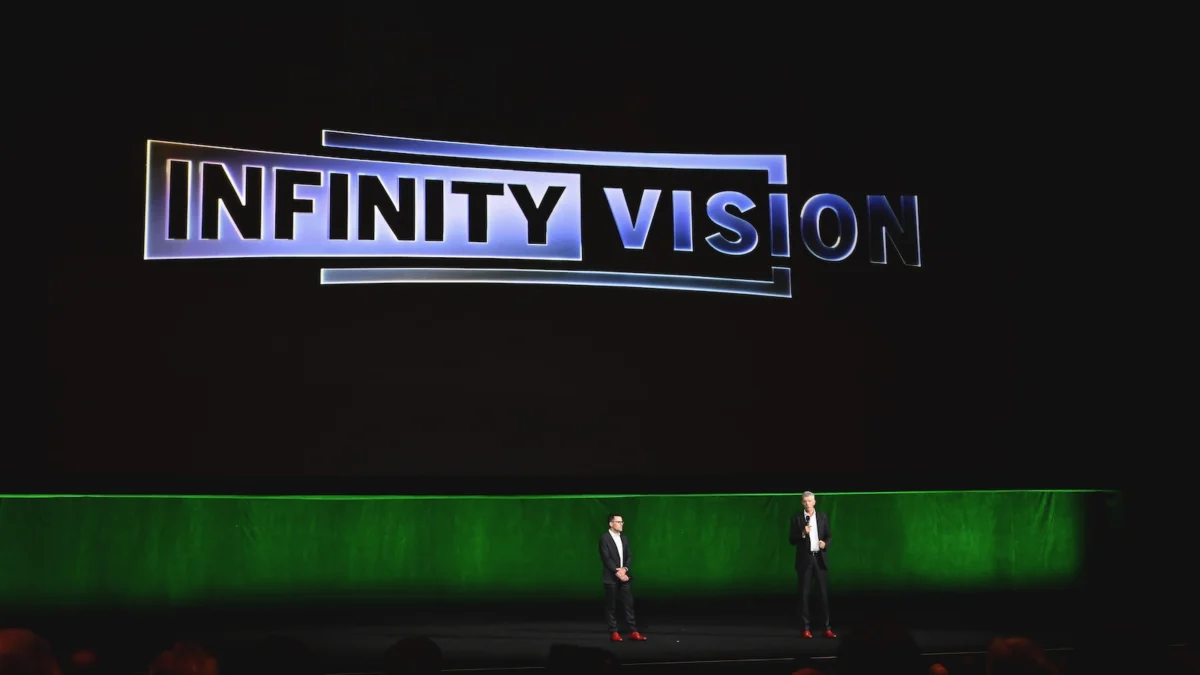
To casual moviegoers, the term might sound like just another marketing buzzword dreamed up by studio publicists. In reality, Infinity Vision represents a calculated, high-stakes infrastructure play by Disney. It is an attempt to solve a massive logistical bottleneck, reshape how audiences choose their showtimes, and establish a proprietary gold standard for theatrical presentation—all while locked in a high-profile holiday scheduling war with Warner Bros. and Denis Villeneuve’s Dune: Part Three.
With the massive rollout of Avengers: Doomsday looming on December 18, Disney is using a seven-year-old movie as a dry run to ensure its new branding sticks, its theater partnerships hold strong, and its core fanbase embraces the future of premium cinematic exhibition.
The Genesis of Infinity Vision: Solving the IMAX Dilemma
To understand why Disney engineered the Infinity Vision initiative, one must look at the congested theatrical landscape of late 2026.
When Disney first began mapping out the release calendar for Avengers: Doomsday, the studio hit a major roadblock: the most lucrative premium real estate in the industry—IMAX screens—was entirely unavailable. Those coveted, massive screens were already claimed by Warner Bros. for Dune: Part Three, which opens on the exact same day, December 18. Because Dune: Part Three was filmed natively using IMAX cameras, Denis Villeneuve’s sci-fi epic secured the traditional format dibs, leaving the Marvel Cinematic Universe’s newest superhero extravaganza locked out of the format that usually serves as its primary box office cash cow.
Facing a landscape where its crown jewel could not rely on IMAX, Disney had to improvise. Rather than quietly conceding premium screen dominance to its competitors, the studio decided to invent its own category.
Disney introduced "Infinity Vision" not as a new physical film format, nor as a specific technological projection standard like IMAX or Dolby Cinema, but as a curation and branding initiative. It is a seal of approval bestowed by Disney upon existing theater screens that the studio has vetted and deemed up to its rigorous internal audio and visual specifications.
The underlying goal is simple yet ambitious: Disney wants to convince moviegoers that Infinity Vision is an elite, event-level way to experience a film, proving that it is not "less than" IMAX, even if industry purists might argue otherwise. By priming audiences to actively seek out the Infinity Vision logo when purchasing tickets, Disney hopes to mitigate the absence of IMAX screens for Doomsday and retain its ironclad grip on the premium box office.
Chronology of the Rollout: From Concept to the Endgame: Encore Test
The journey toward establishing Infinity Vision as a recognizable brand has moved at a breakneck pace since it was first teased earlier this year at CinemaCon 2026.
Phase One: Announcement and Pre-Sales
Following its initial unveiling, Disney immediately integrated Infinity Vision into the pre-sale infrastructure for Avengers: Doomsday. In an aggressive move to drive early adoption, the studio made Infinity Vision-designated tickets available for pre-sale before standard tickets went live. This strategic window gave core fans—those eager to snap up seats the moment they become available—a direct incentive to select higher-quality, studio-vetted auditoriums.
The gamble paid off immediately. Reports surfaced that a staggering 73 percent of Doomsday’s initial $50 million in pre-sales were booked on Infinity Vision screens, signaling that hardcore Marvel fans were willing to prioritize the newly branded auditoriums.
Phase Two: The Endgame: Encore Real-World Stress Test
To test the consumer appetite and operational readiness of the branding in a live theatrical environment, Disney greenlit the nationwide re-release of Avengers: Endgame — Encore.
Opening on more than 3,000 screens nationwide over the weekend, the re-release featured 1,300 screens that had been officially certified up to Infinity Vision standards. This setup provided Disney with a controlled, real-world laboratory to observe how moviegoers interacted with the new branding at the box office, on ticketing websites, and inside local multiplexes.
Supporting Data: Breaking Down the Numbers
The box office data from the Endgame: Encore weekend has provided Disney executives with plenty of analytical ammunition to justify the rollout.
Total Gross: $26 million (No. 1 at the domestic box office).
Infinity Vision Gross: $13.5 million.
Screen Share vs. Revenue Share:Endgame: Encore played on roughly 3,000 total screens, with 1,300 of those (about 43 percent) certified as Infinity Vision. Remarkably, those 43 percent of screens generated $13.5 million, accounting for 52 percent of the film’s total domestic box office.
While some industry observers might view a roughly even split—just over half the money coming from slightly less than half the screens—as an expected outcome for premium-designated auditoriums, Disney views these figures as a resounding success. The numbers prove that consumers actively noticed the Infinity Vision designation next to showtimes on digital ticketing platforms and consciously chose those screenings over standard alternatives.
Furthermore, the data suggests that the ceiling for Avengers: Doomsday could be even higher. Because Endgame: Encore actually shared a handful of IMAX screens that will be entirely blocked off from Doomsday in December, the potential percentage of box office revenue funneled into Infinity Vision screens for the new sequel could eclipse the 52 percent benchmark set over the weekend.
Official Responses and Industry Perspectives
Disney’s leadership is well aware that launching a brand-new consumer-facing exhibition standard is an uphill battle that requires patience, education, and deep collaboration with theater owners.
Andrew Cripps, Disney’s Head of Theatrical Distribution, spoke candidly with IndieWire about the strategy, the hurdles, and the long-term vision behind the initiative.
"I think we’re all going to learn more about this," Cripps told IndieWire. "This is the first time out for Infinity Vision. We have marketed it, and we’ve had our exhibitor partners very engaged with this. If you go on the ticketing websites, there’s Infinity Vision banners on them. We’ve set up an Infinity Vision website with frequently asked questions so people can understand. But as you know, it takes a while to launch a brand and a new concept. So hopefully over time, people will become familiar with it and seek out Infinity Vision theaters."
The exhibitor response has been notably proactive. In exchange for early access to pre-sale tickets and the marketing push, major theater chains are actively working to upgrade their facilities to meet Disney’s criteria. Cripps highlighted that at least two major circuits are currently making aggressive pushes to get their auditoriums certified. This includes several prominent Cinemark locations in Latin America that are upgrading their sound systems to Dolby 7.1 audio specifications specifically to meet Infinity Vision standards.
Crucially, Disney has structured Infinity Vision to be flexible and non-punitive for theater owners and consumers alike. Many of the screens designated as Infinity Vision do not carry an automatic consumer upcharge. Disney does not dictate pricing; any added cost is entirely up to the individual exhibitor, applying only if the theater already classified the auditorium as one of its existing Premium Large Format (PLF) spaces.
Moreover, Cripps was quick to dispel notions that Infinity Vision is an anti-IMAX crusade. Several major Disney releases slated for next year have already secured confirmed IMAX dates. Instead, Infinity Vision is designed as a quality-assurance baseline.
"We want those first audiences to see it in the best possible environment, and the fact that they’re snapping up the biggest and best screens is a very positive thing," Cripps noted.
Implications: What Infinity Vision Means for the Future of Cinema
As the industry looks toward the monumental December release of Avengers: Doomsday, the implications of the Infinity Vision experiment stretch far beyond a single studio or franchise.
1. Shifting Power Dynamics in Exhibition
For decades, IMAX and traditional PLF brands have held a near-monopoly on high-end theatrical prestige. By creating its own curated standard, Disney is attempting to exert direct influence over the physical conditions in which its films are projected. If exhibitors find that Infinity Vision branding directly correlates with higher pre-sales and stronger weekend grosses, theaters will have a powerful economic incentive to continually upgrade their projection and sound infrastructure to appease Hollywood’s biggest studio.
2. A Blueprint for Other Studios
While Infinity Vision is currently tethered to Disney properties—beginning with Endgame: Encore and culminating in Avengers: Doomsday—the broader industry is watching closely. If the branding proves effective at driving audiences to specific auditoriums without requiring costly new proprietary hardware formats, competing studios may look to adopt similar quality-assurance curation models for their own tentpole releases.
3. Evolving Long-Term Expectations
Disney is deliberately playing a long game. The studio views the current rollout as an educational phase for the moviegoing public. As Cripps noted, long-term expectations are still evolving, and the studio plans to conduct deep-dive analyses across global markets alongside its exhibitor partners once the holiday dust settles.
Conclusion: The Ultimate Test Awaits in December
The success of Avengers: Endgame — Encore over the weekend proved that audiences still harbor an immense appetite for theatrical re-releases, provided the framing feels like an event. But more importantly, it proved that the Infinity Vision brand can successfully capture consumer attention, driving more than half of the film’s revenue from less than half of its screens.
As the calendar ticks down to December 18, the real test of Disney’s new cinematic ecosystem is fast approaching. When Avengers: Doomsday arrives without the safety net of IMAX screens, it will step into the ring backed by millions of pre-sold tickets and an unproven, newly minted standard. If the audience response to Endgame: Encore is any indication, Disney’s gamble on Infinity Vision might just redefine how Hollywood sells the theatrical experience for years to come.