
Full Steam Ahead: ‘Train to Busan’ Returns for Its 10th Anniversary with a Definitive 4K UHD and Blu-ray Box Set
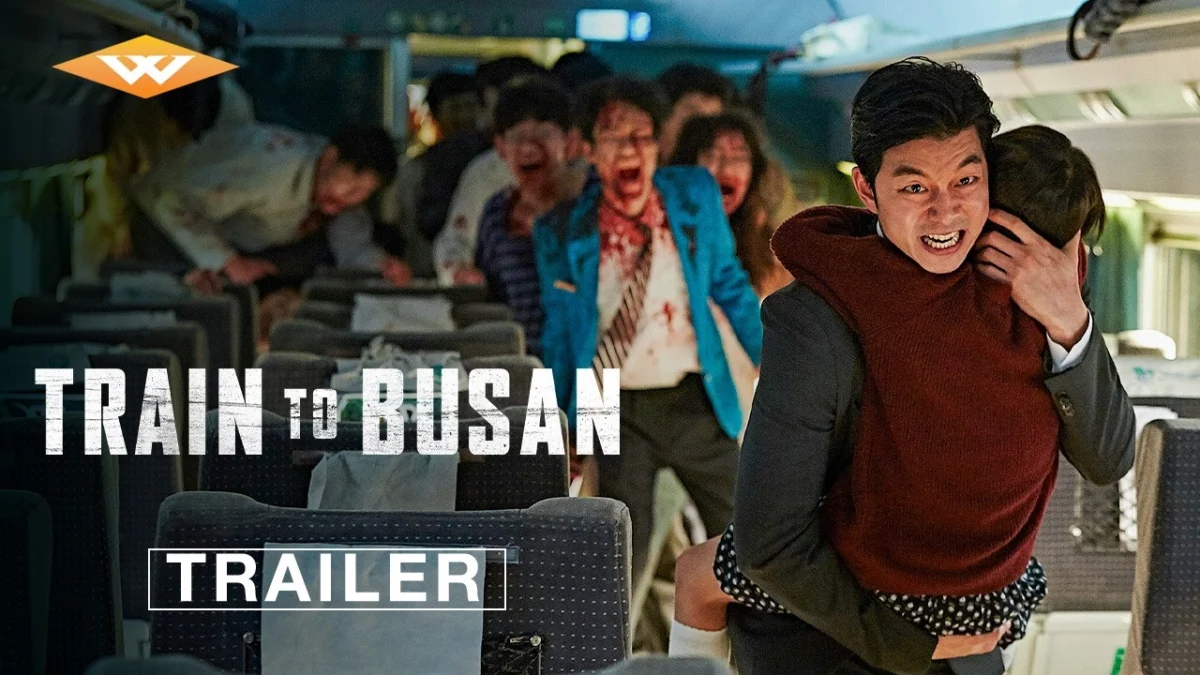
LOS ANGELES — Nearly a decade after it redefined the modern zombie thriller with breathless pacing and visceral emotional stakes, director Yeon Sang-ho’s Train to Busan is preparing for a grand-scale physical media homecoming. Well Go USA Entertainment has officially announced the upcoming release of Train to Busan: 10th Anniversary Remastered & Revived, a comprehensive collector’s edition that promises to give the seminal South Korean blockbuster the definitive home video treatment it has long deserved.
Set for release on December 15, the anniversary package will arrive in two primary formats: a lavish 4K Ultra HD and Blu-ray box set for high-end home theaters, and a standalone DVD edition that refuses to skimp on bonus features. Preorders for both formats are officially scheduled to open on November 10, with the collector’s box set priced at $79.98 and the DVD version listed at $24.98.
For a film that spent much of its 2016 runtime drenching star Gong Yoo in other people’s blood as he fought desperately to protect his daughter aboard a high-speed locomotive, this upcoming release offers fans a chance to own a piece of horror history outfitted with state-of-the-art audiovisual upgrades and an extensive archive of supplemental materials.
Main Facts: What’s Inside the 10th Anniversary Box Set?
The centerpiece of the Well Go USA announcement is the massive upgrade coming to the film’s presentation. Moving well beyond a standard high-definition transfer, the 10th Anniversary Remastered & Revived edition treats the film to a brand-new 4K master designed to highlight the claustrophobic, neon-lit corridors and chaotic exterior landscapes of South Korea’s transportation grid under siege.
The 4K Ultra HD disc will feature a robust Dolby Atmos audio track, allowing home audiences to immerse themselves in the terrifying, cacophonous soundscape of swarming infected hordes, screeching metal, and frantic human screams. Audiophiles will also find a DTS-HD Master Audio 5.1 track included.
Beyond the technical remastering, the box set’s multi-disc layout is packed with new and archival content:
- Dual Audio Commentaries: Both the 4K UHD and Blu-ray discs feature two distinct commentary tracks. The first pairs director Yeon Sang-ho with members of his cast, while the second pairs Yeon with his behind-the-scenes crew.
- Exclusive Bonus Disc: A dedicated third disc houses a comprehensive collection of special features, headlined by a brand-new 28-minute interview with director Yeon Sang-ho, expertly moderated by critic Katie Rife.
- Making-of Featurettes & Archival Material: Fans will find an extensive look into the production of the 2016 film, tracking how the physical stunts, practical makeup effects, and tight set designs were brought to life.
- Trailer Gallery: The release rounds out its video extras with four distinct trailers: the newly minted 2025/2026 U.S. anniversary trailer, the original 2016 U.S. theatrical trailer, the international trailer, and the original teaser.
Notably, the standalone DVD edition is far from a bare-bones release. It includes both audio commentaries, the 28-minute Katie Rife-moderated interview, a 13-minute behind-the-scenes featurette, a five-minute wrap-up piece titled “That’s A Wrap,” and all four trailers. English and Spanish language subtitle and audio options span across every format, ensuring broad accessibility.

Chronology: A Decade of Dead Zones and High-Speed Terrors
To understand the weight of this 10th-anniversary box set, it is necessary to retrace the timeline of how Train to Busan conquered the global consciousness and how its visionary creator has expanded its cinematic universe over the last ten years.
- Summer 2016: Train to Busan holds its world premiere in the Midnight Screenings section at the 2016 Cannes Film Festival, instantly captivating international critics. It subsequently opens in South Korea, shattering box office records and eventually grossing over $98 million worldwide against an estimated budget of $8.5 million. It cements itself as a global cultural phenomenon.
- Later in 2016: Director Yeon Sang-ho expands the universe outward with Seoul Station, an animated prequel film that explores the societal rot and initial outbreak points leading up to the events on the train.
- 2020: Yeon returns to the cinematic wasteland with Peninsula, a standalone, live-action sequel set four years after the events of the original film. While adopting a more post-apocalyptic, vehicular-action tone reminiscent of Mad Max, it proves the viability of the Train to Busan brand as an expansive cinematic franchise.
- Summer 2025: Marking the milestone countdown to its decade mark, Train to Busan returns to select American theaters in August, giving a new generation of horror fans—and devoted veterans—a chance to experience the locomotive terror on the big screen.
- Spring 2025 / Summer 2026: Yeon continues exploring themes of survival and societal collapse. His latest project, Colony, makes its Canadian premiere at the Fantasia International Film Festival over the summer following its trailer release in April, proving that Yeon’s creative trajectory remains locked firmly in the dark, thrilling spaces of genre filmmaking.
- November 10, 2026: Preorders officially go live for the $79.98 collector’s box set and $24.98 DVD edition.
- December 15, 2026: Train to Busan: 10th Anniversary Remastered & Revived officially arrives in retail stores and digital storefronts courtesy of Well Go USA Entertainment.
Supporting Data: Why the Film Has Endured for Ten Years
In the decade since its initial release, the cinematic landscape has been saturated with zombie media. From sprawling television series to micro-budget indies, the walking corpse has been analyzed, deconstructed, and lampooned. Yet, Train to Busan has aged better than almost every horror feature it was compared to in 2016.
The secret to its longevity lies not in revolutionary creature design or unprecedented gore, but in structural genius.
The Architecture of Terror
Most zombie films suffer from narrative sag—moments where characters hole up in a secure location, waiting out the horde while forced exposition attempts to explain the geopolitical or medical collapse of society. Yeon Sang-ho sidesteps this trap entirely by locking his characters inside a moving train.
The film relies on linear geography rather than long-winded dialogue. Every scene serves a singular purpose: pushing the survivors forward through consecutive carriages. Because the train is constantly in motion toward a destination that may no longer exist, the narrative engine never stalls. The geography is the exposition. When characters must move from Car A to Car B, it requires traversing a sea of aggressive, fast-moving infected bodies. The tension is mathematical, rising inexorably as doors lock, compartments shrink, and choices become fatally limited.
This spatial mastery explains why a physical media release built around two commentary tracks is uniquely fitting. A film whose brilliance stems from spatial decisions, blocking, and set choreography invites deep analysis from the artists who constructed its metallic labyrinth.
Official Responses and Industry Perspectives
The announcement of the 10th-anniversary box set has elicited widespread enthusiasm across the horror community, highlighting how deeply the film resonated with both domestic and international audiences.

Industry analysts point to Train to Busan as the watershed moment that broke down major barriers for South Korean genre cinema in Western markets. Long before television series like Squid Game dominated global streaming charts, Train to Busan proved that high-concept, emotionally resonant Korean thrillers could achieve massive theatrical traction in North America without sacrificing their cultural specificity or emotional core.
Speaking on the film’s enduring legacy, critics have frequently praised its ability to ground high-octane spectacle in a deeply moving father-daughter dynamic. Gong Yoo’s transformation from a morally detached, self-absorbed fund manager into a desperate protector provides an emotional anchor that elevates the film from a standard creature feature into a heartbreaking tragedy about class, societal failure, and redemption.
Well Go USA Entertainment’s decision to invest heavily in a premium 4K Ultra HD release underscores the enduring commercial viability of physical media when paired with elite curation. By packing the release with substantial contextual material—such as Katie Rife’s moderated interview with Yeon—the distributor is signaling that Train to Busan is no longer viewed merely as a successful foreign import, but as a bona fide classic of modern horror cinema.
Implications: The Legacy of a Modern Masterpiece
As the film approaches its formal tenth anniversary, the release of Train to Busan: 10th Anniversary Remastered & Revived carries several broader implications for the horror genre and the home video market.
- The Gold Standard for Modern Zombie Cinema: By maintaining its critical and commercial relevance a full decade after release, the film serves as a blueprint for contemporary horror directors. It demonstrates that pacing, character empathy, and tight narrative constraints will always outperform bloated budgets and endless exposition.
- The Maturation of Physical Media Collector’s Editions: In an era dominated by streaming fragmentation, boutique physical media labels and major distributors like Well Go USA are proving that fans are willing to invest in premium packages—such as the $79.98 box set—if the release offers genuine value, superior technical transfers (Dolby Atmos / 4K UHD), and insightful retrospective features.
- The Ongoing Influence of Yeon Sang-ho: As Yeon continues to push boundaries with subsequent projects like Seoul Station, Peninsula, and Colony, this anniversary release acts as a vital anchor, reminding global audiences of the masterclass in tension-building that launched his international career.
When December 15 arrives, fans old and new will once again board the express train to Busan. Thanks to Well Go USA’s meticulous restoration, the blood on Gong Yoo’s coat will look sharper, the screams inside the carriages will hit harder through Dolby Atmos, and one of the defining horror masterpieces of the 21st century will claim its rightful place of honor on collector shelves worldwide.
