
Nazi-Killing Unleashed: A Deep Dive into The Last Temptation of Becky
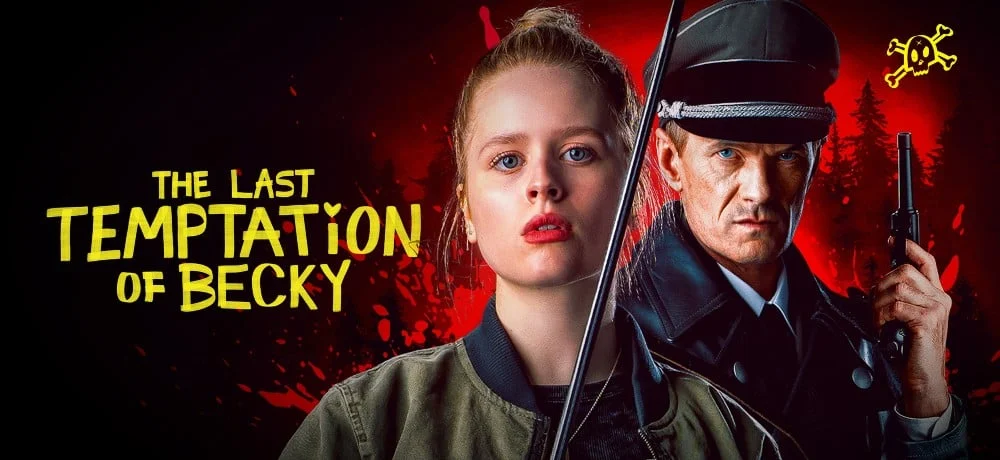
If there is one cinematic tradition that has solidified its place in the modern grindhouse canon, it is the Becky franchise’s unwavering commitment to the systematic dismantling of fascists. Since the series’ inception, audiences have been treated to a singular, cathartic spectacle: Lulu Wilson, playing the titular rage-fueled protagonist, delivering brutal justice to white supremacists and neo-Nazi extremists. With director Jenn Wexler stepping behind the lens for the third installment, The Last Temptation of Becky, the franchise returns with a renewed "bubblegum-meets-bloodletting" aesthetic. While the film faces budgetary headwinds that occasionally dampen its kinetic impact, it remains a triumphant, albeit messy, exercise in genre-driven retribution.
Main Facts: The Evolution of a Vigilante
The Last Temptation of Becky serves as both a continuation of the character’s growth and a doubling down on the series’ core premise. Lulu Wilson reprises her role as the hardened CIA operative, Becky Hooper. Working under the command of Agent Montana (played by Kate Siegel), Becky finds herself at a crossroads. Her notorious temper—the very trait that makes her an effective weapon—has become a liability for the Agency.
Following a mission that nearly spirals out of control, Director Baker (Fiona Marr) issues a final ultimatum: one more assignment, or she is out. The task is straightforward: infiltrate a clandestine cell in Poland to expose the operations of General Wilhelm Reuss, portrayed with chilling efficacy by Neil Patrick Harris. However, in true Becky fashion, the mission parameters are immediately discarded the moment Becky uncovers the scope of Reuss’s genocidal ambitions. Rather than playing the part of a silent observer, Becky reverts to her nature as a "heat-seeking missile," setting the stage for a film that prioritizes visceral, unapologetic carnage over espionage subtlety.
Chronology: From Agency Asset to Lone Executioner
The narrative arc of The Last Temptation of Becky follows a streamlined, high-octane trajectory.
Phase I: The Ultimatum
The film opens with an established status quo: Becky is a government tool struggling with the shackles of bureaucracy. The tension between her natural inclinations and the rigid expectations of the CIA provides a necessary emotional tether. The early sequences highlight the friction between Wilson and Siegel, setting the stage for a protagonist who is increasingly disillusioned by the red tape of modern international relations.
Phase II: The Polish Infiltration
The setting shifts to Poland, where the aesthetic of the film pivots. The move to a European landscape allows Wexler to play with the history of the Third Reich, positioning Reuss not as a subtle extremist, but as a blatant, caricature-adjacent Nazi disciple. The film’s pacing accelerates significantly once Becky enters the orbit of the Reuss estate.
Phase III: The Reckoning
The third act is a relentless, albeit somewhat constrained, cycle of violence. As Becky discovers that Reuss intends to revive the legacy of his ancestors, she bypasses the call for reinforcements. The remainder of the film is a masterclass in "kill-’em-all" cinema, as Becky systematically eliminates the general’s inner circle. The climax offers the catharsis promised by the series’ marketing, though it is here that the budgetary limitations become most apparent to the viewer.
Supporting Data: Casting and Production Dynamics
The success of The Last Temptation of Becky hinges largely on the casting of Neil Patrick Harris. Often typecast in affable or comedic roles, Harris’s turn as General Wilhelm Reuss is a masterstroke of subversion. He sheds his natural charm to inhabit a cold, calculating tyrant whose menace is amplified by the contrast with his public persona. Opposite him, James Urbaniak delivers a performance as Dr. Friedrich Metzger, the "mad scientist" archetype, providing a foil that allows for a darkly satirical take on Nazi pseudoscience.
The film’s production design is aggressively on-the-nose. The use of Hitler standees, authentic-looking period attire, and overt displays of hate symbols creates a "World War II in 2026" atmosphere. By situating the narrative in the present day, Wexler makes a pointed commentary on the resurgence of far-right movements. The film does not shy away from using the imagery of the past to critique the hate-mongers of the present.
However, the production data suggests a struggle between ambition and resources. While the script calls for large-scale carnage, the execution relies heavily on digital effects. For a director like Wexler, known for the practical, visceral gore seen in The Ranger and The Sacrifice Game, the shift to CG blood and post-production bloodshed is a noted departure. The choreography, while serviceable, occasionally feels restricted by the budget, forcing the camera to focus on tight, manageable angles rather than the wide, explosive action sequences that the film’s premise demands.
Official Responses and Creative Vision
Director Jenn Wexler and co-writer Matt Angel have been vocal about their desire to elevate the Becky series while maintaining its punk-rock spirit. In various interviews, the creative team has emphasized that the goal was to craft a film that feels like a "Tiger Beat" magazine cover splashed with gore.
The focus on Becky’s internal maturation is a key creative choice. The film treats the protagonist’s grief and rage as evolving forces. By integrating "notebook doodles" and a teenage-rebellious attitude into the character’s dialogue, the film bridges the gap between a standard action thriller and a gritty, coming-of-age revenge story. Lulu Wilson’s performance has been lauded for its intensity, particularly in scenes where she is allowed to monologue against the absurdity of her enemies’ ideologies. The filmmakers have acknowledged that the film is designed for a specific audience—those who find joy in watching "the right-wing trash" get taken out. They view the film not just as a sequel, but as a necessary form of catharsis in a politically volatile climate.
Implications: The Future of the Franchise
The implications of The Last Temptation of Becky for the future of the series are significant.
1. The Budgetary Ceiling
The most pressing takeaway is the limitation of the current production model. If the franchise is to continue, it will need to reconcile its increasingly ambitious scope with the realities of its budget. The reliance on digital effects, while a functional solution, ultimately detracts from the "gory punk-rock" aesthetic that fans of Wexler expect. For future installments to succeed, there must be a shift toward more practical, high-impact stunt work.
2. The Satirical Shift
The move toward overt, near-parodic villainy marks a transition in the franchise’s tone. By leaning into the absurdity of neo-Nazism, the film avoids becoming bogged down in a serious political lecture, instead opting for a satirical approach that is both biting and fun. This "satire-action" blend creates a distinct lane for the Becky franchise, separating it from more grounded, realistic thrillers.
3. The Character Arc
Becky Hooper has officially evolved from a victim of violence into an institutionalized, albeit rogue, weapon. The final act of the film leaves the door wide open for further expansion. Whether Becky remains tethered to the CIA or goes fully independent is a narrative thread that promises to drive future entries. Lulu Wilson’s commitment to the role remains the anchor of the series; as long as she is willing to continue, the franchise has a clear path forward.
4. Cultural Resonance
The film’s success highlights a growing appetite for genre cinema that confronts real-world anxieties through the lens of fantasy violence. By explicitly framing the conflict as a 2026 struggle against modern-day fascists, the Becky series taps into a current cultural zeitgeist. It is a form of cinematic escapism that feels remarkably prescient, providing audiences with a safe space to process their frustrations with the political climate through the destruction of on-screen villains.
Conclusion
The Last Temptation of Becky may not reach the heights of its predecessors in terms of raw, practical gore, but it succeeds in its mission to entertain. It is a plucky, punishing, and purposefully loud entry in a franchise that knows exactly what its audience wants. With a standout performance from Neil Patrick Harris and a continued, nuanced exploration of Becky’s descent into a life of vengeance, the film proves that the series still has plenty of gas in the tank. If the production constraints can be overcome in future sequels, there is no reason why Becky Hooper cannot remain the definitive face of righteous, cinematic retribution for years to come.
Rating: 3/5
