
The Birth of a Nightmare: Inside Peacock’s ‘Crystal Lake’ and the Reimagining of a Horror Icon
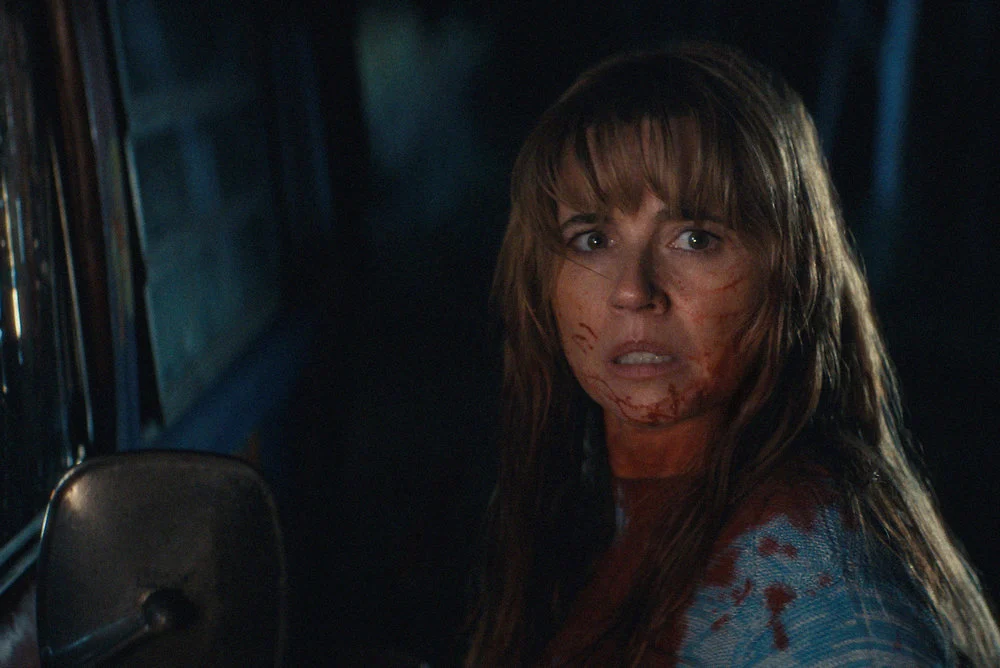
Nearly five decades after Sean S. Cunningham first unleashed the terror of Friday the 13th upon the silver screen, the slasher genre remains indelibly marked by the hockey-masked specter of Camp Crystal Lake. What began as a low-budget indie shocker in 1980 evolved into a sprawling, multi-generational franchise defined by endless sequels, reboots, and a permanent place in the pop-culture lexicon. However, the true origin of the Voorhees legacy has remained largely relegated to the periphery—until now.
With the upcoming premiere of the Peacock original series Crystal Lake, audiences are being granted an unprecedented, deeply unsettling window into the events that forged a monster. Overseen by It: Welcome to Derry showrunner Brad Caleb Kane, the eight-episode series peels back the layers of a town built on secrets, grief, and systemic rot. Far from a standard slasher, Crystal Lake positions itself as a harrowing psychological character study, anchored by a powerhouse performance from Linda Cardellini as the woman behind the legend: Pamela Voorhees.
The Genesis of Horror: A Chronological Look at the Pre-Slasher Era
The narrative architecture of Crystal Lake is meticulously constructed, choosing to anchor its roots in the socio-political turbulence of the early 1970s. The series opens in 1972, precisely eight years before the original film’s timeline. In these early hours, we are introduced to a version of Pamela Voorhees that is far removed from the vengeful, decapitated antagonist of the 1980 classic.
Here, Pamela is a fixture of the community—a humble, hardworking lunch lady serving the students of the local school and the campers at Camp Crystal. Her life is consumed by the exhausting, often thankless task of raising her son, Jason (Callum Vinson), a boy suffering from severe physical ailments and frequent seizures. In the eyes of the town, Jason is an outcast, a "pariah" whose existence highlights the narrow-minded prejudices of a community ill-equipped to handle difference. His only solace is a fragile friendship with Grace (Gwendolyn Sundstrom), a young girl similarly burdened by the trauma of an abusive, alcohol-dependent home.
The series builds toward the inevitable, yet the tragedy that defines the franchise is handled with a slow-burn intensity. During a routine day at camp, a sequence of events leads to Jason wandering into the water and drowning as staff and peers stand in paralyzed silence. The aftermath of this event serves as the show’s emotional anchor. As Pamela struggles to navigate a world without her son, the discovery that his body has vanished—and the subsequent emergence of grisly, unexplained body parts in the nearby woods—signals a descent into a nightmare that is as much about the town’s secrets as it is about one woman’s breaking point.
Supporting Data: Examining the Societal Crossroads of the 1970s
One of the most ambitious aspects of Crystal Lake is its commitment to historical period-piece accuracy. The show serves as a mirror to a society at a genuine crossroads. Through the lens of the 1970s, the writers explore the clashing ideologies of the era: the rise of hippie counterculture, the lingering shadows of Cold War paranoia, the pervasive influence of covert racism, and the emergence of predatory, cult-like self-help movements.
This environmental backdrop is vital to understanding the show’s central theme. The series suggests that Crystal Lake was a powder keg long before the first machete was ever swung. The town is depicted as a place where nonconformity is met with hostility and where the structures of power—represented by characters like Chief of Police Levon Brooks (William Catlett)—are constantly teetering on the edge of collapse.
Chief Brooks serves as the series’ moral compass, an "olive branch" in a town defined by cruelty. However, his efforts to maintain order are constantly derailed by the increasingly erratic behavior of Pamela and the investigative fervor of his sister, journalist Briana (Devin Kessler). As Briana begins to draw connections between the rising body count and a long-buried conspiracy, the audience is forced to realize that Pamela’s transformation into a figure of terror is not merely a reaction to her son’s death, but an explosion of long-suppressed rage against a patriarchal system that had been wounding her for decades.
Official Artistic Perspectives: Beyond the Slasher Tropes
Showrunner Brad Caleb Kane has been vocal about the creative mandate for Crystal Lake: to subvert the expectations of the slasher audience. While the series is unapologetically grisly, utilizing high-quality practical effects to deliver the visceral, stomach-turning violence associated with the franchise, it explicitly rejects the "slasher" label in favor of a psychological thriller framework.
The series emphasizes "women’s rage" as its primary engine. Episode 7, titled "Friday…," is being hailed as the series’ magnum opus. Set in 1959, this installment functions as a crucial flashback that weaves together the historical weaponization of "female hysteria," the cold indifference of pharmaceutical greed, and the deep-seated misogyny of the mid-20th century. By contextualizing Pamela’s past, the series forces the viewer to confront the reality that she was a victim of institutional violence long before she became an agent of it.
Linda Cardellini’s performance has been the subject of significant early acclaim. Critics note that her portrayal of Pamela is not just a study in grief, but a complex study in human elasticity. She plays a woman who possesses a terrifying duality: the unassuming, domestic lunch lady and the ruthless guardian of the innocent, willing to commit unspeakable acts to protect those she deems worthy. William Catlett, as Chief Brooks, provides the perfect counterweight, portraying a man desperately trying to prevent his world—and the woman he feels a strange affinity for—from unraveling completely.
Implications: The Franchise Reinvigorated?
The implications of Crystal Lake for the broader Friday the 13th franchise are significant. By shifting the focus to the psychological and societal origins of the story, the show proves that there is still narrative "meat on the bone" in a franchise that many felt had been exhausted by its own repetition.
However, the series is not without its criticisms. Observers have noted that the show’s pacing is intentionally, perhaps even overly, deliberate. By prioritizing atmosphere and character development over the rapid-fire thrills and jump scares that typically define the slasher genre, Crystal Lake risks alienating segments of the core fanbase who seek a more exhilarating, fast-paced experience. The "sluggish" movement of the plot is a stylistic choice that trades the traditional slasher adrenaline for a haunting, pervasive sense of dread.
Ultimately, Crystal Lake stands as a daring experiment. It takes the familiar silhouette of the hockey-masked killer and hides it behind a curtain of psychological complexity. It asks the audience to empathize with the monster’s mother, to understand the machinery of her madness, and to accept that the true horror of the Friday the 13th saga was never just a supernatural curse, but the very real, very human failures of a town that refused to listen.
As the series prepares to debut on October 15, the industry will be watching closely. If Crystal Lake succeeds in its mission, it will likely set a new gold standard for how legacy horror franchises can be adapted for the prestige television era. It is a brilliantly detailed, albeit bleak, prologue that manages to do the impossible: it makes us fear for the mother of the man who would eventually teach us all to fear the woods.
Series Details at a Glance:
- Showrunner: Brad Caleb Kane
- Starring: Linda Cardellini, William Catlett, Callum Vinson, Devin Kessler, Gwendolyn Sundstrom
- Format: 8-Episode Limited Series
- Premiere Date: October 15, on Peacock
- Genre: Psychological Thriller / Horror / Drama
