The Rise, Fall, and Rebirth of a Sith: Inside Star Wars: Maul — Shadow Lord
Main Facts: A Landmark Solo Series for a Fan-Favorite Villain
Nearly three decades after first striking terror into the hearts of audiences as a silent, red-and-black tattooed assassin in StarWars Episode I: The Phantom Menace, Darth Maul is carving out a historic milestone in the galaxy far, far away. Lucasfilm has officially announced the upcoming animated television series Star Wars: Maul — ShadowLord, making Maul only the second Star Wars villain—following Boba Fett—to headline their own dedicated television project.
Set during the tumultuous dawn of the Galactic Empire, Shadow Lord bridges critical gaps in the Star Wars timeline. It functions simultaneously as a direct narrative sequel to the acclaimed final arcs of Star Wars: The Clone Wars and a prequel to Maul’s live-action cameo in Solo: A Star Wars Story and his tragic swan song in Star Wars Rebels.
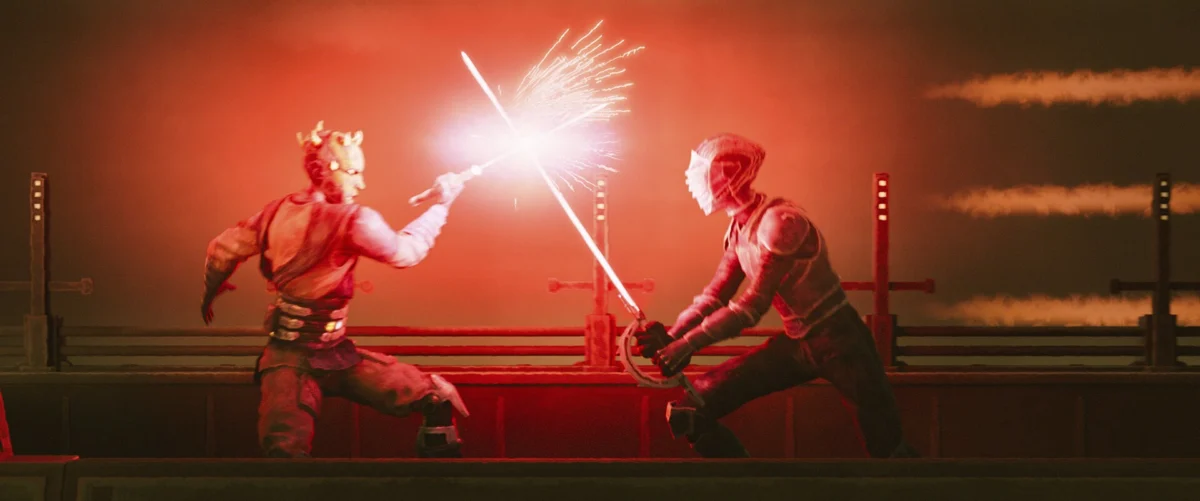
Unlike past episodic, mission-of-the-week animated formats, Shadow Lord introduces a deeply serialized, mature storytelling model. It boasts a distinct, painterly visual style helmed by director of photography Joel Aron, a gritty audio landscape crafted by sound designer David W. Collins, and a complex character study led by veteran voice actor Sam Witwer, who has breathed life and nuance into the character since 2010.
Chronology: Tracing Maul’s Unlikely Evolution
To understand the weight of Shadow Lord, one must trace one of the most improbable narrative comebacks in modern pop culture history.
1999 (The Phantom Menace): Introduced merely as a terrifying, dual-bladed physical threat to Qui-Gon Jinn and Obi-Wan Kenobi, Maul is seemingly cut in half and plunged down a reactor shaft on Naboo, leaving fans to assume his story ended before it truly began.
2011–2020 (The Clone Wars): Defying death through sheer hatred and the dark side of the Force, Maul is resurrected with cybernetic legs. He rapidly evolves from a vengeful madman into a sprawling galactic crime lord, forming the Shadow Collective and ruling Mandalore before being cast down once more during Order 66.
2018 (Solo: A Star Wars Story): A brief live-action cinematic cameo reveals Maul operating in the criminal underworld as the hidden head of the Crimson Dawn syndicate.
2016–2017 (Star Wars Rebels): Fans witness the twilight of Maul’s life—isolated, deranged, and utterly consumed by his obsession with revenge—culminating in his final, poignant duel and death at the hands of his old nemesis, Obi-Wan Kenobi, on Tatooine.
The Present (Shadow Lord): This new series slots neatly into the immediate aftermath of the Siege of Mandalore, exploring how a fractured, powerless Maul transitions from a deposed ruler into a lingering shadow of the underworld, grappling with the loss of his brother Savage Opress, his mother, and his empire.
Supporting Data: Behind-the-Scenes Craft and Production Innovation
Shadow Lord is not only breaking ground narratively, but it is also redefining the technical boundaries of Lucasfilm Animation.
To achieve its distinct aesthetic—described by creators as a textured, vibrant oil-on-canvas look—director of photography Joel Aron implemented a hybrid production technique. Eschewing purely digital rendering for background elements and massive capital ships like Star Destroyers, the crew utilized physical oil-on-glass matte paintings and practical, live-action miniature models. This practical methodology not only accelerated production pipelines but imbued the series with a tangible, grittier atmosphere reminiscent of classical cinema.
Furthermore, the series introduces an innovative post-production workflow to handle its dense serialization. Executive producer Athena Yvette Portillo revealed that episodes were deliberately kept unlocked until the entire season neared completion.
"We didn’t want a situation where someone would say episode four looked better than the first," Portillo explained, likening the process to culinary taste-testing. "We would constantly go back to earlier episodes and pepper them with what we learn from later episodes… adding spices to keep it consistent."
Sound design played an equally vital role. Sound designer David W. Collins incorporated raw, actual screams from voice actor Sam Witwer directly into the swishing audio of Maul’s lightsaber. This creative choice ensures that every blade sweep feels visceral, echoing the character’s unbridled rage and internal agony.
Official Responses: Cast and Crew Perspectives
The creative team behind Shadow Lord views the project not merely as a franchise expansion, but as a long-overdue exploration of trauma, survival, and manipulation.
Sam Witwer, reflecting on over a decade of voicing the character, expressed awe at Maul’s longevity.
"It’s been a real surprise that the character continues to evolve and to grow," Witwer told IndieWire. "The fun of it is reinventing him every time that we bring him out and learning new things about him… I’ve always had a lot of questions about Maul, and now I feel like I finally have the full vision of his arc throughout Star Wars for the first time in my life."
Supervising director Brad Rau highlighted the psychological duality of the former Sith Lord in this era.
"He’s a survivor, and dedicated to his causes," Rau noted. "He’s also a manipulator, and a very charismatic one at that. He provides a kind of devil on the shoulder of our characters… In some regards, a relatable character, due to the losses he’s suffered, and the mistakes he keeps repeating."
Co-creator and showrunner Matt Michnovetz discussed how the overarching threat of the Galactic Empire functions within the narrative. Positioned as the first canon Star Wars television series since the conclusion of Andor, the creative team deliberately kept the Imperial machine at arm’s length.
"We wanted to make it a menacing, strong, external force that would come in at the right time to push the story forward," Michnovetz said, noting how some characters live in fear of the regime while others are tragically blinded by its propaganda.
Implications: A Darker, Morally Grey Horizon for Star Wars Animation
The arrival of Star Wars: Maul — Shadow Lord signals a significant maturation in how Lucasfilm approaches its animated catalog. By stepping away from the traditional, clear-cut binaries of the Jedi and Sith, Shadow Lord embraces a stark, morally complex landscape.
The series introduces characters trapped in institutional rigidities—such as a rigid detective and his bureaucratic droid partner whose strict adherence to the law inadvertently damns planets to tyranny, and a young Jedi Padawan named Devon, whom Maul considers taking as an apprentice. This dynamic positions Maul as a dark mirror image of Ahsoka Tano: both were torn from their families, indoctrinated into dogmatic religious orders, and ultimately cast aside. Yet, while Ahsoka carved out a path toward redemption and survival, Maul’s trajectory remains a tragedy of compounding losses.
By focusing on an anti-hero driven by grief rather than simple malice, Shadow Lord proves that the legacy of Darth Maul is far from exhausted. As long as the Star Wars universe continues to expand, the galaxy’s most resilient survivor will remain a dark, compelling fixture of its storytelling.