
The World Loses a Voice: Remembering Eric Bauza, the Custodian of Animation’s Golden Age
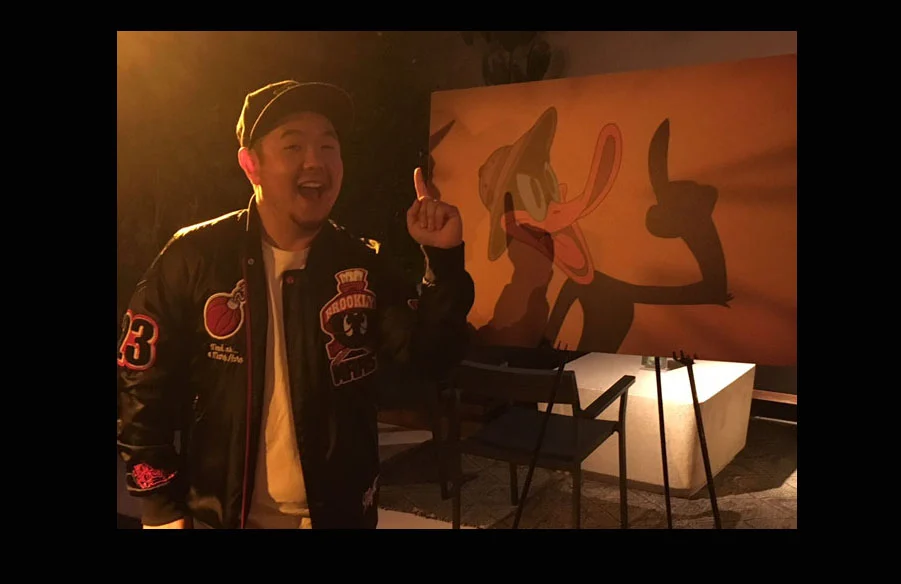
The animation industry is in deep mourning following the sudden and unexpected passing of Eric Bauza, a titan of voice acting whose versatility, warmth, and unparalleled talent brought the most iconic characters of the 20th century into the modern era. Bauza, 47, passed away in his sleep from natural causes on Saturday night, as confirmed by the Los Angeles Medical Examiner’s Office. His death has sent shockwaves through Hollywood, leaving a void in the hearts of his peers, collaborators, and the millions of fans who grew up listening to the legendary voices he perfected.
A Life Dedicated to the Craft
Born in Canada, Eric Bauza’s journey toward becoming one of the most recognizable voices in animation began long before he stepped into a professional recording booth. By his own account, his affinity for mimicry started at the tender age of nine. While most children were content playing with action figures, a young Bauza was already experimenting with the cadence and tonal shifts of cartoon royalty.
"My parents probably thought I was possessed by the devil," Bauza once recalled with a characteristic laugh. "I know Eric is in his room by himself, but I can hear 20 other people in there!"
Before he was an industry-standard voice actor, Bauza began his career in the trenches of the animation industry itself. Starting as an animator, he possessed a unique, dual-perspective understanding of the medium. He didn’t just understand the vocal performance; he understood the timing, the physical comedy, and the visual weight of the characters he was bringing to life. He transitioned into voice acting over 20 years ago, quickly distinguishing himself as a prodigy capable of breathing new life into the Looney Tunes canon—a task many would consider the "heavyweight title" of the industry.
The Final Curtain: A Weekend of Celebration
The tragedy of Bauza’s passing is made all the more poignant by the timing of his final public appearance. Just this past weekend, he participated in a panel at the Lightbox Expo in Pasadena. Attendees describe a man who was, in every sense, "vibrant and alive."
During the panel, Bauza gave a masterclass in performance that served as a microcosm of his career. As the classic Looney Tunes short Hillbilly Hare played on a massive screen, Bauza performed the iconic Bugs Bunny square dance call live for the audience. The room, packed with aspiring artists, animators, and fellow voice actors, watched in awe. For many in that room, it was a moment of pure, unadulterated inspiration—a reminder of why they entered the industry in the first place.
The "Cadillac" Philosophy: A Professional Legacy
Bauza was never one to rest on his laurels or succumb to the ego often associated with celebrity. He viewed his career not as a personal triumph, but as a stewardship. He famously described his work voicing characters like Bugs Bunny, Daffy Duck, and Marvin the Martian as "taking the Cadillac out for a spin."
"I always promise not to scratch it—and to put some gas back in the tank," he once said. This humble, professional, and deeply respectful approach to his work defined his legacy. He was acutely aware that he was part of an ongoing lineage. "I’m just a custodian for now of how they’re taken care of," he remarked. "I won’t be the last person to voice them and I’m very aware of that."
This philosophy extended to his work on the recent film Coyote vs. Acme. Cast members have shared stories of the "otherworldly" experience of sitting across from Bauza during table reads. Will Forte, who starred alongside Bauza’s characters in the film, noted that hearing Bauza slip into character was a "therapeutic" experience for the rest of the cast. Bauza possessed a unique ability to bridge the gap between a high-pressure production environment and the whimsical, lighthearted world of animation.
Impact on the Industry
Bauza’s contribution to the art form cannot be overstated. In an era where animation has undergone a massive digital transformation, he remained a traditionalist at heart, prioritizing the emotional core and the distinct personality of every character he voiced. His Emmy-winning career was marked by a relentless pursuit of excellence.
Beyond the accolades, he was known as a mentor and a friend. He was a constant presence at industry events, consistently offering encouragement to newcomers. He understood that the industry—and the characters he loved—depended on the next generation of talent. His ability to humanize the "voice-over" experience made him a beloved figure in an often-impersonal industry.
Official Responses and Public Reaction
Since the announcement of his passing, the outpouring of grief from the animation community has been profound. Studios, directors, and co-stars have taken to social media and official press channels to express their shock and sorrow.
The Los Angeles Medical Examiner’s Office confirmed the report (Case Number 2026-16998) earlier this week, noting that the passing was due to natural causes. While the formal investigations are a matter of public record, the focus remains firmly on the human element: the loss of a vibrant soul who had so much more to give.
Industry insiders have already begun discussing the necessity of a tribute to honor his life and work. Many have pointed to the Coyote vs. Acme clip—where his Bugs Bunny performance provides a masterclass in character delivery—as the perfect summation of his career: playful, sharp, and timeless.
The Future of the Characters
As the animation world processes the loss, questions naturally arise regarding the future of the characters Bauza had so thoroughly mastered. However, for the moment, those conversations remain secondary. The industry is currently preoccupied with the immediate emotional weight of his absence.
Bauza leaves behind a body of work that spans decades and formats, from television series and feature films to video games and shorts. His performance in Coyote vs. Acme is expected to stand as a definitive showcase of his range. Colleagues have noted that even at the height of his fame, he remained the "young Filipino guy from Canada" who was simply thrilled to be part of the magic.
Conclusion: A Voice That Echoes
Eric Bauza’s life was defined by the joy he brought to others. Whether it was the wide-eyed wonder of a child watching Looney Tunes for the first time or the professional appreciation of a fellow actor witnessing his craft during a table read, Bauza had a gift for connecting people through the medium of animation.
He was more than a voice; he was a bridge between the golden age of animation and the digital future. As his friends and colleagues continue to share their memories, one sentiment remains constant: the world is a little quieter, and significantly less funny, without him.
"I can’t believe I’m writing these words," a friend and fellow panel moderator wrote following the news. "Eric Bauza. Rest In Peace."
As the industry moves forward, it will undoubtedly look to the standard Bauza set—the idea that you treat the craft with respect, you keep the "tank full," and you never, ever take for granted the privilege of bringing laughter to the world. Eric Bauza may have stepped out of the booth, but the characters he breathed life into will continue to dance, scheme, and laugh for generations to come. That, perhaps, is the greatest tribute of all.
