
Unraveling the Enigma: An In-Depth Analysis of You Can See Everything

The buzz surrounding the Telluride Film Festival was dominated this year by a singular, polarizing cinematic event: You Can See Everything. The documentary, helmed by the unlikely creative pairing of Lance Oppenheim and Nathan Fielder, represents a haunting new chapter in the ongoing public obsession with Elizabeth Holmes, the disgraced founder of the now-defunct medical technology company, Theranos.
For 174 minutes, the film invites viewers into the final 34 days of Holmes’ life before she reported to federal prison to serve an 11-year sentence for wire fraud and conspiracy. However, the film is far from a standard procedural or a retread of familiar news cycles. Instead, it serves as a psychological battlefield, exploring the intersection of modern celebrity, the nature of truth, and the unsettling question of whether a master manipulator can, in turn, be manipulated.
The Context: A Legacy of Deception
To understand the gravity of You Can See Everything, one must first revisit the wreckage of Theranos. Holmes once promised to revolutionize the healthcare industry with "Edison," a proprietary device allegedly capable of performing hundreds of diagnostic tests from a single finger-prick of blood. The company reached a valuation of $9 billion before its house of cards collapsed under the weight of investigative journalism and regulatory scrutiny.

When Oppenheim and Fielder catch up with Holmes, the narrative has shifted. She is no longer the titan of Silicon Valley, nor is she the disgraced convict—at least not yet. She is living in a rented San Diego beach house with her new partner, Billy Evans, an entrepreneur and hotel heir, and their two children. The documentary posits a provocative question: Is this the end of the line, or is this a calculated pivot toward a "Theranos 2.0"?
Chronology: The Descent into the Final Act
The film is structured as a slow-burning interrogation of reality itself. In the early acts, the audience witnesses the mundane—Holmes washing dishes, interacting with her children, and engaging in awkward, philosophical debates with Fielder.
The middle act introduces a meta-textual layer: the inclusion of Amanda Seyfried, who famously portrayed Holmes in the Hulu limited series The Dropout. By bringing in the actress who played her, Fielder creates a hall of mirrors. Holmes’ reaction to watching herself being dramatized—specifically a scene involving her former partner Ramesh "Sunny" Balwani—reveals a woman who is either deeply traumatized or masterfully deflecting.

As the clock ticks down toward her incarceration, the film shifts into a "heist-like" structure. Fielder, frustrated by the controlling presence of Billy Evans, orchestrates a clandestine visit to Holmes in prison. This climax is not merely a journalistic interview; it is a meticulously scripted, re-enacted confrontation designed to peel back the layers of Holmes’ relationship with her partner and her own sense of reality.
The Dynamics of Control: Billy Evans and the "Monument of Love"
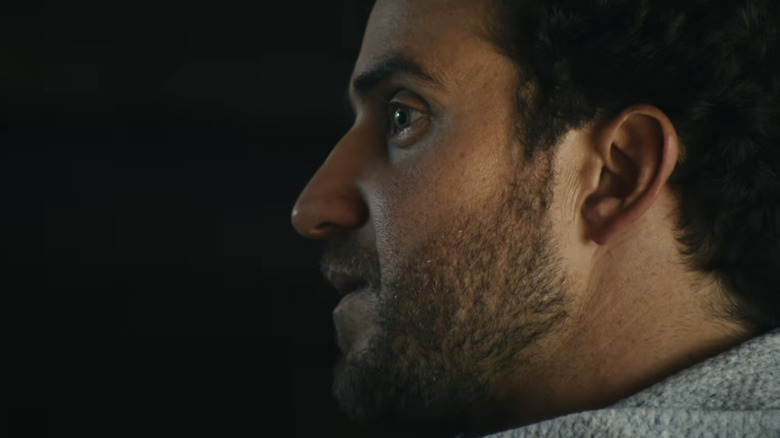
One of the most chilling aspects of the documentary is the portrayal of Billy Evans. Throughout the film, Evans appears to be an architect of control. He dictates the flow of conversation, dismisses the influence of Holmes’ family, and manages her public image—including, alarmingly, her Twitter account.
The most damning piece of evidence presented is the secret deal Evans attempted to strike with A24 to receive a portion of the film’s box office profits—a deal Holmes seemingly knew nothing about. When confronted by Fielder and Seyfried, Evans frames his actions as part of a "monument of love" he is building for his partner. The film leaves the audience to decide: Is Evans an abusive, opportunistic partner, or is he simply another cog in the machine that Holmes built to survive?
Supporting Data: The Semantics of Guilt
A recurring motif in You Can See Everything is the "Who’s on First?" debate. Holmes maintains that she never lied; she merely promised that the Edison device could perform the tests, but the chemistry was simply not yet perfected. She views the failure of Theranos as a technical hurdle rather than a fraudulent endeavor.
This reliance on semantics is the core of the film’s tension. During the final prison interview, Fielder presses Holmes on whether she was complicit in Evans’ attempts to profit from the film. When she gives an ambiguous answer, Fielder later "corrects" the interpretation of her words in a conversation with Seyfried. This moment is pivotal: Does Fielder correct the record to protect Holmes because he has developed a genuine, albeit irrational, sympathy for her? Or is he, too, being played?
The Implications: Is Nathan Fielder the Victim?
The most startling revelation in the film’s final minutes concerns the nature of Fielder’s own perspective. Early in the documentary, Fielder notes a fear of cold ocean water, declining a swim with Holmes. However, a later scene shows a man swimming with her in the ocean. Through subtle editing and re-examination, the film implies that the swimmer is actually Fielder.
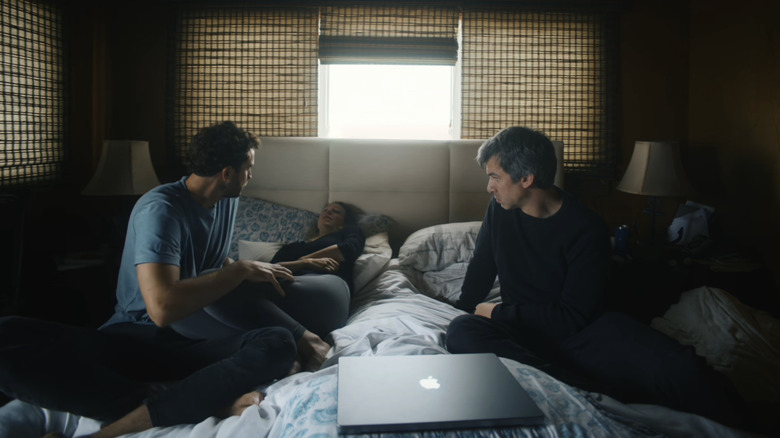
This revelation transforms the entire narrative. It suggests that Fielder—a filmmaker known for his own brand of meta-manipulation—has been seduced by his subject. If the objective observer has lost his objectivity, what hope does the audience have? The film suggests that the "truth" is not a fixed point but a malleable resource that Holmes, Evans, and even the documentary crew are actively mining.
Official Responses and Public Reception
Since its debut, the film has drawn sharp reactions from legal experts and media critics. While some praise the film for its avant-garde approach to the "true crime" genre, others argue that it risks humanizing a figure who caused irreparable harm to patients who received false medical results.
The film notes that, in a final twist, Billy Evans eventually declined the box office profit deal. Whether this was an act of genuine moral clarity or a strategic move to soften the public perception of the couple remains an open question. The lack of clarity is exactly where Oppenheim and Fielder want the viewer to reside.

Conclusion: A Monument to Uncertainty
You Can See Everything does not offer the catharsis of a "guilty" verdict or the relief of an exoneration. Instead, it provides a portrait of a woman who has become an expert at existing in the grey space between reality and performance.
By the time the credits roll, the audience is left with more questions than answers. Is Elizabeth Holmes a victim of a manipulative partner? Is she a mastermind who has managed to charm her way into a sympathetic documentary? Or is she simply a person who believes her own myth so profoundly that she expects the world to follow suit?
The documentary ultimately suggests that in the age of the personal brand, the truth is whatever one can convince the audience to believe. By the end of You Can See Everything, we aren’t just looking at Elizabeth Holmes; we are looking at our own susceptibility to the stories we are told. Whether or not we are being "duped" is, perhaps, the most uncomfortable question of all.
