Behind the Scenes of Netflix’s ‘Best of the Best’: How Director Lena Khan and Her Team Brought Collegiate Bollywood Dance to Life
Main Facts
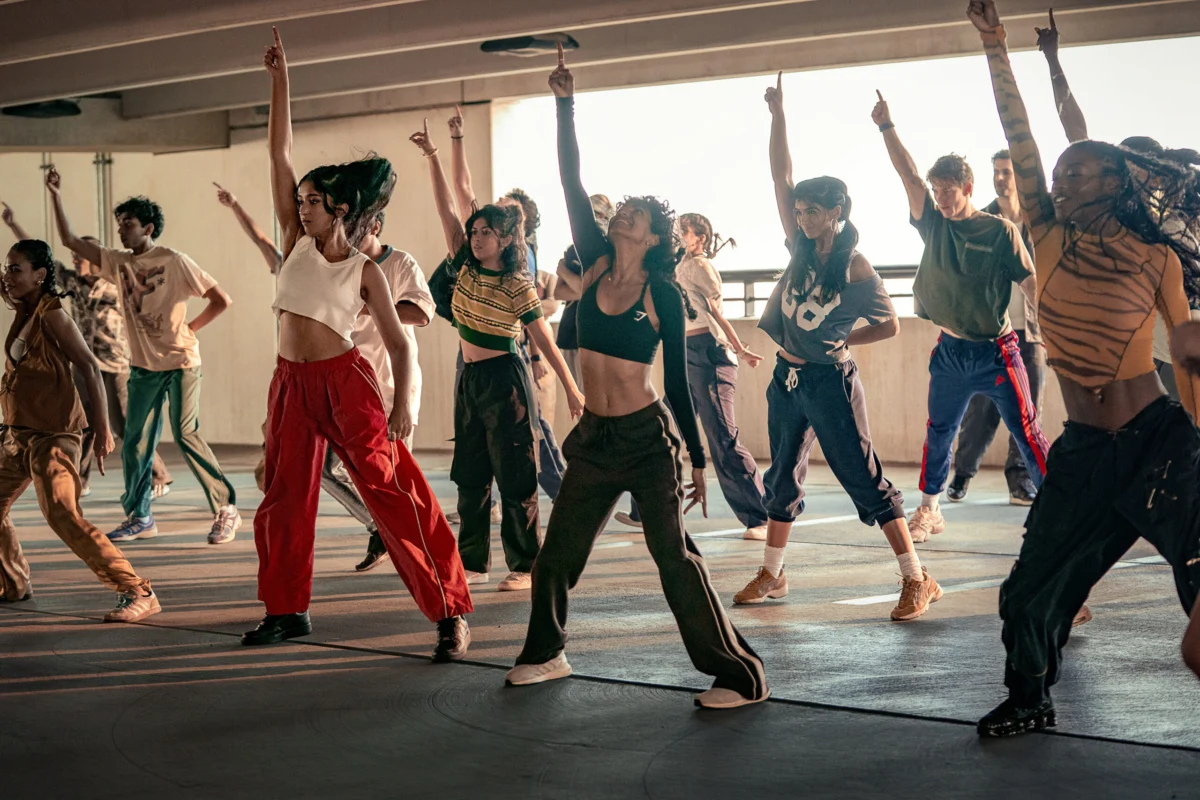
Netflix’s high-energy collegiatedance film Best of the Best immerses viewers in the vibrant, high-stakes subculture of competitive Bollywood fusion dance. Written by Hasan Minhaj and Prashanth Venkataramanujam and directed by LenaKhan, the film stars Maitreyi Ramakrishnan as Maya, a fearlessly innovative freshman dancer at UCLA, alongside Priyanka Kedia as her best friend, Anjali, and Ankur Rathee as team captain Ronak.
Rather than relying on standard musical-number tropes, the production utilized an intricate web of pre-production spreadsheets, data graphs, and deep cross-departmental collaboration. The result is a series of narrative-driven dance sequences that trace the evolving emotional states and relationship dynamics of the characters entirely through movement, lighting, and camera choreography.
Chronology: From Concept to Competition Climax
1. The Blueprint: Scripting with Space
When writing the script, Minhaj and Venkataramanujam were tasked with a unique challenge: leaving enough textual and emotional "blank space" for the dance sequences to fulfill the narrative promises of the dialogue, without boxing in the future director, choreographers, or dancers. They had to rely on the production team to cash the narrative checks the script was writing.
2. Pre-Production and the "Mighty Graphs"
To ensure the choreography served the story rather than distracting from it, director Lena Khan and her creative team utilized Google Sheets and detailed PowerPoint presentations. They constructed a macro-level line graph tracking the emotional journeys of every major character relationship—including UCLA’s team trajectory, Maya and Anjali’s shifting codependency, and Anjali and Ronak’s dynamic. Every dance sequence was mapped onto this timeline so that viewers could read the dramatic arc purely through physical expression.
3. Integrated Storyboarding with the Camera
Unlike typical dance films where choreography is locked before the camera arrives, Best of the Best relied heavily on the integration of choreographers Phillip Chbeeb, Makenzie Dustman, and Joya Kazi with cinematographer Adam Carboni. Using PreViz tools, hard-rigged camera mounts, and optical illusions, the camera team treated the camera itself as a dancing participant, capturing elaborate transitions and single-take illusions within tight shooting schedules.
4. The British Museum Heist Finale
The production culminated in the ambitious final sequence, set at the national Best of the Best competition. UCLA Team Agni performs a narrative-driven routine themed around a British museum heist to reclaim the Koh-i-Noor diamond. The sequence demanded seamless synchronization between the physical set pieces—such as moving museum walls—and complex technical execution, including an Ocean’s Twelve-inspired laser-dodging sequence.
Supporting Data & Production Logistics
The Scale of the Finale: The final dance sequence required six distinct sets within a single performance framework, posing immense logistical hurdles for both the crew and the exhausted ensemble cast.
Physical Toll: According to choreographer Joya Kazi, the physical demands placed on the young actors and dancers were equivalent to running a 10K race, resulting in inevitable minor injuries, bruises, and sheer physical exhaustion.
Laser Rigging: To pull off the climactic museum laser sequence, cinematographer Adam Carboni’s team initially mapped the blocking using yarn. On the day of the shoot, they replaced the yarn with 50-watt static lasers to achieve proper exposure for wide-angle shots.
Real-Time Cues: Due to limited rehearsal time for the technical crew, choreographers stood live on headsets during principal photography, manually cueing lighting spotlights in real time to match the split-second timing of the dancers.
Official Responses and Creative Insights
The creative team has spoken candidly about the collaborative anomaly that made Best of the Best possible, emphasizing that traditional film productions rarely integrate choreographers into early script meetings and camera planning.
Director Lena Khan explained her core musical philosophy to IndieWire:
"I told [our music supervisor] Kier Lehman that I wanted to be able to listen to this movie. You should be able to tell the story and the relationships and the feelings through the movement, and the music."
Detailing the complex character graph used to anchor the film, Khan added:
"And, of course, Maya and Anjali’s journey takes the most atypical route because they’re going from codependency to attachment issues to attention to having a healthier, more loving and supportive relationship."
Cinematographer Adam Carboni highlighted the desire to avoid relying purely on bloated budgets:
"We couldn’t just throw scale at every dance and expect it to be compelling. Instead, we brainstormed ways to create unexpected moments using optical illusions, hard-rigged camera mounts, mirror reflections, and simple in-camera tricks."
Choreographer Makenzie Dustman praised the collaborative freedom provided by the writers and director:
"As choreographers, you are normally not integrated into pre-production and designing these scenes. It’s very rare… To be woven into that process as choreographers is so rare, and they were so generous with all of us, because that’s just not something you get."
Reflecting on the emotional resonance of the final duet between Maya and Anjali, Joya Kazi shared the palpable impact on the set:
"The day that we filmed that, there was not a dry eye in the room. I saw grown men crying, and it just makes you feel like the work that you put out as an artist — it’s so precious, and when people receive it and feel it, that’s the whole point of being in this line of work."
Implications for the Genre
Best of the Best marks a significant departure from standard Hollywood dance films by leaning authentically into the specific cultural framework of collegiate South Asian American fusion circuits. By refusing to flatten Bollywood culture into a monolith of cheap clichés—a tension directly addressed within the film’s narrative by Maitreyi Ramakrishnan’s character, Maya—the filmmakers have carved out a fresh template for modern movie musicals.
Furthermore, the film’s production methodology demonstrates how tightly coordinated cross-departmental pipelines can elevate micro-budget sensibilities to grand-scale visual spectacles. By treating dance as a primary storytelling vehicle rather than an intermittent musical break, Best of the Best elevates the artistic validity of competitive fusion dance on a global streaming stage, setting a high benchmark for future youth-centric ensemble films.
‘Best of the Best’ is now streaming globally on Netflix.