
Behind the Deficit: Why Glen Powell’s ‘The Running Man’ Stumbled at the Box Office

The cinematic landscape of 2025 was defined by high-stakes ambition and, occasionally, sobering realities. Among the most discussed casualties of the year was the high-profile adaptation of Stephen King’s 1982 dystopian novel, The Running Man. Directed by the visionary Edgar Wright and anchored by current Hollywood powerhouse Glen Powell, the film arrived with the pedigree of a guaranteed blockbuster. Yet, when it hit theaters on November 14, 2025, it failed to ignite the cultural firestorm expected of it. With a production budget of $110 million and a final domestic and international haul of roughly $69.5 million, the film’s financial performance has become a case study in the volatility of modern studio filmmaking.
The Perfect Storm: A Chronology of the Release
To understand the failure of The Running Man, one must look at the chaotic timeline of its release. The project was conceived as a cornerstone of the post-merger Paramount Pictures strategy. However, the months leading up to the film’s debut were marked by severe corporate instability.
- October 2025: Paramount undergoes massive restructuring following its merger with Skydance. As part of a cost-cutting initiative, the studio lays off over 2,000 employees. Critically, these cuts hit the marketing and promotional departments—the very engines responsible for building pre-release buzz.
- November 14, 2025: The Running Man premieres in theaters. Despite a high-profile marketing campaign that was severely handicapped by the recent staff exodus, the film struggles to capture the attention of a crowded post-summer movie market.
- Late 2025 – Early 2026: The film completes its theatrical run. Industry analysts categorize it as a "financial disappointment," noting that even with streaming ancillary revenue, the path to profitability remains steep.
- October 2026: In a candid interview for Esquire, lead actor Glen Powell breaks his silence, pinpointing the internal corporate turmoil as the primary catalyst for the film’s lukewarm reception.
The Powell Perspective: Marketing as the Missing Link
In his recent Esquire profile, Glen Powell—who has enjoyed a meteoric rise thanks to hits like Top Gun: Maverick and Twisters—offered a blunt assessment of why the film failed to connect with the zeitgeist.
"They let go of an entire marketing department a month before our movie came out in the middle of a merger," Powell stated. This observation is not merely the sentiment of a frustrated actor; it reflects a broader industry concern. When a studio undergoes a merger of the scale seen between Paramount and Skydance, the internal institutional knowledge—the people who know how to sell a specific genre, how to navigate digital advertising algorithms, and how to coordinate global press tours—is often gutted.

For a film like The Running Man, which relied on bridging the gap between legacy Stephen King fans and a younger demographic drawn to Powell, a coherent, high-energy marketing push was essential. Without the experienced staff to steer that ship, the film was effectively released into a vacuum.
The Anatomy of the Flop: Beyond the Marketing
While Powell’s critique of the layoffs carries significant weight, box office analysts argue that the failure of The Running Man is multi-faceted. A film’s success is rarely tethered to a single department; it is a convergence of critical reception, audience appetite, and the "event status" of the picture.
The Critical Reception
The film currently sits at a 63% critic score on Rotten Tomatoes. In an era where "Rotten" or "Fresh" scores dictate the opening weekend trajectory for casual moviegoers, a 63% rating is a dangerous middle ground. It is neither a critical darling that demands to be seen for its artistry, nor is it a "fun, mindless" popcorn flick that ignores critical consensus. It occupied a space of mediocrity that failed to incentivize the average consumer to pay theater prices during a period of economic caution.
The "Event Movie" Threshold
In 2025, the economics of cinema shifted further toward the "event" model. For a $110 million production to be considered a success, it must feel essential. The 1987 Schwarzenegger version remains a cult classic, and some audiences struggled to reconcile the need for a modern remake. Without a revolutionary visual hook or a massive, viral social media campaign, the film struggled to convince audiences that it was a "must-see" theatrical experience rather than a "wait for streaming" candidate.

Official Responses: The Director’s Stance
Edgar Wright, a director whose work is typically characterized by meticulous craftsmanship and a devoted fanbase, has remained philosophical about the film’s performance. In comments provided to Empire, Wright cautioned against the modern obsession with box office receipts as the sole indicator of a film’s value.
"It’s a weird thing that happens with all films, where their box office is treated like football results," Wright noted. "I’m proud of the movie. There’s a lot to talk about, and there is a life beyond the opening weekend."
This perspective is becoming increasingly common among auteurs who recognize that the theatrical window is no longer the definitive end-all for a project’s legacy. However, for a studio, the bottom line remains the primary metric, leading to a disconnect between the artistic goals of the filmmaker and the fiscal requirements of the corporation.
The Script Controversy: A Legacy Question
The conversation surrounding the film has also extended to the writing process. Steven E. de Souza, who wrote the 1987 original, weighed in via The Hollywood Reporter. While he admitted he hadn’t seen Wright’s version, his observations on the script’s reception highlight a recurring issue with adaptations of King’s work: the ending.
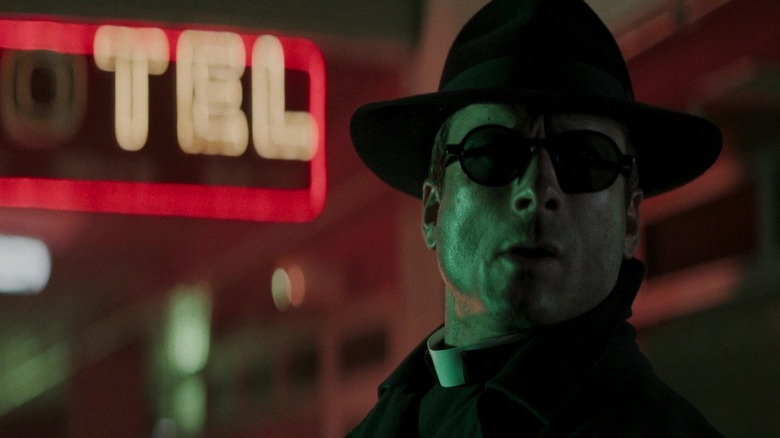
"On paper, they got the ending working," de Souza remarked, acknowledging the challenges of the source material. However, he noted that early reviews suggested a struggle to translate the finale from page to screen effectively. In contrast, Stephen King himself reportedly praised the ending of the 2025 iteration. This dichotomy—between the author’s approval and the audience’s perceived disappointment—adds another layer of complexity to why the film failed to generate the positive word-of-mouth necessary to sustain a long theatrical run.
Broader Implications for the Industry
The saga of The Running Man serves as a warning sign for major studios in the age of consolidation. As legacy studios merge and reorganize, the human cost of these transitions often manifests in the quality and reach of their output.
- The Fragility of Institutional Knowledge: The loss of veteran marketing and production staff creates a "blind spot" in the studio’s ability to support its own slate.
- The Shift in Audience Patience: Audiences are increasingly selective. With the cost of living rising and streaming alternatives becoming more robust, films that fail to capture the cultural conversation within their first 72 hours of release are rarely given a "second chance" in theaters.
- The Value of Autonomy: As directors like Wright face the pressure of corporate mergers, the tension between artistic vision and commercial mandates will likely become a recurring theme in contract negotiations and project greenlighting.
Ultimately, The Running Man will likely find its audience on home media and streaming platforms, where the pressure of opening-weekend box office numbers will no longer weigh on its reputation. But for now, it remains a stark reminder that in the high-stakes world of Hollywood, even the most talented actors and directors can be undone by the quiet, brutal mechanics of corporate boardroom shifts. Whether this serves as a lesson for future blockbuster management or simply as a historical footnote in the career of Glen Powell remains to be seen.
