
The 2027 Oscars Race: A Shifting Landscape for Best Director

As the cinematic calendar turns toward the final quarter of 2026, the race for the 99th Academy Awards is crystallizing into one of the most unpredictable seasons in recent memory. The industry is currently grappling with a landscape reshaped by the monumental merger of Paramount and Warner Bros. into the monolithic entity known as Skydance. Amidst this corporate upheaval, the artistic focus remains on a singular, prestigious prize: the Academy Award for Best Director.
The Changing of the Guard: Where Are the Titans?
At the start of 2026, prognosticators were almost uniform in their expectations. The conventional wisdom suggested that industry titans like Steven Spielberg, Ridley Scott, Alejandro González Iñárritu, and Pedro Almodóvar would dominate the awards circuit.
However, as of October, the reality of the release schedule has proven far more unforgiving. Spielberg’s Disclosure Day and Scott’s The Dog Stars have failed to generate the necessary critical momentum, effectively removing them from serious contention. Iñárritu, conversely, finds himself in a dire professional position following the catastrophic box-office performance of Digger. His potential for a nomination has all but vanished. Only Almodóvar, with his poignant tragicomedy Bitter Christmas, maintains a tenuous path toward a nomination, serving as a reminder that even the most celebrated auteurs are subject to the whims of an evolving audience.

The Frontrunners: Ambrossi, Calvo, and the Nolan Phenomenon
Despite the absence of the "old guard," the category remains fiercely competitive. Based on current industry buzz and festival trajectory, two names have emerged as the primary locks for nomination: Javier Ambrossi and Javier Calvo for La Bola Negra, and Christopher Nolan for his epic, The Odyssey.
The Case for La Bola Negra
Javier Ambrossi and Javier Calvo have become the darlings of the festival circuit. La Bola Negra has not only secured the Best Director prize at the Cannes Film Festival but also captured the People’s Choice Award at the Toronto International Film Festival.
The film is a complex narrative triptych spanning 1932, 1937, and 2017. Inspired by the unfinished final play of Federico García Lorca, the film serves as a harrowing and beautiful meditation on the Spanish Civil War. By focusing on the romance between a Nationalist soldier, Sebastián, and Lorca’s former companion, Rafael Rodríguez Rapún, the directors have crafted an emotionally resonant piece of art. Given the current political climate and the industry’s desire to make a statement regarding LGBTQ+ rights, La Bola Negra currently carries the momentum of a frontrunner.

The Spectacle of The Odyssey
Christopher Nolan, having already secured a Best Director win for 2024’s Oppenheimer, is attempting a rare feat: back-to-back dominance. The Odyssey has been nothing short of a cultural phenomenon, grossing $1.8 billion worldwide against a $250 million budget.
Nolan’s ability to marry high-concept intellectualism with massive, star-studded spectacle has arguably saved the summer box office. While some traditionalists might argue against a second win so quickly after his first, history shows that the Academy is not averse to rewarding directors who demonstrate immense "physical chutzpah." The most likely scenario for Nolan is a split—The Odyssey potentially taking home Best Picture, while the directing trophy goes to the duo behind La Bola Negra.
Mid-Tier Contenders: McDonagh, Wilde, and Villeneuve
Behind the two leaders, a group of formidable directors waits in the wings, each bringing a unique narrative to the table.
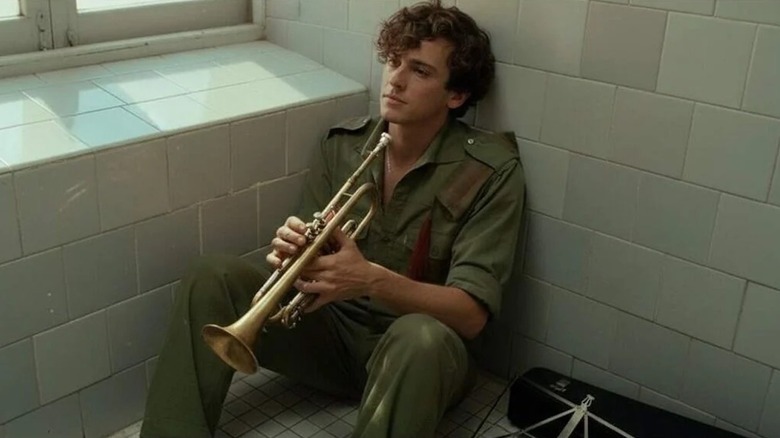
Martin McDonagh and Wild Horse Nine
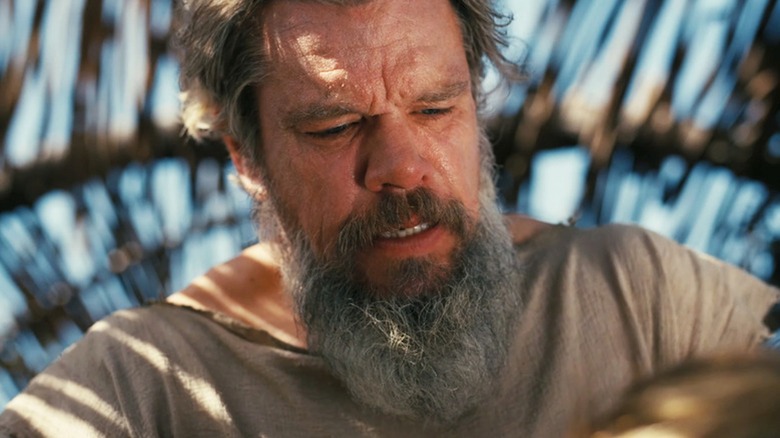
Martin McDonagh is an industry paradox. A decorated playwright and filmmaker, he has been nominated for six Oscars without a single win. Wild Horse Nine, a dark, cynical comedy surrounding the 1973 Chilean coup, has received rave reviews for its sharp-edged, quintessentially "McDonagh" writing. While many expect the film to secure a Best Actor nomination for John Malkovich, the Academy may yet decide that this is the year to finally acknowledge one of the most consistent voices in modern cinema.
Olivia Wilde’s Return to Form
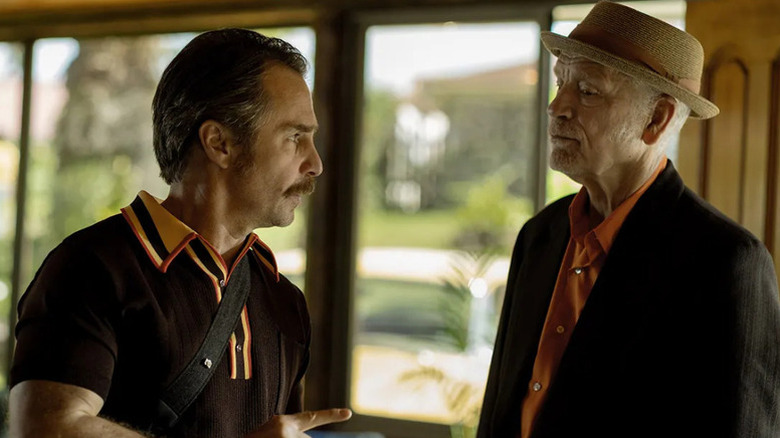
Perhaps the most compelling "redemption arc" of the season belongs to Olivia Wilde. Following the intense media scrutiny and behind-the-scenes controversies of Don’t Worry Darling, Wilde has returned with The Invite. A masterful, acerbic domestic drama, the film has drawn comparisons to the work of Edward Albee and Paul Mazursky. By extracting nuanced performances from a powerhouse cast—including Seth Rogen and Edward Norton—Wilde has proven that directing is as much about the management of performance as it is about grand scale.
The Icy Pragmatism of Denis Villeneuve
Denis Villeneuve’s Dune: Part Three represents a fascinating challenge for the Academy. Having been snubbed for directing nominations on his first two Dune outings, Villeneuve faces a critical question: will the Academy finally recognize his achievement? The film’s exploration of Paul Atreides’ descent into despotism is timely, reflecting the cold, pragmatic anxieties of the current global political landscape. If the electorate desires a film that captures the darker zeitgeist of the era, Villeneuve is the clear choice.
Implications for the Industry
The 2027 Oscars will be remembered not just for the winners, but for what the nominations reveal about the state of the industry. The merger of major studios has left many in Hollywood feeling adrift, searching for a return to the "prestige" era of filmmaking.
The clash between the high-budget spectacle of The Odyssey and the intimate, humanistic heart of La Bola Negra mirrors the struggle for the soul of Hollywood itself. Furthermore, the prominence of international narratives like La Bola Negra suggests that the Academy’s voting base is continuing to expand its horizons, moving away from a purely domestic focus.
Chronology of the Awards Season
- Late November 2026: The release of early critics’ awards marks the official "kick-off" of the campaign season. This is when the "Oscar fever" begins to influence the broader public discourse.
- December 2026: The announcement of the SAG and Golden Globe nominations will serve as the first major indicator of which directors have managed to turn early buzz into sustained industry support.
- January 2027: Official Academy nominations are announced. This period will be defined by the "mud-slinging" phase, where negative buzz is weaponized against the leading contenders.
- February 2027: The 99th Academy Awards ceremony.
Conclusion
While it is still early, the race for Best Director is a battle between spectacle and substance, between the established prestige of auteurs like Nolan and the rising tide of international, character-driven epics like those from Ambrossi and Calvo.
If the current momentum holds, the industry may find itself at a crossroads. Will they reward the blockbuster director who single-handedly propped up the summer season, or will they lean into a more politically charged, humanistic narrative that defines the modern era? Regardless of the outcome, the 2027 Oscars are shaping up to be a reflection of a year where, despite the mergers and the corporate turmoil, the art of directing remains the heartbeat of the industry.
