
The Battle for Elm Street: Why Filmmaker Michael Leavy is Leading the Charge to Become the Next Freddy Krueger
Main Facts: A Dual Race to Revive Horror’s Most Iconic Dream Demon
The horror community has been sent into a frenzy following the blockbuster announcement that both Warner Bros. and Paramount Pictures are individually developing competing A Nightmare on Elm Street projects. As speculation runs rampant over who will write, direct, and helm these prospective reboots, the conversation has inevitably zeroed in on the ultimate casting conundrum: Who could possibly step into the razor-gloved hands of Freddy Krueger?
While major industry names like Bill Skarsgård (IT), Jamie Campbell Bower (Stranger Things), and Kevin Bacon have been tossed into the fan-casting ring, one dark horse has emerged not merely as a social media suggestion, but as a dedicated, active campaigner. Michael Leavy—accomplished filmmaker, co-founder of the indie horror powerhouse Fuzz on the Lens Productions, and a veteran of modern genre staples like Terrifier 2, Terrifier 3, and Stream—has firmly planted his fedora in the ring.
Backed by a rapidly growing Change.org petition, endorsements from franchise royalty, and a proof-of-concept short film titled Freddy’s Back, Leavy is making a compelling case that the next definitive Springwood Slasher doesn’t necessarily need to be an A-list Hollywood star. Instead, he argues, the role should go to someone who understands the psychological terror of Wes Craven’s original 1984 masterpiece inside and out.

Chronology: From Playing Robert Englund’s Younger Self to Becoming Freddy
Michael Leavy’s journey toward the iconic red-and-green striped sweater is rooted in a lifelong dedication to the horror genre, a collaborative filmmaking history, and a uniquely intimate connection to the legacy of Robert Englund himself.
2010–2014: Building Foundations and Meeting the Master
In 2010, lifelong horror enthusiasts Michael Leavy, his brother Jason Leavy, and childhood friend Steven Della Salla established Fuzz on the Lens Productions. Built by fans, for fans, the company quickly carved out a reputation for delivering visceral, uncompromising horror experiences.
Leavy’s physical and stylistic crossover into the established horror canon took a major leap forward in 2014 when he was cast in the psychological horror thriller Fear Clinic. Directed by Robert Green Hall, the film starred horror icon Robert Englund as Dr. Andover, a visionary psychiatrist using experimental technology to cure his patients’ deepest phobias. Leavy landed a pivotal role portraying a younger version of Dr. Andover. He secured the part not only due to a striking physical resemblance to the veteran actor, but also because of his uncanny ability to mimic Englund’s specific physical mannerisms and screen presence.

The Rise of Fuzz on the Lens
Over the next decade, Leavy’s behind-the-camera footprint expanded dramatically. He served as a producer, writer, and actor across several massive independent horror hits. Fuzz on the Lens became instrumental in bringing Damien Leone’s Terrifier 2 and Terrifier 3 to audiences, while also producing the survival-horror thriller Stream and the comprehensive documentary Pennywise: The Story of ‘It’. Leavy’s acting credits expanded concurrently, with appearances ranging from Sharknado 2: The Second One to Scary Movie 6 and Marcus Slabine’s upcoming Sundown, as well as the highly anticipated Stream 2: Sudden Death.
2026: The #LeavyForKrueger Movement Goes Viral
When Warner Bros. and Paramount officially sparked a cinematic race to the finish line with their respective Elm Street developments, Leavy made a playful musing on his personal Facebook page. Attaching the hashtag #LeavyForKrueger, he floated the idea of throwing his hat into the ring.
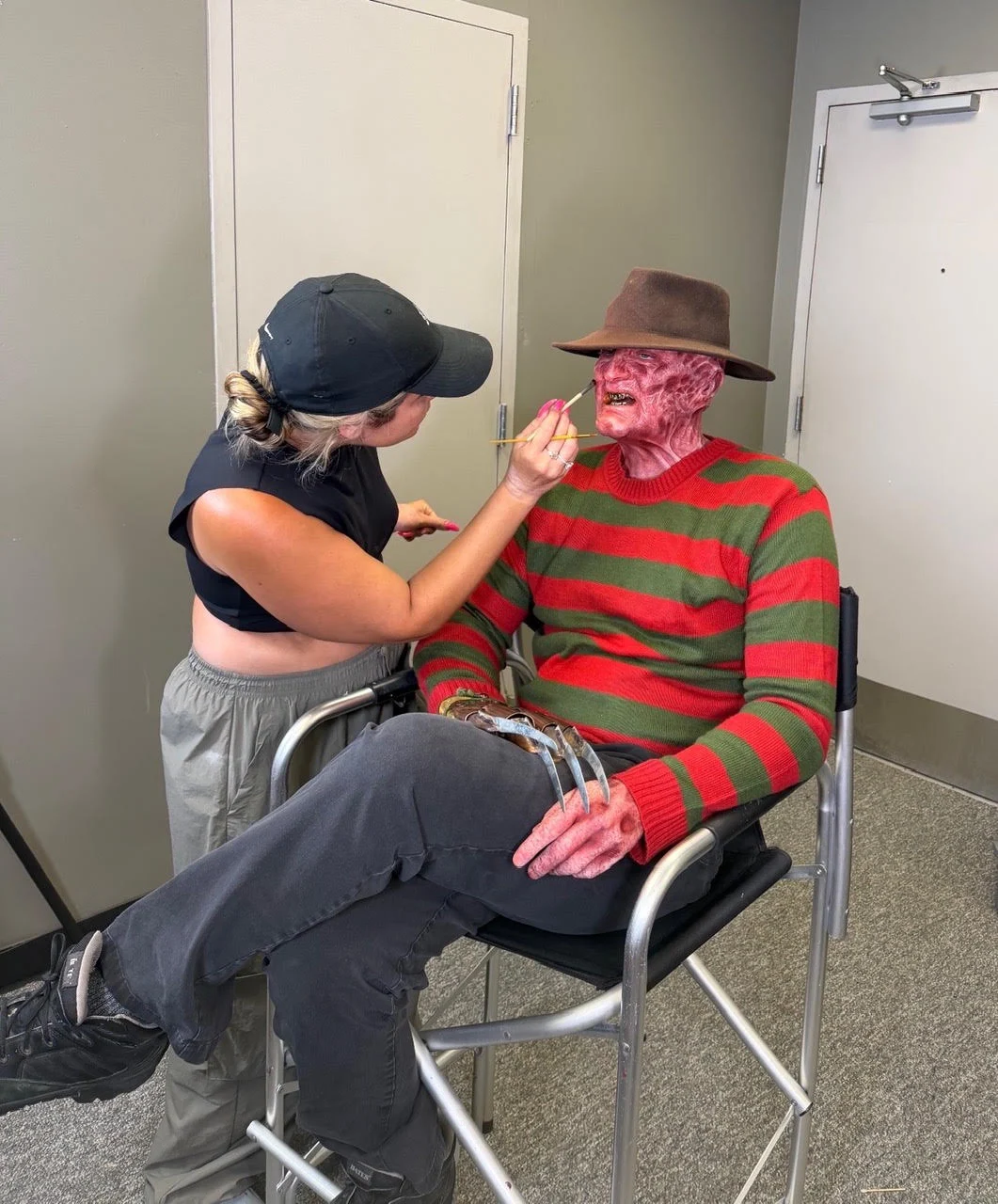
What began as a lighthearted social media post quickly snowballed into a grassroots campaign. Fans rallied behind the filmmaker, transforming the hashtag into a formal Change.org petition that has since amassed nearly 4,000 signatures. Galvanized by the support, Leavy fully committed to the bit—and to his craft—by stepping into complete special-effects makeup, wearing the iconic fedora, and donning the razor-sharp claw.

Supporting Data: Franchise Alums and the Proof-of-Concept Short
The momentum behind Leavy’s campaign is not just driven by internet algorithms; it has earned the seal of approval from foundational figures within the Nightmare on Elm Street franchise itself.
- Elm Street Endorsements: Multiple veterans of the cinematic universe have publicly announced their support for Leavy. These include Ronee Blakely (who portrayed Marge Thompson in the 1984 original), Lisa Wilcox (Alice Johnson from A Nightmare on Elm Street 4: The Dream Master and The Dream Child), and Lochlyn Munro (detour-maker Mark Davis from Freddy vs. Jason).
- The Petition Metrics: The Change.org initiative demanding serious consideration for Leavy by casting directors at Paramount or Warner Bros. continues to climb, demonstrating sustained, passionate fan engagement.
- Freddy’s Back Short Film: To definitively prove his capabilities, Leavy and the Fuzz on the Lens team produced the proof-of-concept short film Freddy’s Back (2026). Co-starring Allison Pittel (Stream), the short serves as a masterclass in recapturing atmospheric tension. Complete with the classic boiler room aesthetic, the metallic scrape of claws against iron pipes, the hiss of ambient steam, and a pitch-perfect cackle, the project showcases Leavy’s mastery of Krueger’s trademark vocal cadences and body language under full burn prosthetics.
Official Responses and Industry Perspectives
While major studios like Warner Bros. and Paramount have kept their cards close to their chests regarding casting choices, directors, and writers for their respective Elm Street pipelines, the industry reaction to grassroots campaigns has shifted significantly in the streaming and reboot era. Studios are increasingly attentive to fan sentiment, particularly when independent creators can demonstrate a proven track record of box-office success and cultural resonance.
Robert Englund, who famously retired from physically inhabiting the role of Freddy Krueger due to the grueling nature of the makeup chair and physical stunt work, has previously expressed openness to a younger successor taking up the mantle, provided they possess the right theatricality and dedication.

Leavy, for his part, has maintained a respectful reverence for Englund’s definitive performance while emphasizing that his campaign is born out of a genuine desire to honor the character’s terrifying roots rather than chase self-promotion. Industry analysts note that while studio blockbusters often lean toward marquee names, modern horror reboots frequently find their greatest successes by casting dedicated genre artisans who understand the psychological architecture of the monsters they portray.
Implications: Reclaiming the Fear of the Springwood Slasher
The broader implications of the #LeavyForKrueger movement speak to a deep-seated desire among horror enthusiasts to steer the Elm Street franchise back to its terrifying origins.
Over the course of its multi-decade run—spanning seven original sequels, a television series, and the 2010 remake—the Nightmare on Elm Street franchise experienced a tonal evolution. What began as a grim, psychological slasher film exploring the dark corners of suburban guilt and adolescent vulnerability gradually shifted. In later entries, Freddy Krueger morphed from a chilling, shadowy child murderer into a wise-cracking, darkly comedic master of ceremonies, delivering one-liners alongside elaborate cartoonish traps.

While fans grew to love the charismatic, black-humor incarnation of the dream demon, many purists argue that the franchise lost its genuine edge of terror. Wes Craven’s original vision relied on unpredictability, dread, and the deeply unsettling notion that sleep—a biological necessity—was no longer safe.
Leavy’s portrayal in Freddy’s Back has been widely praised by critics and fans alike for successfully stripping away the cartoonish antics and restoring the visceral, dark horror that made Krueger a cinematic legend in 1984. By presenting a Freddy who is genuinely menacing, visually striking, and psychologically suffocating, Leavy demonstrates what a modern, 21st-century adaptation could look like if placed in the hands of someone who treats the lore with reverent terror.
Whether Paramount or Warner Bros. ultimately answers the call of the fans remains to be seen. However, one thing is certain: Michael Leavy has proven that he has the vision, the passion, and the terrifying physical chops to wield the glove. As the race to Elm Street heats up, the ball is now firmly in Hollywood’s court to decide whether they will answer the prayers—or the nightmares—of the horror community.
