
A Sublime Translation: Georgia Oakley Brings Fresh Vision and Cinematic Luster to Jane Austen’s Sense and Sensibility
Main Facts
The cinematic landscape is once more poised to welcome one of English literature’s most cherished works, as director Georgia Oakley—critically acclaimed for her breakout feature Blue Jean—turns her considerable lens toward Jane Austen’s enduring classic, Sense and Sensibility. Opening nationwide on Friday, October 16, this fresh adaptation avoids the trap of attempting to radically reinvent a text already immortalized by Ang Lee’s 1995 Oscar-winning masterpiece. Instead, Oakley delivers a sublime, exquisitely crafted film that proves the timeless vitality of Austen’s sturdy narrative framework.
Driven by a stellar ensemble cast featuring Daisy Edgar-Jones, Esmé Creed-Miles, George MacKay, Frank Dillane, and Caitríona Balfe, the film charts the familiar yet emotionally resonant trials of the Dashwood sisters. Following the sudden death of the family patriarch, elder sister Elinor (Edgar-Jones) and fiery middle sibling Marianne (Creed-Miles) find themselves abruptly thrust to the precipice of financial ruin and social displacement. Accompanied by their grieving mother (Balfe) and youngest sister Margaret (Bodhi Rae Breathnach), the women must navigate the perilous marriage market of 19th-century England, where a strategic union is not merely a romantic pursuit, but a vital mechanism for survival.
Oakley’s adaptation distinguishes itself not through narrative subversion, but through an exceptional command of visual storytelling. Bolstered by Arnaud Potier’s lush, transportive cinematography, the film balances Austen’s signature biting wit with deeply felt thematic explorations of repression, societal expectation, and the complex realities of womanhood. Running at a brisk, purposeful pace, the movie proves that revisiting foundational literary material can yield profound cinematic rewards when placed in the hands of an ambitious and visually gifted filmmaker.
Chronology
To understand the pacing and structural rhythm of Oakley’s adaptation, one must trace how the narrative unfolds from its opening frames to its emotionally charged conclusion.
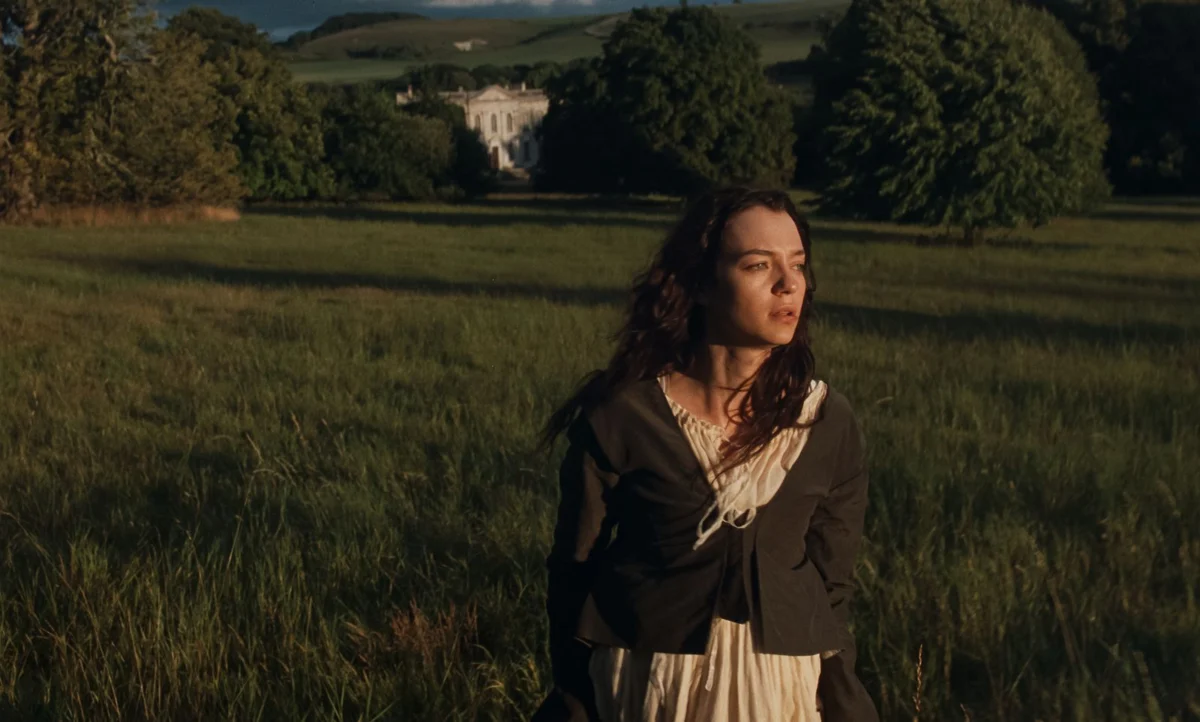
The film wastes precious little time on expositional throat-clearing. Opening credits play out over lingering, impressionistic images of a young woman lounging idly in a sun-drenched field, immediately establishing the naturalistic and atmospheric tone that will characterize much of the runtime. Almost instantly, the audience is thrust into the inciting incident: the death of the Dashwood patriarch.
With the estate passing by law to the icy hands of his son John and his haughty wife, Fanny (portrayed with sharp condescension by Stacey Martin), Mrs. Dashwood and her daughters face the imminent danger of losing both their ancestral home and their precarious footing in the upper class. The chronology moves swiftly as the family is downsized from a comfortable estate to a modest, shabby cottage, framing their economic downgrade as a ticking clock for matrimonial security.
As the narrative progresses, the contrasting temperaments of the Dashwood sisters dictate their respective romances. The reserved, emotionally guarded Elinor initiates a tentative, sweetly cautious courtship with Fanny’s gentle brother, Edward Ferrars (George MacKay). Meanwhile, the passionate and impulsive Marianne literally falls—in a literal tumble that underscores her theatrical emotionalism—for the dashing, enigmatic John Willoughby (Frank Dillane). Lurking quietly in the narrative periphery is the older, aloof, and steadfast family friend Colonel Brandon (Herbert Nordrum), whose patient presence hints at a more grounded, unexpected future for Marianne.
As the story reaches its familiar emotional crescendos and inevitable misunderstandings, the chronology tracks the sisters’ internal transformations. Despite the audience’s preexisting familiarity with the plot beats, the narrative builds toward a satisfying climax that underscores Austen’s thesis: the vital, undeniable necessity of authentic emotional expression within a deeply repressed society.
Supporting Data and Production Details
Behind the scenes, Sense and Sensibility is anchored by a formidable combination of established talent and rising industry powerhouses. The production metrics and creative choices highlight a meticulous approach to period filmmaking that feels both classic and distinctly modern.
Cast and Performances
- Daisy Edgar-Jones as Elinor Dashwood: Bringing a quiet dignity and razor-sharp emotional intelligence to the more restrained sister, Edgar-Jones anchors the film’s dramatic core.
- Esmé Creed-Miles as Marianne Dashwood: Creed-Miles captures Marianne’s torrential emotional landscape, balancing youthful naivety with heartbreaking vulnerability. The chemistry between Edgar-Jones and Creed-Miles establishes a palpable, authentic sibling dynamic characterized by classic antagonism and fierce devotion.
- George MacKay as Edward Ferrars: Possessing a physical presence and visage seemingly custom-built for period dramas, MacKay cuts a dashing, sympathetic figure as the hesitant romantic lead.
- Frank Dillane as John Willoughby: Dillane showcases a warmer register than audiences may anticipate, while subtly nodding to the toxic masculine archetypes he previously explored in projects like Urchin.
- Caitríona Balfe as Mrs. Dashwood: Balfe delivers a solid, grounded performance as the matriarch eager to secure her daughters’ futures, imbuing the role with the signature dry wit intrinsic to Austen’s literary voice.
- Herbert Nordrum as Colonel Brandon: Nordrum successfully navigates the linguistic hurdles of adopting an English accent, though his character’s naturally aloof nature occasionally limits his room for deep emotional excavation.
- Bodhi Rae Breathnach as Margaret Dashwood: Rounding out the family, young Breathnach provides delightful comedic relief as the youngest sister.
- Fiona Shaw as Mrs. Jennings: Shaw makes a thunderous, boorish entrance that injects immediate energy into the proceedings, though the character’s screen time stretches slightly past its welcome.
Cinematography and Direction
Cinematographer Arnaud Potier works in tandem with director Georgia Oakley to craft a visual language that elevates the material far above standard literary adaptations. The camera work frequently eschews static, traditional blocking in favor of a roving, handheld Malickian aesthetic that captures the characters interacting organically with the natural world—outperforming similar attempts made in recent period pieces like Hamnet.
Indoors, Oakley employs sophisticated framing techniques, utilizing mirrors during intimate dinner conversations to subtly shift narrative focus between speakers. Furthermore, the film’s dance sequences are choreographed and captured with an eye for kinetic grace, highlighting the beauty and tension of bodies moving in disciplined, socially mandated sync.
Official Responses and Critical Reception
Early critical responses from festival screenings and industry previews indicate that Georgia Oakley has successfully navigated the treacherous waters of adapting a universally beloved classic. Industry analysts and film critics have overwhelmingly praised her ability to honor the source material while leaving an unmistakable auteurist stamp.
In official commentary surrounding the film’s distribution rollout, executives at the studio have emphasized the timeless appeal of Austen’s themes when filtered through a contemporary feminist lens. Oakley herself has noted in interviews that her approach was driven not by a desire to "fix" Austen, but rather to interrogate the machinery of class, survival, and female agency that underpins 19th-century domestic life.
Critical consensus highlights Sense and Sensibility as a triumphant stepping stone for Oakley following her indie breakthrough Blue Jean. Reviewers have particularly lauded the brisk runtime, which avoids the narrative bloat that often plagues historical dramas. While purists may debate whether this version eclipses the iconic 1995 Ang Lee film starring Emma Thompson and Kate Winslet, the overarching critical verdict is unanimous: Oakley’s film is a richly entertaining, expertly mounted cinematic achievement that more than justifies its own existence.
Implications
The release of Sense and Sensibility on October 16 carries broader implications for the contemporary film industry, particularly concerning how studios approach literary adaptations in an era increasingly saturated by original IP and franchise fatigue.
The Viability of "Solid Translations"
For years, the prevailing wisdom in Hollywood suggested that classic literary adaptations required heavy deconstruction, gritty modernization, or radical subversion to capture contemporary audience attention. Oakley’s film challenges this assumption. By embracing a "solid translation" of sturdy material without attempting to reinvent the narrative wheel, the film proves that audiences still crave masterfully executed, traditional storytelling. It demonstrates that innovation can happen at the level of craft, tone, and visual grammar rather than through forced plot alterations.
Auteurist Growth and Gender Politics
For Georgia Oakley, this project cements her transition from an indie darling to a major talent capable of managing larger budgets, period aesthetics, and ensemble casts. Crucially, the thematic continuity between Blue Jean and Sense and Sensibility is striking. Both films—despite taking place centuries apart—deeply investigate the themes of institutional repression, societal surveillance, and the precarious position of women trying to carve out an authentic existence within rigid patriarchal structures.
By treating the Dashwood sisters’ pursuit of marriage not merely as a quaint romance, but as an urgent, high-stakes economic survival strategy, Oakley breathes modern urgency into historical text. The implication for viewers is clear: beneath the corsets, country dances, and polite drawing-room banter lie the timeless, universal struggles of emotional honesty and self-determination. As audiences head to theaters this October, they are invited not just to revisit an old friend, but to witness a brilliant modern voice breathing vibrant new life into the cinematic canon.
