
Unraveling the Time-Bending Suburbia of David Robert Mitchell’s The End of Oak Street: A Deep Dive into VFX, Filmmaking, and Narrative Choices
Main Facts
In the latest episode of The VFX Show (Episode 309), a panel of industry veterans gathers to dissect one of the most visually and narratively ambitious cinematic releases in recent memory: David Robert Mitchell’s The End of Oak Street. Starring Hollywood heavyweights Anne Hathaway and Ewan McGregor, the film presents a high-concept premise that upends the traditional suburban drama.
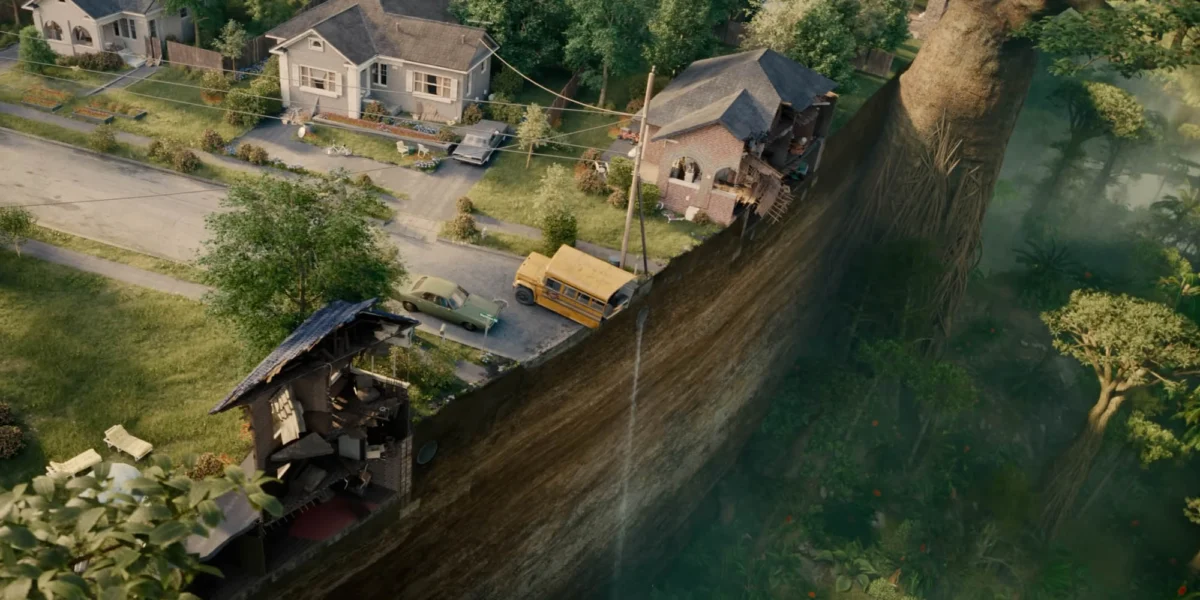
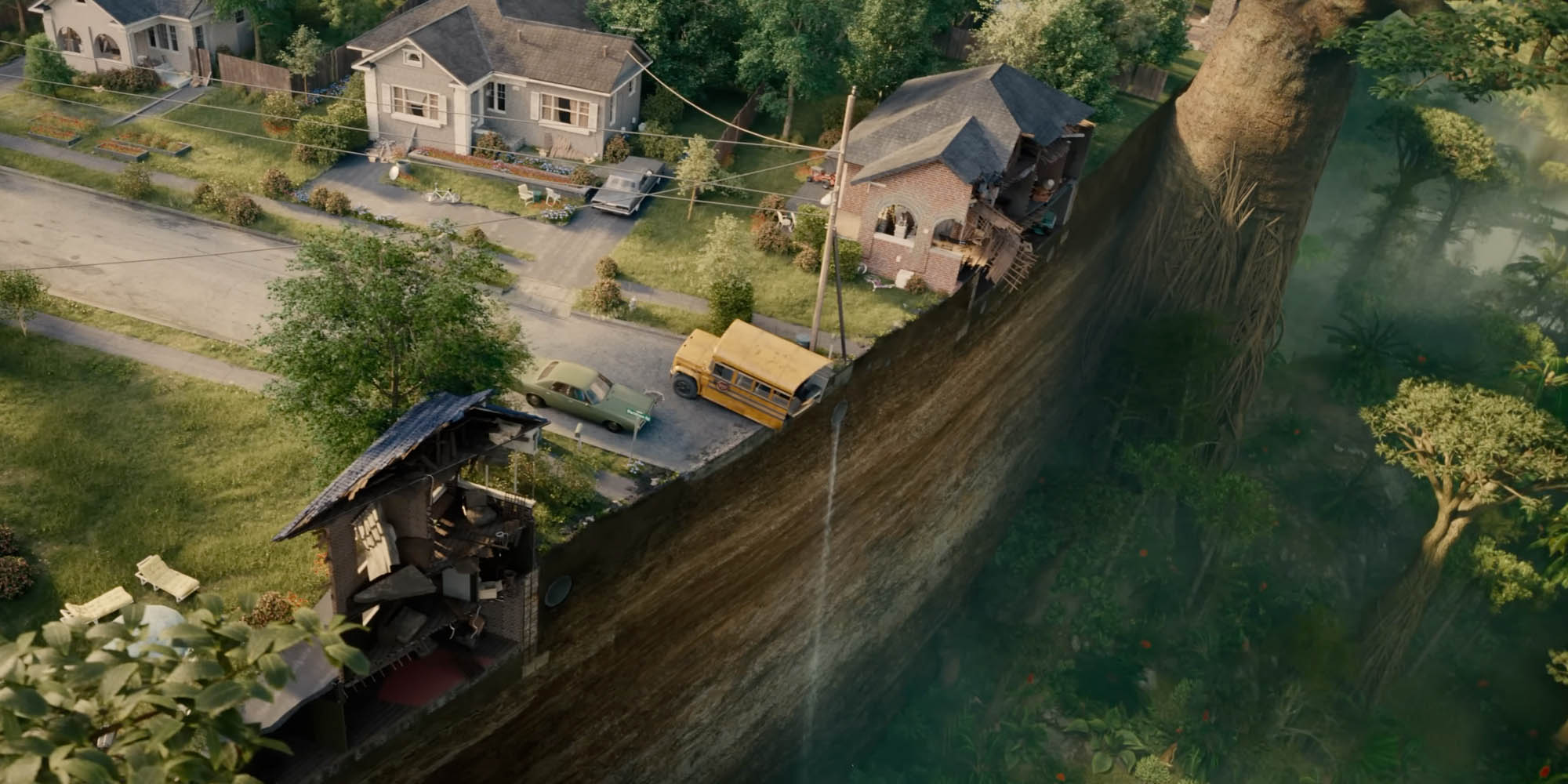
At its core, The End of Oak Street follows the Platt family as their seemingly idyllic, routine suburban neighborhood is abruptly upended by a mysterious, cataclysmic event. Instead of merely being displaced geographically, the neighborhood—along with its residents—is violently transported both somewhere entirely unknown and backward in time. As the boundaries of reality fracture, the Platt family, anchored by Hathaway and McGregor’s compelling performances, must pull together to navigate an unfamiliar, disorienting era while confronting the psychological toll of their displacement.
Written and directed by Mitchell—best known for his genre-defining work on It Follows and Under the Silver Lake—the film blends psychological suspense with speculative sci-fi and intricate visual effects. In Episode 309, the podcast panel puts these filmmaking choices under a rigorous microscope. Featuring insights from Matt Wallin, Jason Diamond, and Mike Seymour, alongside editing and production by Jim Shen, the episode explores the complex intersection of practical filmmaking, visual effects artistry, and narrative execution, sparking a lively debate on what ultimately succeeded on screen and where the ambitious project stumbled.
Chronology of Production and Release
The journey of The End of Oak Street from concept to screen represents a meticulous blend of modern digital pipelines and traditional auteur-driven storytelling. While specific production timelines for Mitchell’s follow-up projects are often shrouded in secrecy, the visual effects and post-production phases spanned several months of intense collaborative effort between directors, cinematographers, and top-tier VFX houses.
- Pre-Production and Conceptualization: David Robert Mitchell spent considerable time developing the script, focusing heavily on the claustrophobia of suburban architecture juxtaposed against the infinite, terrifying void of an unknown temporal and physical landscape. Storyboarding prioritized continuous, tracking-shot aesthetics to make the viewer feel trapped alongside the Platt family.
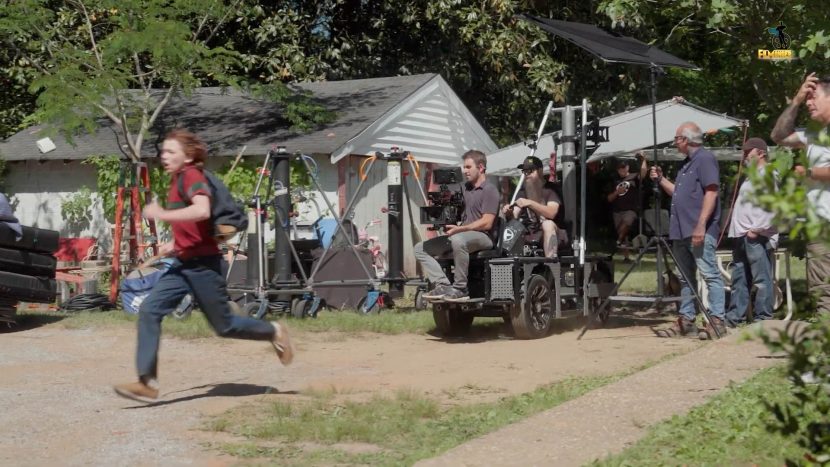
- Principal Photography: Filming with Anne Hathaway and Ewan McGregor utilized a combination of physical set builds—representing the titular Oak Street—and advanced LED volume stages/green-screen environments. This allowed the actors to physically interact with tactile elements of their suburban surroundings while preparing for the digital erasure and replacement of their familiar horizons.
- Post-Production and VFX Integration: The heaviest lifting occurred in post-production, where teams painstakingly crafted the temporal anomalies and environmental shifts that define the film’s inciting incident. Seamlessly merging practical suburban decay with surreal, anachronistic landscapes required iterative passes of digital compositing, lighting matching, and CGI environment creation.
- Theatrical Release and Critical Reception: Upon hitting theaters, the film polarized audiences and critics alike, praised for its audacity and atmosphere while drawing scrutiny for its labyrinthine plot mechanics.
- The VFX Show Episode 309 Drop: Capitalizing on the film’s complex visual identity, The VFX Show released its comprehensive breakdown episode, inviting listeners to re-evaluate the cinematic techniques that brought Mitchell’s surreal vision to life.
Supporting Data and Technical Breakdown
To truly understand the cinematic weight of The End of Oak Street, one must examine the technical infrastructure and artistic choices discussed by the podcast panel. The film relies heavily on illusion, scale, and digital mastery to sell its impossible premise.
Visual Effects Metrics & Techniques
- Environment Replacement: Over 60% of the exterior shots featuring the Oak Street neighborhood required digital augmentation or complete background replacement to depict the "unknown" temporal zones.
- Lighting Shifts: Because the neighborhood is thrust backward in time, the color grading and lighting design transition from warm, nostalgic Americana palettes to harsh, desaturated, or anachronistically lit environments. The VFX team had to dynamically track sun angles and atmospheric scattering across complex suburban geometries.
- Practical vs. Digital Integration: According to the panel discussions on The VFX Show, the film succeeded best when it anchored digital effects with physical action. Practical debris, weather effects, and physical interactions on the Platt family set provided the necessary grit to ground the surreal narrative.
Podcast Panel Overview
- Matt Wallin: Digital artist and educator (@mattwallin, mattwallin.com, Mastodon/Letterboxd) brought a technical eye to the discussion, analyzing how digital asset management and environment extensions were handled.
- Jason Diamond: Filmmaker and creative director (thediamondbros.com) focused on pacing, narrative structure, and how the visual framing served—or occasionally hindered—the emotional arcs of Hathaway and McGregor.
- Mike Seymour: Co-founder of fxguide (fxguide.com) provided deep industry context, evaluating the broader pipeline methodologies utilized by the VFX studios credited on the project.
- Jim Shen: Handled the rigorous editing and audio production of the podcast episode, ensuring a polished listening experience for digital artists, cinephiles, and casual fans alike.
Official Responses and Industry Reception
The release of The End of Oak Street prompted widespread discussion across major cinema and visual effects forums. While mainstream reviews focused primarily on the star power of Hathaway and McGregor and Mitchell’s signature atmospheric dread, specialized communities like fxguide dove headfirst into the mechanics of the production.
Industry professionals lauded the film’s refusal to rely on generic blockbuster aesthetics. Instead, Mitchell opted for an unsettling, grounded approach to science fiction. The visual effects were frequently cited as a masterclass in subtlety—rather than bombastic superhero CGI, the effects in The End of Oak Street are designed to induce low-grade panic and disorientation.
However, the film was not immune to debate. During Episode 309 of The VFX Show, the panel engaged in a candid, unvarnished critique of the production. While universally praising the texture of the suburban set designs and the emotional commitment of the lead actors, the panel debated whether certain third-act visual choices fully resolved the narrative’s central mystery. This friction between technical brilliance and storytelling clarity has become a hallmark of discussions surrounding Mitchell’s filmography, proving that The End of Oak Street is a movie designed to provoke conversation long after the credits roll.
Implications for Modern Cinema and Visual Effects
The discourse surrounding The End of Oak Street and its deep-dive analysis on The VFX Show highlights several broader trends in contemporary filmmaking and visual effects:
- The Rise of "Invisible" VFX in High-Concept Sci-Fi:
For years, blockbusters have relied on loud, unmistakable CGI. The End of Oak Street demonstrates a counter-movement: using high-end visual effects not to show monsters or spaceships, but to distort reality in mundane spaces. The terror of a suburban street looking almost right, but displaced in time, requires a level of psychological nuance that pushes digital artists toward photorealistic precision. - Auteur-Driven Genre Filmmaking:
The involvement of prestige actors like Anne Hathaway and Ewan McGregor in an idiosyncratic, time-bending indie-leaning sci-fi project from David Robert Mitchell signals a healthy appetite for original storytelling. Studios and financiers are increasingly willing to back high-concept bets when paired with visionary directors and bankable talent. - The Demand for Deep-Dive Analytical Content:
As films become more textually and technically complex, audiences—particularly creators and cinephiles—crave granular breakdowns. Podcasts like The VFX Show fill a crucial gap, allowing viewers to move past simple "thumbs up/thumbs down" reviews and understand the actual sweat, code, and creative problem-solving required to bring a modern cinematic nightmare to life.
As listeners tune into Episode 309, they are invited not just to consume a review, but to participate in an ongoing industry debate. Whether The End of Oak Street ultimately succeeds as a cohesive masterpiece or remains a brilliantly flawed experiment, it has firmly cemented its place as a landmark text for modern visual effects discussion.
To join the conversation, fans can reach out to the team via email at the address provided on fxguide, subscribe to the podcast on Apple Podcasts, Spotify, or via RSS, and check out the video breakdown on the official fxguide YouTube channel.
