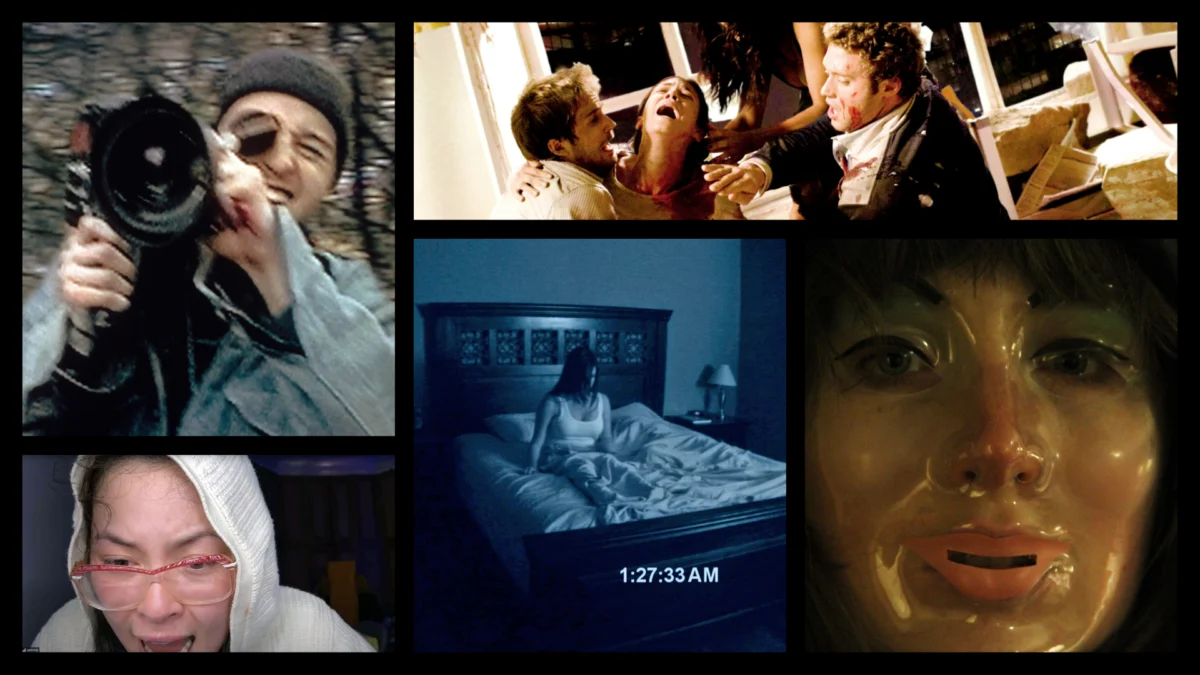
The Digital Panopticon and the Celluloid Ghost: Why Found Footage Horror Still Reigns Supreme in the Age of AI
Main Facts: The Enduring Terror of the Simulated Real
As the boundary between physical reality and digital fabrication grows increasingly porous, the horror genre finds itself standing at a fascinating cultural crossroads. What is genuinely more terrifying than a technologically saturated world where omnipresent lenses, algorithms, and sensors record every inch of human existence? The answer, perhaps, is horror cinema that aggressively pretends this digital panopticon is entirely real.
Thanks to the rapid, global proliferation of artificial intelligence, deepfakes, and instantly generated computer imagery, audiences may soon find it nearly impossible to distinguish between traditional "foundfootage" movies—shot practically on handheld cameras, camcorders, and consumer devices—and synthetic video instantly spun up by a server farm. For now, however, horror enthusiasts can still dive into the gritty, pixelated archives of the subgenre without worrying that the entire cinematic landscape will dissolve into digital info-rot overnight.
The found footage format remains a cornerstone of modern horror, drawing its power from the unsettling premise that what you are watching is not a performance, but physical evidence of hell on Earth. Whether it is a compilation of cursed VHS tapes, a harrowing supernatural haunting played out across a live Zoom call, or security camera feeds capturing a descent into madness, these films weaponize our collective anxiety about technology, surveillance, and the fragility of truth.
As the genre celebrates decades of innovation since The Blair Witch Project fundamentally altered the cinematic landscape, filmmakers and critics alike are reckoning with how the form must evolve. With new features hitting festival circuits, major developmental funds launching to support marginalized creators, and highly anticipated directorial debuts on the horizon, found footage is proving that it is far more than a passing gimmick—it is a vital, shape-shifting medium for our paranoid times.
Chronology: From 16mm Atrocity to the Zoom-Room Ghost Train
To understand the resilience of found footage horror, one must trace its evolution from controversial underground experiments to a dominant mainstream and indie force.
The Precursors and Pioneers
Long before digital cameras and smartphones democratized filmmaking, early cinematic experiments played with the mockumentary and faux-documentary format. However, the modern iteration of the subgenre truly began to take shape with extreme, transgressive works like Ruggero Deodato’s 1980 Italian shocker Cannibal Holocaust. Though deeply controversial and mired in ethical debates regarding its production, the film established the framing device that would define a generation of horror: an expedition lost in the wilderness, leaving behind only film canisters that document unspeakable horrors.
The Paradigm Shift (1999)
The tectonic plates of horror shifted irrevocably in 1999 with the release of directors Daniel Myrick and Eduardo Sánchez’s The Blair Witch Project. Shot on a micro-budget with actors improvising in the Maryland woods, the film leveraged the nascent power of the internet to market itself as a genuine, recovered documentary about three student filmmakers who vanished. The resulting cultural phenomenon proved that audiences did not need million-dollar CGI monsters to be terrified; they needed the raw, unvarnished claustrophobia of a shaking camera lens pointing into the dark.
The Digital Renaissance (Late 2000s – 2010s)
Following the millennium, the rapid advancement of consumer digital video cameras, GoPros, and domestic security systems birthed a second wave of found footage blockbusters. Oren Peli’s Paranormal Activity (2007) utilized static home-surveillance cameras to turn an ordinary suburban bedroom into a chamber of unimaginable dread, grossing over $190 million worldwide on a minuscule budget. Simultaneously, Matt Reeves and J.J. Abrams’ Cloverfield (2008) applied the aesthetic to a massive monster-movie canvas, capturing an alien attack on New York City through the lens of a handheld consumer camcorder at a going-away party.
During this era, under-seen international and indie gems also carved out cult legacies. Australian spine-chillers like Lake Mungo (2008) and The Tunnel (2011) utilized pseudo-documentary investigation formats to explore grief, guilt, and subterranean terror. Meanwhile, anthologies like the V/H/S franchise revitalized the short-form horror segment, inviting a revolving door of visionary directors to experiment with analog nostalgia, glitch art, and digital artifacts.
The Pandemic Pivot and Modern Horizons (2020–Present)
When the COVID-19 pandemic locked down the global population in 2020, indie horror proved remarkably agile. Rob Savage’s Host capitalized on the sudden ubiquity of video conferencing software, staging a séance over Zoom that trapped characters—and viewers—in a familiar digital prison.
As the subgenre moves through 2025, it continues to adapt. Over the summer, Peter S. Hall and Paul Gandersman released their divisive festival entry Man Finds Tape, which Magnet Releasing quickly snapped up. Meanwhile, the pipeline for fresh voices expanded significantly when Duplass Brothers Productions partnered with the Transgender Film Center to launch a dedicated production fund supporting trans artists working within the found footage format.
Looking forward to late October 2025, the cultural conversation around the subgenre will pivot again with the feature directorial debut of prominent YouTuber and film critic Chris Stuckmann. His film Neon’s Shelby Oaks, partially framed as a paranormal missing person’s case utilizing found footage aesthetics, represents a fascinating bridge between internet creator culture and traditional theatrical distribution.
Supporting Data: The Economics and Demographics of Found Footage
The enduring appeal of found footage horror is not merely artistic; it is rooted in a highly effective economic and structural framework that continues to attract studios, independent financiers, and audiences alike.
The Return on Investment (ROI) Phenomenon: Found footage films remain among the most financially lucrative investments in the history of cinema. The Blair Witch Project grossed approximately $248 million worldwide against a budget estimated between $25,000 and $60,000. Paranormal Activity achieved an even higher percentage return, pulling in nearly $194 million on a production budget of just $15,000.
Demographic Engagement: According to box-office analytics and streaming metrics from platforms like Shudder, found footage and screenlife horror over-index heavily with younger demographics (Gen Z and Millennials). This audience demonstrates a high comfort level with digital interfaces, multi-screen narratives, and decentralized storytelling.
Accessibility and Production Trends: The democratization of high-definition digital cameras, mobile phones, and editing software has lowered the barrier to entry for independent filmmakers. Rather than requiring expensive lighting rigs and crane shots, found footage relies on "imperfect" aesthetics, making raw, authentic-feeling visuals accessible to creators operating on micro-budgets.
Critical Reappraisal: While early 2000s critics often dismissed the subgenre as a cheap, nausea-inducing fad plagued by diminishing returns, contemporary film scholarship recognizes it as a sophisticated form of metafiction. Films like Lake Mungo and Savageland use the format to explore complex socio-political commentary, grief, systemic racism, and the unreliability of historical archives.
Official Responses and Industry Perspectives
The rapid evolution of AI-generated media alongside the enduring popularity of raw cinematic realism has prompted notable figures across the film industry to weigh in on the future of recording, truth, and horror.
In recent interviews surrounding the festival circuit and theatrical rollouts, independent filmmakers have emphasized that the psychological terror of found footage stems directly from its claim to documentary authority.
"When a viewer believes they are watching unedited, real-time evidence of a tragedy, the psychological contract between the audience and the screen changes entirely," noted one prominent indie horror producer. "You aren’t just watching a story unfold; you are implicated as a witness to a crime or a supernatural event."
Industry analysts tracking the partnership between Duplass Brothers Productions and the Transgender Film Center have similarly highlighted the importance of expanding who gets to hold the camera. By establishing a dedicated fund for trans artists in the found footage space, the initiative aims to dismantle traditional gatekeeping and allow marginalized creators to define their own visual narratives and fears.
Furthermore, crossover creators like Chris Stuckmann have spoken candidly about transitioning from film criticism to feature filmmaking within genre spaces. By utilizing missing-person tropes and paranormal investigation frameworks in Shelby Oaks, Stuckmann and distributors like Neon are tapping directly into the modern internet obsession with true crime rabbit holes, missing persons forums, and digital sleuthing.
At the same time, technologists and ethicists have issued warnings regarding the dawn of hyper-realistic generative video. As deepfakes become indistinguishable from actual footage, the very foundation of the "found footage" conceit—the promise that this really happened—faces an existential crisis. If audiences assume everything they see online is artificially generated, horror cinema may need to pioneer entirely new vocabularies to convince viewers of on-screen peril.
Implications: The Future of Fear in a Post-Truth World
What do these cultural and technological shifts mean for the future of horror? As we look past Halloween 2025 and stare down the barrel of an increasingly automated media landscape, the implications for the found footage subgenre are profound.
1. The Death and Rebirth of "Proof"
For decades, humanity has operated under the cultural assumption that "seeing is believing." Photographs, home videos, and news broadcasts served as anchors of objective reality. The found footage genre weaponized this trust, using shaky cameras and low-resolution audio to trick our brains into accepting the impossible.
As generative AI makes fabricating convincing video evidence trivial, the psychological impact of found footage risks being neutralized—or, conversely, heightened. If audiences can no longer trust real video, the theater becomes one of the few remaining spaces where collective, consensual suspension of disbelief can occur. Alternatively, filmmakers may lean into the uncanny valley of digital fabrication, creating hybrid nightmares where audiences cannot tell if the monster on screen is a costumed actor or a hallucinating algorithm.
2. Democratization Through Micro-Budgets
The structural blueprint of found footage guarantees that DIY filmmaking will continue to thrive. As major studios grapple with bloated budgets and franchise fatigue, independent creators utilizing mobile phones, security cameras, and desktop interfaces can pivot quickly to address contemporary anxieties. Whether exploring the horrors of remote work isolation (Host), internet subcultures, or local municipal cover-ups (Savageland), the format remains uniquely equipped to reflect the immediate zeitgeist.
3. Ethical Storytelling and Amplifying New Voices
Initiatives like the Duplass-TFC fund signal a crucial shift toward inclusivity within a subgenre historically dominated by homogenous perspectives. By empowering underrepresented artists to utilize the grammar of documentation and surveillance, the horror genre gains fresh thematic depth. Found footage ceases to be merely about panicked people running through dark woods; it becomes a tool for marginalized communities to interrogate surveillance, societal neglect, and the historical record itself.
Conclusion: Embracing the Digital Void
Ultimately, the longevity of found footage horror proves that audiences do not crave pristine, perfectly lit spectacle—they crave intimacy, vulnerability, and the chilling sensation of looking where humans were never meant to look. Whether revisiting foundational milestones like The Blair Witch Project and Paranormal Activity or unearthing overlooked gems like Be My Cat: A Film for Anne, horror fans continue to seek out the thrill of the unedited, the unpolished, and the profoundly unsettling.
As the robots chant their digital slogans and algorithms attempt to synthesize reality itself, flesh-and-blood audiences will keep turning off the lights, pressing play on the cursed tape, and whispering into the dark.