
When Apex Predator Meets High-Octane Action: A Deep Dive Into Jacob Rainer’s Wildman
Main Facts: The Script That Broke the Mold
In the competitive, high-stakes landscape of modern screenwriting contests, few entries manage to instantly capture the collective imagination of the industry quite like Jacob Rainer’s action-horror spec script, Wildman. Developed as part of the rigorous, highly selective Blood & Ink Horror Screenplay Contest, Wildman immediately stood out during its pitch weekend phase due to one unforgettable, high-concept logline:
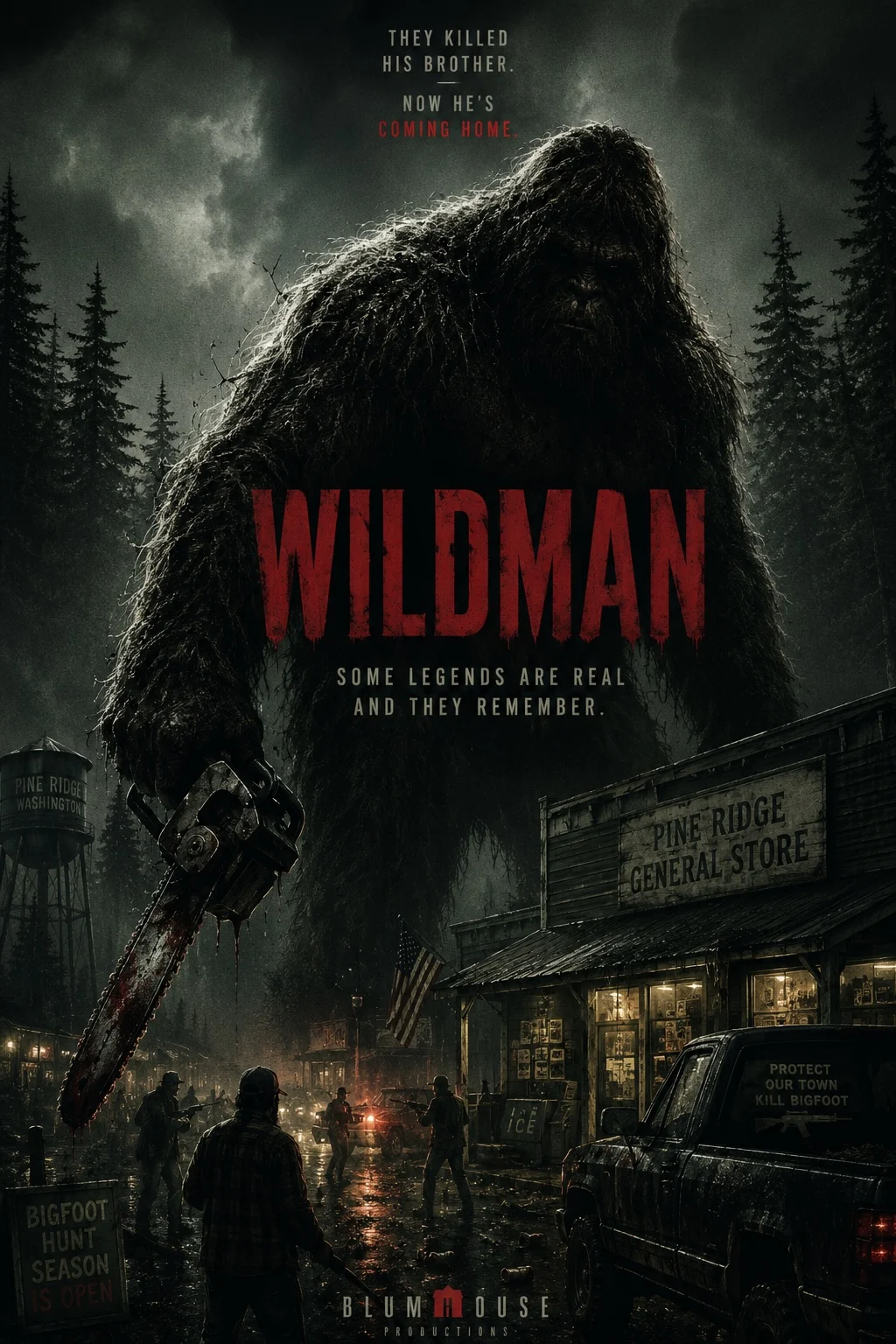
When his brother is gunned down by a murderous gang, reclusive Joel must leave his hidden mountain home to get revenge. His quest for justice sets him on a collision course with a homicidal cop, stone-cold psychopaths, and a bloodthirsty militia, but Joel won’t stop until he’s torn them all limb from limb. Also, Joel is a Bigfoot.
Spanning 121 pages, Wildman takes the tired, often campy cryptozoology subgenre and violently injects it with the gritty, relentless pacing of a classic revenge thriller. Rather than treating the legendary cryptid as a mere monster-of-the-week to be hunted in the shadows, Rainer positions Bigfoot as the wronged, grief-stricken protagonist of a brutal tale of vengeance.
The project emerged from a grueling contest framework. Out of hundreds of pitches, only around 90 writers earned the right to compete based on peer upvotes or direct approvals. Given a strict six-month window to complete their features, participants pushed their creative boundaries to deliver finished scripts for review. While Wildman has officially secured its placement in the contest’s upcoming Top 10 review cycle, it has already sparked vital industry conversations about narrative voice, script economy, and the future of spec screenwriting in an era increasingly saturated by automated text generation.
Chronology: The Making and Mechanics of Wildman
To understand how Wildman achieved its current status as a standout contest contender, it helps to examine both its internal narrative arc and its unique developmental timeline.
Phase 1: The Six-Month Gauntlet
Six months ago, the Blood & Ink contest required hopefuls to pitch their concepts directly into a public comments arena, demanding either fifteen peer upvotes or direct curator approval to enter the official drafting pool. Once accepted, Rainer and roughly ninety other scribes faced a strict half-year deadline to turn their raw premises into fully realized feature-length screenplays.
Phase 2: Entering the Backwoods of Washington
Rainer’s script opens in a remote, rugged pocket of Washington State. The narrative immediately establishes the volatile socio-cultural climate of a small, hyper-aggressive rural community. We are introduced to local authorities and residents—ranging from the relatively level-headed Sheriff Cale Dyer to volatile deputies, unhinged war veterans, and dangerous local misfits like the bloodthirsty Ranse.
The catalyst for the carnage occurs when a local resident named Luke acquires a rare, illicit "Bigfoot call"—a mechanical audio device engineered to mimic cryptid vocalizations. Pressured by his belligerent peers, Luke uses the call in a deep-forest clearing.
Deep in their isolated, utopian sanctuary, Bigfoot brothers Joel and Ethan hear the sound. While Joel remains cautious, the younger Ethan is consumed by a fatal curiosity. He investigates the clearing, only to be ambushed and gunned down in cold blood by camouflaged militiamen.
Phase 3: The Path of Vengeance
Arriving moments too late to save his brother, Joel witnesses the aftermath and initiates a bloody reprisal. Although initially wounded and forced to seek shelter with a sympathetic elderly couple, Joel quickly adapts to the human world’s violence. In a defining sequence, he arms himself with a heavy-duty chainsaw, infiltrates a crowded local bar to slaughter the men responsible, and launches an all-out war against the town’s armed factions to retrieve his brother’s body.
Supporting Data: Narrative Breakdown and Structural Critique
While industry analysts and script readers have lauded Wildman for its audacious set-pieces and sheer fearlessness, structural evaluations reveal a nuanced picture of a script that is simultaneously brilliant and overstuffed.
The Power of Bold Cinematic Imagery
Wildman succeeds wildly when it leans into unapologetic, high-concept spectacle. Reviewers have highlighted two monumental set-pieces that elevate the script above standard creature features:
- The General Store Massacre: An explosive, chaotic opening sequence that instantly establishes the lethal capability of the cryptid protagonist.
- The Chainsaw Bar Raid: A deliriously entertaining, hyper-violent sequence where a chainsaw-wielding Bigfoot systematically dismantles an entire room of hostile rednecks.
These moments embody the quintessential "movie scene"—the rare kind of narrative beat that studio producers read and instantly visualize as a blockbuster box-office draw.
The Weight of Length: The 121-Page Dilemma
Despite its high-octane highlights, Wildman faces significant hurdles typical of ambitious spec scripts: excessive runtime and narrative bloat. At 122 pages, the script tests the traditional rules of the thriller genre.
Industry consensus holds that thrillers must move at a breakneck pace, gripping the audience by the throat and refusing to let go until the final frame. Every extraneous scene, sub-plot, or redundant character arc acts as "script fat"—unnecessary weight that slows down momentum. In Wildman, the attempt to construct an elaborate town mythology, multiple antagonistic subplots, and an extended origin story stretches a lean revenge narrative into a somewhat lethargic viewing experience.
Official Responses and Expert Analysis
Critical evaluation of Wildman extends far beyond surface-level plot summaries, offering deep insights into the mechanical craft of screenwriting. Reviewers have praised Rainer’s absolute commitment to his premise, noting that many writers pull their punches when exploring taboo or extreme narrative territories. Rainer dives headfirst into the madness, crafting a world where human depravity matches—and often exceeds—the feral fury of the titular beast.
However, the primary critique centers on structural ambition versus narrative focus. Analysts have posed a provocative question: What if the story completely aligned its perspective with the cryptid protagonist?
By drawing a parallel to action milestones like John Wick, industry critics suggest that stripping away extraneous human dialogue and anchoring the narrative entirely to Joel’s silent, relentless quest for revenge could transform the script from a traditional creature-feature into an iconic, lightning-fast cinematic experience. Instead of dividing screen time among a large ensemble of familiar town archetypes, keeping the audience confined to Joel’s POV—observing his enemies from the shadows and executing calculated strikes—would establish a truly unique tonal identity.
Implications: Writing With Personality in the Age of AI
Beyond its value as a piece of speculative fiction, Wildman serves as a timely case study for the broader screenwriting community, particularly regarding the evolving role of the human author in an automated landscape.
The Crisis of Logical, Sterile Prose
Too many aspiring screenwriters fall into the trap of "logical writing"—prose that functions purely as a clinical, mechanical conveyor belt of information. For example, a sterile description might read:
We’re on: Georgie’s General Store. A common store that looks similar to other stores in small towns. In the parking lot are a number of men in military gear holding AR-15s.
While functional, this style strips the page of life. It reads like an instruction manual rather than an invitation to experience a world.
The Ultimate Human Advantage
Jacob Rainer’s work demonstrates the vital importance of authorial personality. When writers infuse their scene description, action lines, and narrative transitions with their own distinct voice, tone, and passion, the script transforms. It signals to readers, contests judges, and potential buyers that a living, breathing human being cares deeply about the material.
This distinction is becoming the ultimate dividing line in the industry. As artificial intelligence tools become increasingly sophisticated at generating structurally sound, straightforward prose, they fundamentally lack internal voice, lived emotional resonance, and authentic passion. AI can assemble a logical sequence of events, but it cannot inject a soul.
Wildman proves that raw, idiosyncratic human flavor—even when applied to a wildly absurd premise like a chainsaw-wielding Bigfoot—is irreplaceable. While Rainer’s script still requires targeted structural tightening and a leaner page count before it is ready for the silver screen, its ferocious energy and unmistakable human footprint ensure that it deserves its place among the elite contenders of the Blood & Ink competition.
