
The Documentary That Could Break the Oscars: Inside the Phenomenon of "You Can See Everything"
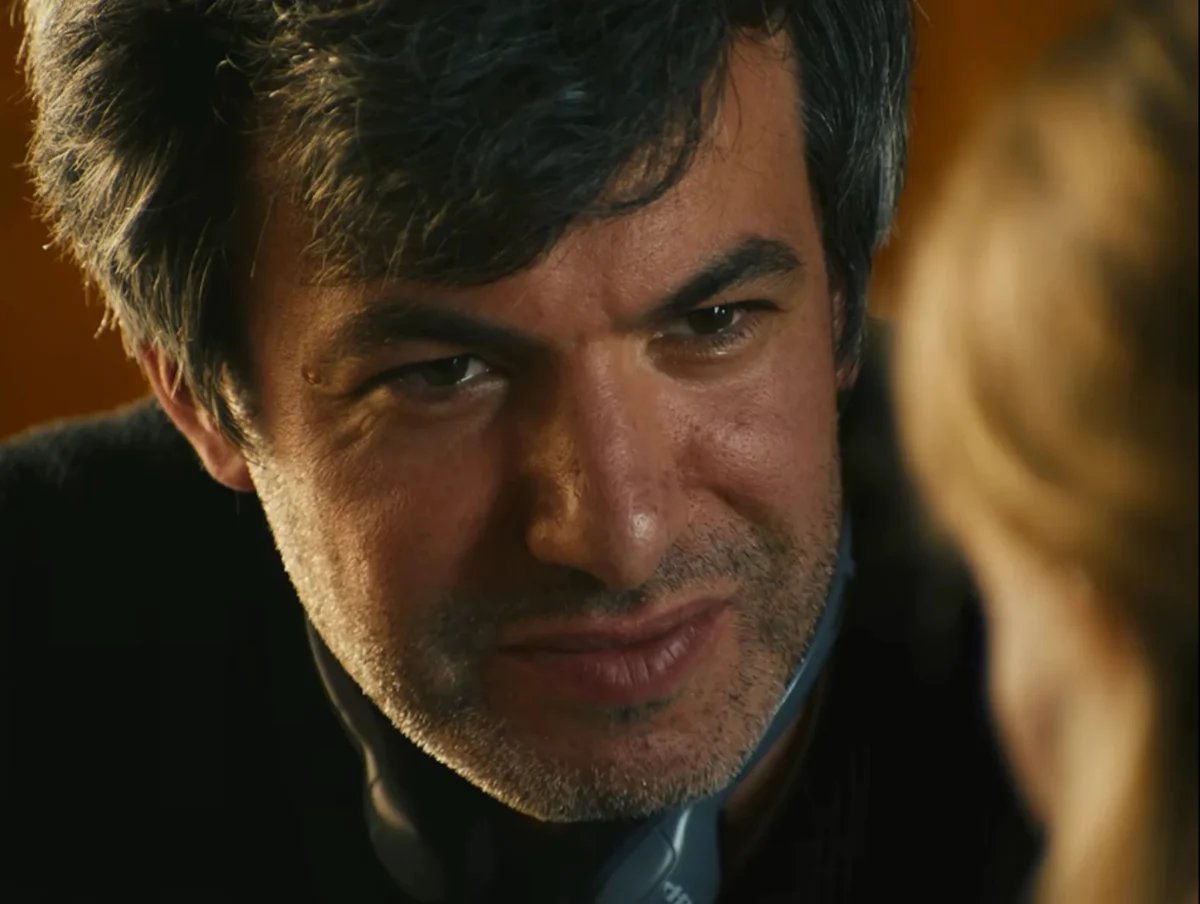
As the 99th Academy Awards season accelerates, the conversation surrounding the race for Best Picture has shifted from a traditional "David vs. Goliath" narrative to something far more meta and existential. At the center of this paradigm shift is You Can See Everything, the boundary-blurring documentary directed by Nathan Fielder and Lance Oppenheim. After an unprecedented $15 million opening weekend, the film is no longer just a critical darling; it is a legitimate frontrunner, challenging the industry’s long-standing definitions of nonfiction cinema and acting eligibility.

The Unprecedented Rise of a Documentary Juggernaut
The industry was caught off guard when You Can See Everything—a project that existed as a ghost at the Telluride Film Festival—hit theaters with the force of a blockbuster. The film provides an intimate, often uncomfortable lens into the 34 days leading up to Elizabeth Holmes’s prison sentence, continuing its surveillance well into her incarceration.

The reception has been nothing short of historic. Boasting a staggering 99 on Metacritic and a 98% approval rating on Rotten Tomatoes, the film has achieved a rare consensus among critics and audiences alike. On platforms like Letterboxd and IMDb, where digital-native filmgoers congregate, it maintains near-perfect scores of 4.7/5 and 9.4/10, respectively.

For A24, the strategy is clear: they are not just aiming for the Best Documentary Feature category. They are mounting a full-scale assault on the major awards, including Best Picture, Best Director, and a suite of technical categories ranging from Production Design to Original Score. The question now echoing through Hollywood’s inner circles is no longer if a documentary can be nominated for Best Picture, but whether this specific documentary has the momentum to take home the industry’s highest honor.

Chronology of a Campaign: From Surprise Premiere to Awards Contender
The journey of You Can See Everything has been a masterclass in calculated disruption. Since its surprise premiere at Telluride, the project has defied every standard rule of film distribution and awards campaigning.

- September 2026: You Can See Everything makes its unannounced world premiere at Telluride. Industry insiders are left stunned by the film’s structure, which blends direct documentary footage with stylized recreations.
- October 2026: The film sees a wide release, grossing $15 million in its opening weekend—a figure that eclipses the entire theatrical run of most documentaries in modern history.
- October 22, 2026: Variety confirms the full breadth of A24’s submission strategy, including acting eligibility for Amanda Seyfried and Christopher Abbott.
- November 15, 2026: The Governors Awards serve as the first major industry gathering, where the film’s buzz is expected to dominate conversations between voters.
- December 2026: The Academy’s preliminary voting for the shortlist begins, marking the first major gatekeeping hurdle for the film’s Best Picture ambitions.
- January 21, 2027: The official Oscar nominations are revealed, where the industry will find out if the Academy is willing to shatter the 98-year-old "documentary ceiling" regarding Best Picture.
- March 14, 2027: The 99th Academy Awards, hosted by Conan O’Brien, will serve as the final verdict on whether the experimental nature of Fielder and Oppenheim’s work is rewarded with gold.
The Meta-Acting Dilemma: Seyfried and the Performance of Self
Perhaps the most controversial and fascinating aspect of the film’s awards bid is the eligibility of Amanda Seyfried. Seyfried, who famously portrayed Elizabeth Holmes in the limited series The Dropout, appears in You Can See Everything as herself—a performer revisiting the role—while simultaneously occupying the space of the real Elizabeth Holmes.

Variety has confirmed that Seyfried will be campaigned in the Supporting Actress category. If nominated, she would be recognized for a dual-layered performance: playing a character she is already synonymous with, while navigating the documentary reality of the subject’s real-life downfall. This meta-commentary extends to Christopher Abbott, who appears in scripted reenactments of Holmes’s life with her spouse, Billy Evans. While Nathan Fielder appears on screen as himself, he has opted out of individual performance consideration, keeping the focus on the documentary’s primary subject and its surrealist framework.

This unique casting strategy forces voters to confront a difficult question: Does a performance in a documentary—where the line between "playing a role" and "being documented" is intentionally blurred—qualify as "acting" under the traditional Academy bylaws?

Supporting Data: The Landscape of the 99th Oscars
The competitive field for the 99th Oscars is dominated by a few heavy hitters, creating a fascinating contrast between blockbuster spectacle and documentary realism. Christopher Nolan’s The Odyssey remains the Goliath of the season, currently projected to lead with 15 nominations.

Projected Nomination Leaders (Films)
- The Odyssey (15)
- Dune: Part Three (11)
- La Bola Negra (10)
- Project Hail Mary (8)
- The Invite (6)
Projected Nomination Leaders (Studios)
- A24 (17)
- Universal Pictures (15)
- Netflix (13)
- Warner Bros. (12)
- Amazon MGM Studios / Searchlight (8)
The data suggests a shift in studio power. A24’s current lead, driven largely by the massive footprint of You Can See Everything, signals a willingness among voters to reward films that challenge the traditional studio-blockbuster model.

Official Responses and Industry Implications
The broader industry is currently reacting to a series of high-stakes decisions regarding categorization. Most notably, the Golden Globes recently denied Lionsgate’s request to categorize its Michael Jackson biopic as a "Comedy or Musical." This rejection forces the film into the Drama category, where it must contend with The Odyssey and La Bola Negra.

For the Academy, the implication of You Can See Everything is even more profound. By accepting the film’s submission for Best Picture, the Academy has opened a Pandora’s box regarding what constitutes a feature film. If You Can See Everything succeeds, it will likely lead to a surge of "hybrid" documentaries in future cycles, potentially forcing the Academy to create new sub-categories or redefine the "documentary" label entirely.

Critics argue that if a film is essentially a reality-show-style documentary, it lacks the scripted narrative arc required of a Best Picture winner. Proponents, however, argue that the "zeitgeist" is shifting. In an era where audiences are increasingly skeptical of curated narratives, a film that captures a genuine, ongoing historical event—and does so with the cinematic precision of Fielder and Oppenheim—is perhaps the most "Best Picture-worthy" film of the decade.

The Road to the Dolby Theatre
As we head toward the March 14 ceremony, the narrative remains fluid. The Academy is often accused of being traditionalist, yet history shows that they are occasionally willing to rewrite the rules when a project generates enough cultural heat.

The race between The Odyssey and You Can See Everything is more than a competition between two films; it is a referendum on the future of cinema. Is the Oscars a celebration of the grand, scripted spectacle, or is it a space for the raw, uncomfortable, and groundbreaking documentation of the human condition? With host Conan O’Brien preparing to take the stage at the Dolby Theatre, the industry waits to see if the 99th Oscars will be remembered as the year of the traditional epic, or the year the documentary finally conquered the summit of film excellence.
