
A Celebration of Cinematic Legacy: Torino Film Festival Honors Titans of the Screen
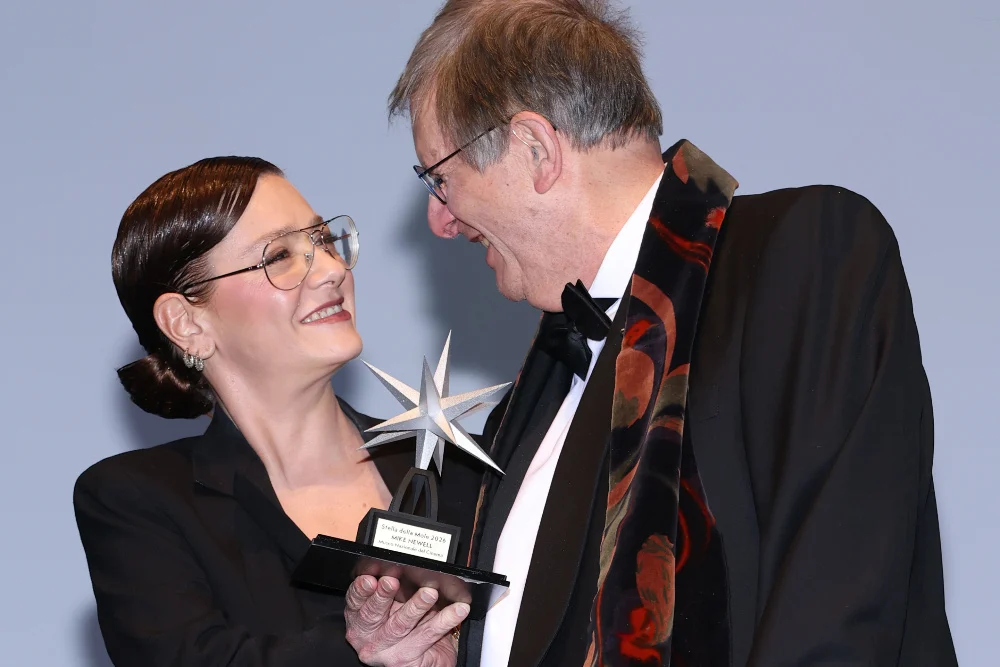
The Torino Film Festival (TFF) has officially commenced, transforming the historic Italian city into a global epicenter for cinephiles and industry legends alike. This year’s opening ceremony served as more than just a formal inauguration; it was a profound valentine to the art of filmmaking, characterized by emotional reunions, reflections on the evolution of the craft, and the presentation of the prestigious Stella della Mole lifetime achievement awards to some of the most influential figures in modern cinema.
The Pillars of British Cinema: Frears and Newell
The spotlight shone brightest on two titans of British directing: Stephen Frears and Mike Newell. Their shared history, which spans over six decades, provided the emotional core of the evening. Both men rose to prominence during the golden era of the BBC’s anthology series Play for Today in the 1970s—a formative incubator for talent that would go on to shape the aesthetic of modern European and international film.
From those humble television beginnings, both directors ascended to the global stage, crafting a string of definitive 1980s and 90s classics. Frears, the architect behind the razor-sharp Dangerous Liaisons and the darkly comedic The Grifters, stood alongside Newell, whose masterful navigation of genres resulted in the universally beloved Four Weddings and a Funeral and the gritty, high-stakes crime drama Donnie Brasco.
A Friendship Forged in Cambridge
When Mike Newell took the stage to accept his Stella della Mole trophy, he eschewed a standard acceptance speech in favor of a personal reflection on his long-standing bond with Frears.
"It’s lovely to be in the same hall as my old friend Stephen Frears, whom I have known since I was 18 years old," Newell remarked to a roaring, capacity crowd. "We go a ways back."
The duo’s camaraderie provided a stark, human contrast to the high-glamour expectations of a film festival opening. Their presence served as a reminder that behind the vast filmographies and accolades lies a shared journey of creative struggle and mutual support that began in the hallowed halls of the University of Cambridge in the early 1960s.

Chronology of Challenges: From Colombia to the Global Stage
Newell’s speech took a poignant turn as he recalled the chaotic, near-impossible production of his 2007 adaptation of Gabriel García Márquez’s Love in the Time of Cholera. Filmed on location in Colombia, the production was a test of endurance for both cast and crew, including stars Javier Bardem, Liev Schreiber, and Benjamin Bratt.
"She [Giovanna Mezzogiorno] and I made a movie in impossible circumstances, in an impossible country, of an impossible script," Newell joked, his voice carrying the weight of the memory. "And we managed to live through it!"
He recounted a harrowing incident involving a helicopter trapped by ground fire, a moment that epitomized the unpredictable nature of on-location filmmaking. "They were shooting at us, and the pilot just didn’t want to go," Newell recalled. "There was Giovanna Mezzogiorno, on my arm, being shot at, being like, ‘F— all this!’"
The anecdote was received with a mixture of shock and appreciative laughter, underscoring the dedication required to translate high-art literature into the visceral language of cinema.
Stephen Frears: A Wry Reflection on a Prolific Career
Stephen Frears, ever the wit, used his time on stage to address the shifting political landscape of Europe. "I’m English," he quipped, gesturing to the audience. "Do you remember England? Once we were European!" The remark, a playful jab at the post-Brexit climate, resonated deeply with the Italian audience, highlighting the enduring connection between British filmmakers and their continental counterparts.
Currently in the pre-production phase of his 25th theatrical feature, Frears displayed a characteristically modest demeanor regarding his body of work. When asked about his longevity, he remained self-effacing: "It’s all I can do. I can’t do anything else. I’m helpless." Yet, he acknowledged the privilege that has defined his career. "I’ve always had a good time. I mean, look at those actors [with whom I’ve worked]. I’ve been very lucky."

A Stealth ‘Pulp Fiction’ Reunion
The festival’s reach extended far beyond the British contingent, orchestrating a surprise for fans of cult cinema. The opening ceremony doubled as a de facto Pulp Fiction reunion, as both John Travolta and Maria de Medeiros were in attendance to receive their own lifetime achievement honors.
Though their characters in Quentin Tarantino’s 1994 masterpiece shared only fleeting screen time, the mutual respect between the two stars was palpable. At the opening dinner, Travolta greeted de Medeiros with a warm embrace, declaring, "You and I made history."
For de Medeiros, the award was a moment of deep reflection. Accepting the trophy in fluent Italian—a language she mastered specifically for her work in the Neapolitan film industry—she spoke eloquently on the symbiotic relationship between language and performance.
"Every language has its own point of view," de Medeiros noted. "Italian was a dream for me… this prize is an absolute landmark. I’m truly honored to receive this star alongside so many extraordinary names in cinema, and we all also want to celebrate Italian cinema, which is a reference point for filmmakers all over the world."
Supporting Data: A Festival of Landmark Figures
The festival organizers have carefully curated this year’s roster to reflect the breadth of global cinematic influence. In addition to the aforementioned honorees, the program includes a major retrospective dedicated to Margarethe von Trotta. As the first female director to win the Golden Lion at the Venice Film Festival for her 1981 masterpiece Marianne and Juliane, von Trotta remains a standard-bearer for European auteur cinema.
The festival’s commitment to honoring both the giants of the past and the pioneers of the present creates a unique atmosphere where history is not just preserved but actively interrogated. By placing figures like Travolta and Frears alongside the institutional weight of Italian cinema, the Torino Film Festival establishes itself as a bridge between the industry’s mid-century origins and its contemporary, globalized future.

Implications: The Future of the Torino Film Festival
The opening night of the Torino Film Festival serves as a clear signal of the event’s increasing importance on the international circuit. By balancing high-profile Hollywood names with the intellectual rigor of European auteurism, the festival is effectively positioning itself as a vital sanctuary for serious filmmakers.
The emphasis on "lifetime achievement" is not merely celebratory; it is an attempt to define the canon. In an era of rapid digital transition and shifting viewing habits, the festival’s focus on the careers of directors like Frears and Newell reminds the industry that cinema is, at its heart, a medium of human experience—a craft defined by the bonds formed on sets, the risks taken in foreign lands, and the persistent, often humorous, pursuit of artistic expression.
As the festival progresses, the thematic focus will likely shift toward the challenges of sustainability in filmmaking and the role of the director in a post-studio era. However, the tone set during the opening ceremony—a blend of gratitude, historical awareness, and a healthy dose of wit—suggests that the Torino Film Festival will remain a vital, human-centric anchor in the ever-turbulent sea of global cinema.
The festival runs through the coming week, with screenings of Roland Joffé’s latest work, November 1963, continuing to draw significant attention from critics and distributors. As the stars descend upon Turin, the city confirms its place not just as a location for production, but as a destination for the celebration of the very soul of the medium.
