
Anatomy of a Misfire: Inside George Kay’s Legal Drama ‘War’
Main Facts
Television has long thrived on high-stakes legal dramas, high-powered corporate espionage, and the messy collisions of wealth, power, and matrimony. Yet, stepping into this crowded arena comes with a distinct set of expectations. When creators attempt to reinvent the prestige television wheel, they are measured against heavyweights of the genre—shows that balance razor-sharp writing with authentic systemic flaws and deeply complex human behavior.
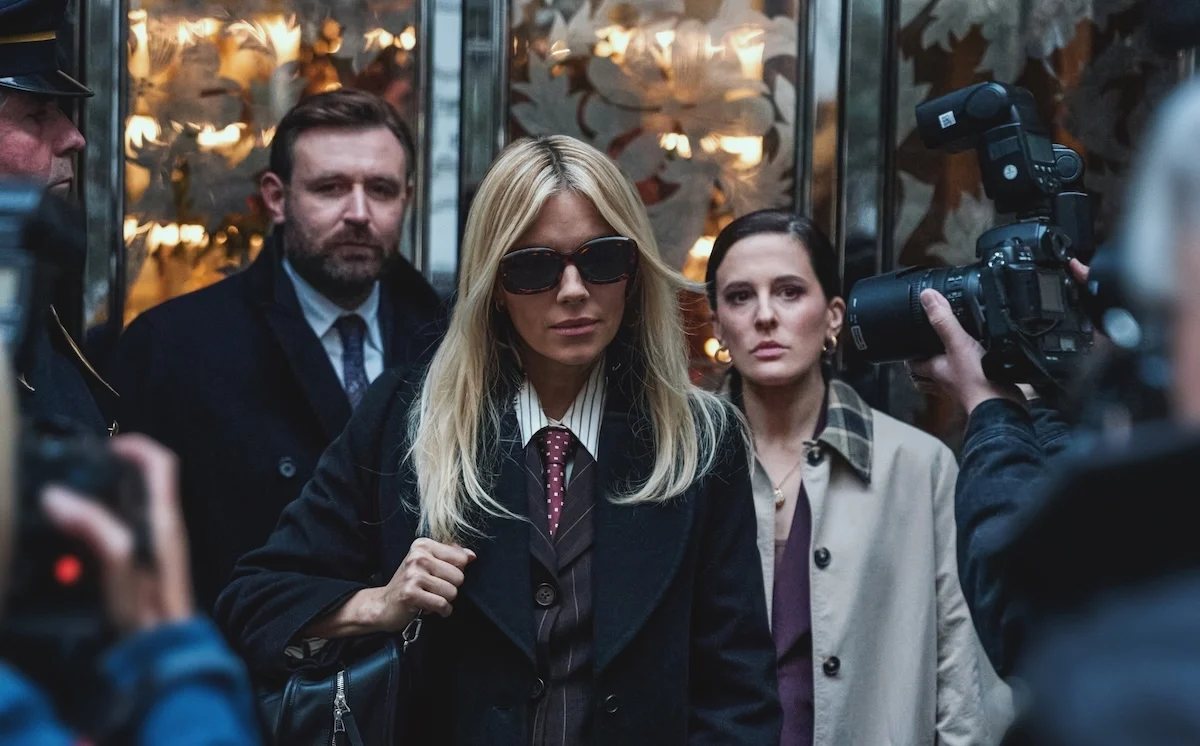
Enter War, the new HBO legal drama created by George Kay. Billed as a high-stakes, multi-million-pound battle of wits, reputations, and billion-pound fortunes, the series drops viewers into the tumultuous divorce and legal warfare between tech billionaire Morgan Henderson (played by Dominic West) and his estranged wife, aging international movie star Carla (Sienna Miller).
However, despite a starry ensemble cast that also includes James McArdle, Phoebe Fox, and Archie Renaux, the first season stumbles under the weight of its own pretentious scaffolding. Featuring a repeating motif quoting actor Keanu Reeves—“The simple act of paying attention can take you a long way”—the series paradoxically demands intense viewer focus while failing to reward it. Riddled with contradictory characterizations, toothless courtroom dynamics, and thinly veiled plot devices masquerading as complex human beings, War arrives with considerable industry fanfare, only to collapse under closer inspection. Already renewed for a second season as an anthology format, the series premieres on Thursday, October 1, at 9 p.m. ET on HBO and Max, with weekly episodes rolling out through its November 19 finale.
Chronology and Production Background
The path of War to the HBO and Sky schedules has been watched closely by industry insiders, largely due to George Kay’s pedigree in crafting tense, internationally appealing narratives. As an anthology series designed to reset its central case with a new legal dispute each season while retaining its core network of attorneys, the structural blueprint was ambitious from its inception.
The production timeline ramped up significantly over the past year, with casting announcements drawing substantial interest as Dominic West and Sienna Miller signed on to anchor the high-profile marital dissolution. Filming across elite British backdrops and opulent corporate settings, the creative team sought to capture the cold, sterile aesthetics of modern tech wealth juxtaposed against traditional legal institutions.
Yet, narrative pacing suffers early in the run. The series kicks off with Morgan Henderson receiving a prestigious industry award for Zephyr, his "positive" social media service—before immediately ditching the celebration to engage in an illicit affair with one of his wife’s friends. From this initial inciting incident, the narrative accelerates through the mandatory milestones of high-end divorces: the serving of papers, mandatory mediation, pre-nuptial challenges, and courtroom skirmishes. Unfortunately, the sequence of events feels mechanical rather than organic, tracking a predictable checklist of broadcast legal tropes that fail to justify the prestige format.

Supporting Data and Character Analysis
To understand why War struggles to resonate, one must examine its foundational components: the central couple, the opposing legal firms, and the auxiliary players who clog up the narrative pipeline.
The Split at the Center: Morgan and Carla
Dominic West brings a certain level of earnestness to Morgan Henderson, but the character is fundamentally hamstrung by lazy writing. Morgan embodies the quintessential tech-oligarch cliché: a man who preaches connectivity and positive digital engagement while routinely committing adultery and uttering unironic "I never do this" justifications. Despite being framed as a brilliant innovator who genuinely cares about his platform’s algorithmic footprint, his predictable downfalls render him neutered and inauthentic.
Sienna Miller’s Carla faces a parallel identity crisis. As an international movie star whose box-office prime is behind her, she occupies an uncomfortable societal space. Yet, the series refuses to meaningfully engage with the realities of aging, gender dynamics, or public perception in the modern media landscape. Instead, Carla’s public reputation fluctuates wildly depending on the immediate demands of the script. One moment she is a beloved global icon; the next, she is universally reviled, with her behavioral choices pivoting unconvincingly to manufacture artificial drama.
The Rival Law Firms: Cathcarts vs. Taylor & Byrne
Rather than focusing deeply on the emotional fallout of the Henderson marriage, the series pivots its attention toward the legal teams orchestrating the battle. The juxtaposition between the opposing firms relies heavily on visual shorthand rather than behavioral depth:
- Cathcarts & Sons: Billed as an old-school, cutthroat titan of the legal world. Their offices are dark, draped in heavy wood and leather, and staffed by intimidating, unwelcoming attorneys who deploy resources like a blunt instrument.
- Taylor & Byrne: A boutique family firm run by married former Cathcarts employees Nicholas Taylor (James McArdle) and the pregnant Serena Byrne (Phoebe Fox). Their office is drenched in natural light and glass to signify transparency, housing a close-knit, friendly team.
Despite this stark architectural and atmospheric contrast, the two firms behave with startling similarity. Both engage in ethically dubious strategies, yet the show refuses to interrogate the moral implications of these actions. They are unprincipled protagonists whose professional posturing lacks the sharp, systemic critique found in peer programs like HBO’s Industry.
The Johnny Warren Problem
Further muddying the waters is Johnny Warren (Archie Renaux), a young American transplant who arrives in London under a cloud of professional suspicion following a controversial internship at a prestigious New York firm. Struggling to secure employment in the UK, Johnny eventually embeds himself within the Henderson case.

Unfortunately, Johnny functions less like a fully realized character and more like a clumsy plot device. He consumes valuable screen time without offering proportional relevance to the core narrative or audience investment. Much like Harper Stern in Industry, Johnny is meant to represent restless, toxic ambition, but without the razor-sharp writing backing him up, he quickly becomes an exhausting presence.
Official Responses and Industry Context
HBO’s decision to greenlight a second season of War before the broadcast of the first episode reflects a high degree of corporate confidence in George Kay’s anthology model. In an era where streaming platforms and premium cable networks constantly hunt for repeatable, globally marketable IP that can sustain high-profile talent rotation, legal dramas remain a lucrative staple.
Industry analysts note that War was positioned to capture the audience crossover between high-end British drama production (backed by partners like Sky and New Pictures) and American prestige cable consumption. However, critical early reception highlights the growing viewer fatigue surrounding derivative legal procedurals that dress themselves up in high-budget cinematography while recycling tired tropes. Representatives for the production have emphasized the anthology’s unique structure as an opportunity to reinvent the narrative sandbox year after year, promising that future seasons will iterate on the framework established by the Henderson-v-Henderson dispute.
Implications and Critical Outlook
The ultimate takeaway from War lies in its inability to reconcile its grand ambitions with its hollow execution. By framing the multi-billion-pound legal battle with the superficial energy of a high school debate camp, the series diminishes its own stakes. The attorneys make glaring tactical oversights, rely on primitive assumptions, and commit professional errors that defy credibility, regardless of the wealth involved.
More broadly, War highlights a recurring pitfall in contemporary prestige television: the confusion between genuine emotional complexity and erratic, melodramatic character choices. When characters act out simply because a scene requires conflict—without grounding those actions in demonstrable personal or professional pressures—the audience’s capacity for empathy evaporates.
As the series heads toward its November finale and looks ahead to its pre-approved second season, it serves as a cautionary tale for creators working within the prestige drama ecosystem. If a television show repeatedly demands that its audience "pay attention" to its intricate plotting and thematic echoes, it incurs a fundamental debt to pay equal attention to the internal logic, psychological depth, and structural integrity of its storytelling.

Failing that, even the most star-studded cast and high-end production design cannot save a series from delivering a hollow verdict.
Grade: D+
“War” premieres Thursday, October 1, at 9 p.m. ET on HBO and Max, with new episodes airing weekly through the November 19 finale.
