
Behind the Screams: Inside the Musical Anatomy of The Simpsons’ “Treehouse of Horror XXXVII”
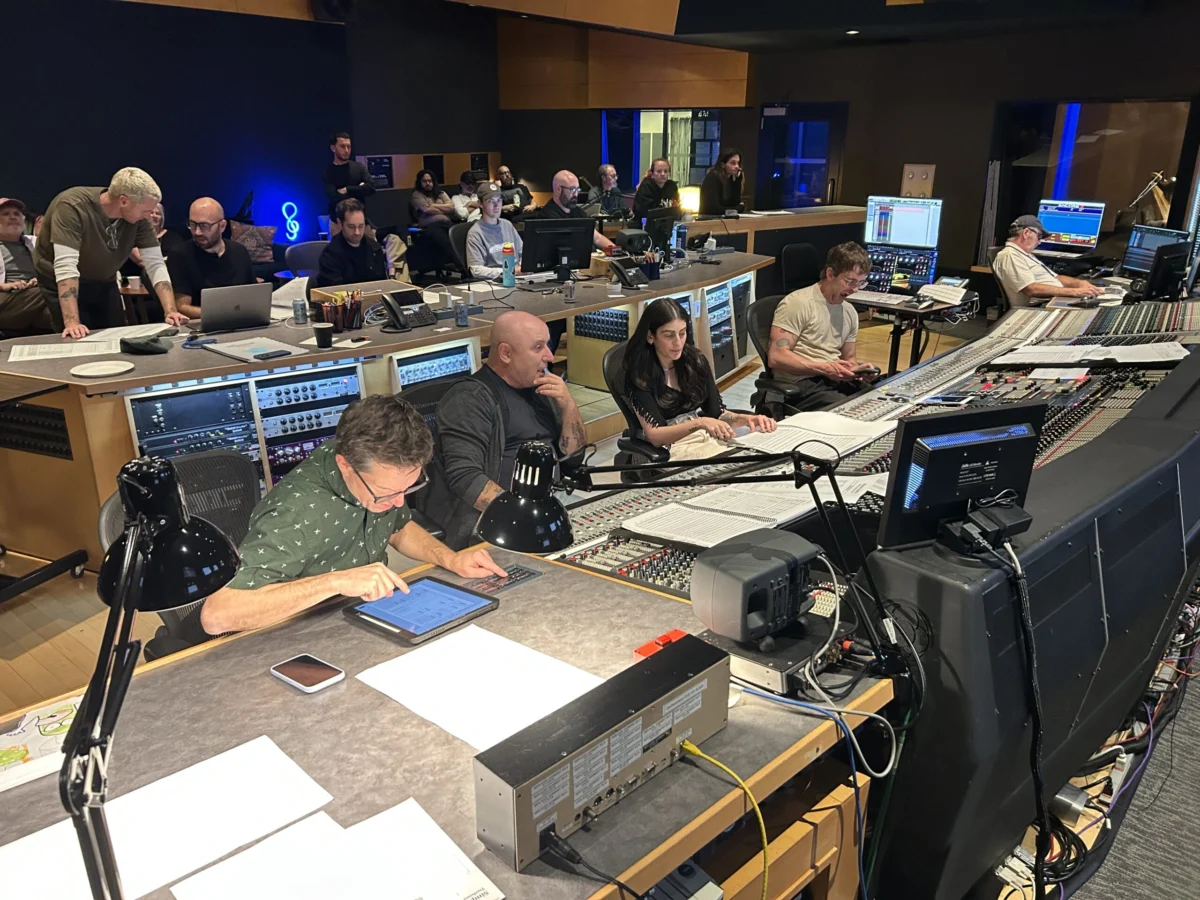
LOS ANGELES — It is just past 7:00 p.m. on a crisp September evening, and the storied Newman Scoring Stage on the 20th Century Fox lot is a hive of calculated, high-stakes activity. Dozens of elite studio musicians file into the cavernous room, instrument cases in tow, taking their seats beneath towering acoustic baffles. In the bustling control room, recording engineers, orchestrators, and production personnel conduct their final technical sweeps.
The date is September 23, and the room has gathered for one purpose: to record the sonic nightmare of The Simpsons’ upcoming seasonal milestone, “Treehouse of Horror XXXVII.”
At the mixing console sits Russell Emanuel, the jovial co-founder of the Bleeding Fingers Music collective alongside Hans Zimmer and Steve Kofsky. To his right is Kara Talve, the episode’s principal composer and the driving musical force behind Springfield’s modern era. Occupying a central vantage point is Tim Long, a six-time Emmy Award-winning writer-producer who serves as this year’s "Treehouse" steward.
Together, this creative triad is mid-collaboration on what remains television’s most enduring and musically demanding animated horror tradition. For an enterprise that began more than three decades ago during the show’s sophomore season, the annual Halloween anthology continues to push the boundaries of television scoring, demanding massive orchestration, lightning-fast turnaround times, and an uncompromising commitment to genre pastiche.

Main Facts: A Symphony of Macabre and Meta-Humor
The logistical reality of scoring a Simpsons Halloween special is staggering. “Treehouse of Horror XXXVII” is the season’s most musically complex undertaking, requiring a 43-piece orchestra augmented by specialized, esoteric instrumentation—including a traditional harp and a live theremin. Over the course of the session, the ensemble must record nearly 50 distinct musical cues synchronized directly to screen.
This year’s narrative structure follows the traditional triptych formula framed by a grand musical opening:
- The Opening Number: A stop-motion animated spoof of "This Is Halloween" from Henry Selick and Tim Burton’s The Nightmare Before Christmas, animated by Stoopid Buddy Stoodios (Robot Chicken).
- Segment One: A Springfieldian adaptation of Holly Gramazio’s BookTok-certified novel, The Husbands.
- Segment Two: A blood-soaked, cosmic mashup of Stephen King’s Pet Sematary and Disney’s Freaky Friday thematic elements (titled "Bart Dog/Dog Bart").
- Segment Three: An original, terrifying descent into one of modern society’s ultimate circles of bureaucratic hell—the Department of Motor Vehicles (DMV).
Despite the voice tracks still pending recording sessions—featuring guest appearances from comedians and personalities like Tiffany Haddish and Survivor host Jeff Probst—and portions of the animation existing in provisional "temp" states, the episode’s signature dark humor is already anchored by Talve’s intricate, genre-aware compositions.
Chronology: The Evolution of Bleeding Fingers and the Rise of Kara Talve
The musical lineage of The Simpsons underwent a seismic shift in 2017 when legendary, long-serving composer Alf Clausen was replaced after 27 seasons. Bleeding Fingers Music stepped in, inheriting what Emanuel describes with awe as "the crown jewels" of television scoring.

Into this legacy stepped Kara Talve. Six years into her tenure helming the series, her trajectory from background assistant to primary architect has been nothing short of meteoric.
"She used to be a shy little assistant. She wouldn’t look up, she wouldn’t talk," Emanuel recalls of Talve’s early days at the collective. "Now, she’s an absolute rock star."
Long echoes this sentiment, marveling at her output: "I don’t know when she sleeps, because she’s so good and so fast."
Since taking the reins, Talve has accumulated five Emmy nominations and a Grammy nod. Her workload extends far beyond Springfield; she is concurrently scoring HBO’s highly anticipated upcoming Harry Potter television series.

Emanuel jokes about the dynamic of their partnership: "Look, Kara can easily do this job without me—don’t tell her or anyone else. My job is to take the helicopter view and then take all the glory. I give 10%, she does 90."
Supporting Data: Crafting a Genuinely Frightening Aesthetic
The "Treehouse of Horror" tradition was established in 1990 during Season 2. Over the decades, these non-canon episodes have developed a reputation for being bloodier, deadlier, and far more lethal to beloved main characters than standard episodes. According to Long, series creator Matt Groening laid down a specific artistic mandate for the 2026 edition.
"Matt had brought it up a few times—the spirit of it is that these should be genuinely frightening, or at least lean in that direction," Long explains. "I took that to heart."
For Talve, a lifelong devotee of the horror genre, the mandate was a dream assignment. "I just love horror movies—that’s my genre. Every Halloween, I stream a bunch of horror movies, and I love creepy music in general. I love dissonance, so horror is just my favorite. That’s why I love Treehouse so much."

Long emphasizes the unique narrative freedom these non-canon outings provide: "People look forward to it; it’s always one of our highest-rated episodes. Halloween episodes are not canon—as Lisa sings in the opening—which means we get to have the characters act even more abhorrently than they normally do and, more importantly, start killing them off. The stakes are always high in these stories, and that’s what makes it fun."
Official Responses: Behind the Scenes of a Nightmare Parody
Translating The Nightmare Before Christmas aesthetic into the universe of The Simpsons required meticulous mapping by the writers’ room.
"The guy in Nightmare who has an ax in his head looks kind of like Comic Book Guy, so we made him that," Long notes. "Sally, the character who sews herself back together, became Marge. Jack Skellington is a great Bart. And Homer… there was just something about the way that [the Mayor] is rendered in Nightmare that seemed perfect."
The musical centerpiece of the opening was Talve’s assignment to parody Danny Elfman’s iconic track, "This Is Halloween." The collaboration nearly featured Elfman himself—who, notably, composed the original Simpsons theme music.

"When we wrote the parody of the Nightmare opening song, you can rest easy that they’re going to knock it out of the park," Long says. "We give them a script and say, ‘Do a song in this style,’ and they come back with it in less than 24 hours, even on weekends. We should probably stop doing that because we abuse that privilege."
Talve admits the weight of the assignment: "[Elfman] was almost going to do the opening, so the pressure was on. I’m skating a fine line. It’s hard to parody stuff that’s so iconic—obviously you want [him] to sing the original tune. But it was very meta."
Long adds: "He heard about it and expressed an interest, but it didn’t quite work out for timing reasons, which is a shame."
Implications: Audio Easter Eggs and the Power of the Theremin
Beyond major film parodies, the score for Treehouse of Horror XXXVII is dense with intentional audio references and easter eggs spanning decades of cinema history.

"I always have very specific ideas of what I want each segment to feel like," Long explains. "For the Bart Dog/Dog Bart one, I wanted to evoke the score from the original Carrie—the Brian De Palma film… So I gave Kara that mandate, and she executed it perfectly. For the driving segment, I always liked the dramatic music in Speed. And a lot of that was also influenced by Spielberg’s Duel."
Talve points to foundational influences throughout her arrangements: "I love Bernard Herrmann. You can hear it throughout."
"Bernard Herrmann is like one of the absolute greatest," Long agrees. "He did Psycho, obviously, and Taxi Driver—there’s just so much menace in his work. It’s great."
The team also leaned into unexpected comedic juxtapositions. Talve reveals an early pre-record request: "Tim had asked us, way ahead of animation, to do a pre-record of ‘On Top of Spaghetti,’ but scary. That’s such a fun part about this show—it’s always like ‘it’s this, but in this style, with an extra thing added on top of it.’ So it’s always this weird mashup of different styles, and it always comes out really funny and unexpected."

The gag originated from writers’ room assistant Alexa Patterson. "As soon as we see the meatball, we’d get the ominous version of ‘On Top of Spaghetti,’" Long says. "Every once in a while an assistant will pipe up with something and we go, ‘Damn, that’s a good idea.’"
Visual and musical easter eggs intersect cleanly in Act 3, where Patty and Selma appear wearing traffic cones as wicked witch hats during Homer’s harrowing abduction into the DMV, subtly cueing the iconic Wizard of Oz wicked witch theme.
The Secret Weapon: The Live Theremin
No Treehouse score would be complete without the otherworldly wail of the theremin. Russell Emanuel recalls a hard-earned lesson from their early seasons on the show:
"The very first Treehouse season we were on, we used a sampled theremin, which we thought sounded good. Then we went to the dub, and Matt Groening was there. He heard it right away: ‘That’s not a real theremin.’ Not only did he know what theremin sound he wanted, he knew the level of distortion he wanted, and he made us go back. We had to actually cancel the dub, go back, and do the session just for a live theremin. We’ve never made that mistake again."

Handled live by specialist Lara Wickes—whom Emanuel hails as the best in the industry—the instrument remains a marvel of performance without physical contact.
"It’s the only instrument you don’t touch at all. It’s just sound waves," Long marvels, before recounting a humorous behind-the-scenes mishap: "She walked me through it—’Do this for volume, do that’—and I asked if something I was doing had an effect, and she said, ‘No, that doesn’t do anything.’ And I said, ‘I think it’s doing something,’ and she said, ‘It doesn’t do anything.’ I realized I was thereminsplaining [Wickes’s] instrument back to her. I had to back off."
As The Simpsons approaches its fourth decade on the air, the meticulous care taken by Long, Emanuel, Talve, and their orchestral collaborators proves that Springfield’s annual descent into madness remains in brilliantly calibrated, terrifyingly talented hands.
