
Everything You Need to Know About the New Federal Film Incentive Bill
By the Entertainment Desk
Published: October 2026
Introduction: A Changing Skyline in Burbank
It is a visible, indelible sign of the times. High above the historic studio lots in Burbank, California, the iconic Warner Bros. water tower has been hastily repainted. The legendary shield now shares its real estate with a bold new tenant: “A Skydance Corporation.”
This fresh coat of paint is more than just a corporate branding exercise; it represents the official close of the massive PSKY/WBD merger, a tectonic shift that has once again rearranged the Hollywood landscape. As legacy media giants consolidate into leaner, meaner monoliths, the ripple effects are felt throughout the entire ecosystem—from deep-pocketed studio executives down to the independent crew members wondering where their next paycheck will come from.
While the ink on the merger was barely dry, industry leaders gathered to confront the realities of a transformed Hollywood. At the recent Film Independent Forum, during a panel aptly titled “Future of Independent Film & The Creative Economy,” the mood was a mix of sobering realism and cautious optimism. The central question hung heavy in the air: Can Los Angeles—and the United States at large—reclaim its status as the undisputed global capital of storytelling?
Amidst a landscape of disappearing local jobs, runaway production, and economic volatility, a sweeping new legislative lifeline has emerged in Washington. Known as the Motion Picture, Television, and Entertainment Revitalization Act, this bipartisan federal initiative could fundamentally alter how films are financed, packaged, and produced.
Main Facts: The Anatomy of the New Federal Incentive
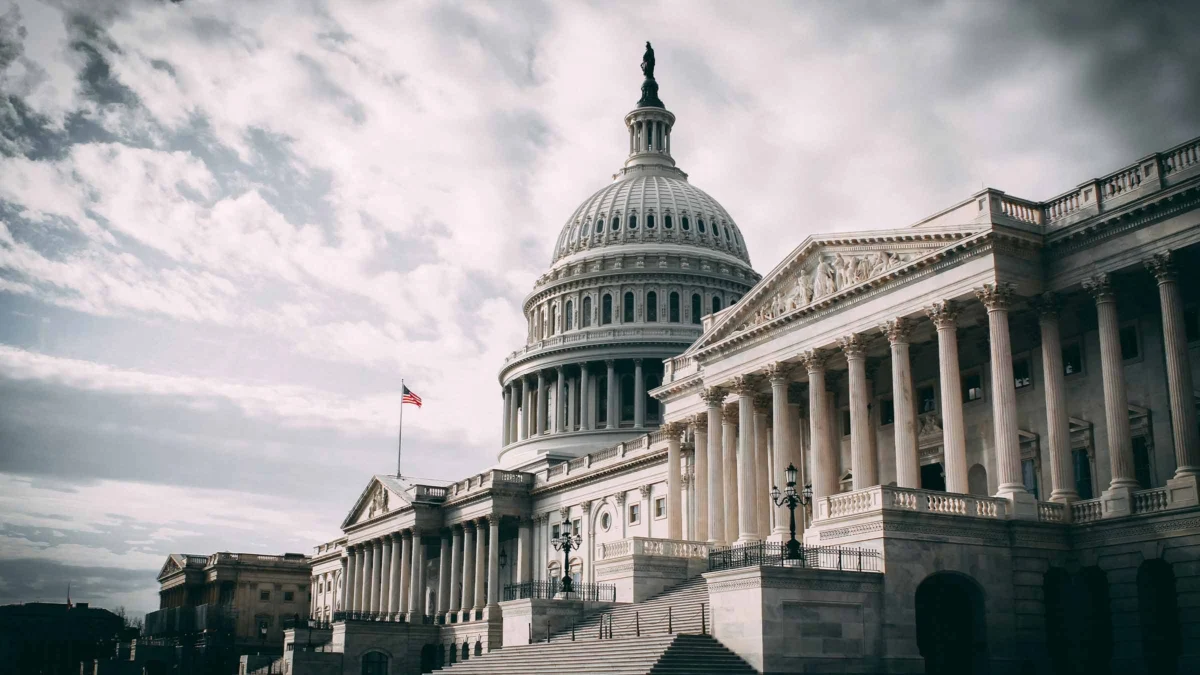
Introduced on Capitol Hill by a bipartisan coalition of lawmakers on September 24, 2026, the Motion Picture, Television, and Entertainment Revitalization Act represents a watershed moment for American media. For the first time in history, the United States is poised to enact a national film and television production tax credit designed specifically to stanch the bleeding of runaway production to overseas markets.
Key Components of the Proposed Legislation:
- The Base Credit: A foundational 20% U.S. film incentive applicable to eligible domestic productions.
- Stackable Bonuses: Additional tax credits and uplifts that can push total rebates up to 30%, making U.S. shoots financially competitive with—and often superior to—foreign subsidy programs.
- Eligible Projects: Narrative and documentary feature films, scripted and unscripted television series, TV pilots, and animation projects.
- Comprehensive Coverage: The incentive covers pre-production, principal photography, post-production, as well as both above-the-line and below-the-line wages.
- Core Requirements: Projects must maintain a minimum spend of $1 million, and at least 75% of total production days must take place within the United States.
- Effective Date: If passed, the legislation will apply to qualifying projects that enter production after December 31, 2026.
This federal push arrives not a moment too soon. For decades, American filmmakers have watched state-by-state incentives battle one another while international territories lured away millions of dollars in economic activity with unbeatable tax packages. This new bill seeks to level the playing field on a national scale.
Chronology: How the Crisis and the Legislation Unfolded
To understand why the Motion Picture, Television, and Entertainment Revitalization Act is being heralded as a potential game-changer, it is essential to look at the timeline of events that brought the American entertainment economy to this crossroads.
- The Runaway Production Era (2010s–Early 2020s): Driven by escalating production costs and aggressive international tax credits, a growing percentage of Hollywood blockbusters, television series, and indie films migrate overseas to countries like the United Kingdom, Canada, Hungary, and Australia.
- The Post-Pandemic Squeeze and Local Decline (2023–2025): Following historic dual labor strikes by the WGA and SAG-AFTRA, production volumes in Southern California fail to rebound to pre-pandemic highs. Local crew members face prolonged unemployment, and infrastructure businesses suffer.
- Natural Disasters Compound the Crisis (Late 2025): Devastating natural disasters, including the catastrophic Palisades and Eaton fires, sweep through Southern California. Los Angeles County is officially declared a federal disaster area, further stalling local production capabilities and displacing residents and businesses alike.
- The PSKY/WBD Merger Closes (Mid-2026): Corporate consolidation reaches a fever pitch as the Skydance Corporation and Warner Bros. finalize their massive merger, visibly marked by the repainting of the iconic water tower in Burbank. The industry reels as corporate cost-cutting measures threaten further job security.
- Bipartisan Bill Introduction (September 24, 2026): Federal lawmakers in Washington formally introduce the Motion Picture, Television, and Entertainment Revitalization Act, establishing the first-ever national production incentive framework.
- The Film Independent Forum (Fall 2026): Industry leaders gather in Los Angeles to debate the future of the creative economy, dissecting the newly introduced federal bill and assessing its potential to rescue the ailing local production infrastructure.
Supporting Data: The Global Financial Disparity
The primary driver behind the new federal legislation is the staggering math of runaway production. U.S. producers have long struggled to compete with the sheer volume of financial incentives offered by roughly 65 foreign nations.
During the Future of Independent Film & The Creative Economy panel at the Film Independent Forum, producer John Lang laid bare the stark financial realities facing modern filmmakers. Lang presented a sobering case study: a mid-budget feature film with an estimated budget of $25 million to $30 million.
When mapping out the logistics, the proposed transportation budget to film the project in Atlanta, Georgia—historically a major U.S. production hub—was pegged at roughly $9 million. In sharp contrast, shooting the exact same production in Belfast, Northern Ireland, carried a transportation and logistical estimate of just £950,000.
"You can’t compete with that," Lang bluntly told the audience.
When international destinations offer tax rebates, infrastructure grants, and logistical subsidies that dwarf domestic options by millions of dollars, U.S. producers are frequently forced to abandon domestic locations, leaving American crews without work.
However, the proposed federal act aims to rewrite this economic formula. According to Joe Chianese, Senior Vice President for Incentives at Entertainment Partners, the mechanics of the new bill are uniquely powerful because they are designed to be stackable with existing state-level incentives. Furthermore, the bill includes a 5% uplift for productions that spend at least $10 million across 10 different states within a single calendar year.
"If it passes and it stacks clean, shooting in Georgia or California or New York is the best deal on the planet," Chianese noted in a recent interview. "Nothing overseas comes close."
Official Responses and Bipartisan Momentum
Perhaps the most surprising aspect of the Motion Picture, Television, and Entertainment Revitalization Act is its broad, cross-aisle appeal. In an era defined by deep political polarization, the survival of the American entertainment industry has successfully united lawmakers from both sides of the aisle, backed by the White House.
The legislative coalition championing the bill features a formidable mix of regional and national political figures:
- Senator Adam Schiff (D-California), representing the heart of the entertainment industry.
- Representative Laura Friedman (D-California), a founding member of the newly formed Congressional American Film & TV Production Caucus.
- Senator Tim Scott (R-South Carolina), recognizing the economic development potential for regional hubs outside traditional coastal centers.
- Representative Tim Moran (R-Texas), a co-founder of the bipartisan Production Caucus dedicated to educating Congress on the strategic importance of domestic media creation.
The establishment of the Congressional American Film & TV Production Caucus is a crucial development. For years, federal policymakers often viewed Hollywood through the narrow lens of cultural output or partisan talking points, frequently ignoring the heavy manufacturing, technology, small business, and blue-collar labor components that underpin the industry.
By framing entertainment as an essential pillar of American manufacturing and technological innovation, lawmakers are successfully building a coalition that views keeping film production in the U.S. as a matter of national economic security.
Implications for Independent Filmmakers and the Local Economy
While studio blockbusters and multi-season streaming series command headlines, the health of the broader cinematic ecosystem depends heavily on independent storytelling. Independent films serve as the R&D lab of the industry—discovering new talent, taking creative risks, and telling diverse, unconventional stories.
The Motion Picture, Television, and Entertainment Revitalization Act contains specific provisions that could prove transformative for independent producers:
1. The Independent Production Bonus
The legislation features a dedicated 5% bonus for independent productions, providing a vital financial cushion for lower-budget films that traditionally struggle to secure completion funds.
2. The Disaster Area Uplift
Additionally, the bill includes a 5% bonus for filming in federal disaster areas, structured with a five-year sunset limit. Because Los Angeles County was officially declared a federal disaster area in the wake of the devastating 2025 Palisades and Eaton fires, this bonus would apply directly to LA County productions until January 2030.
3. Packaging and Talent Retention
For indie filmmakers, the ability to shoot locally in Los Angeles without taking a massive financial hit changes the calculus of talent attachment. Securing a recognizable star who can greenlight a film is notoriously difficult when shooting requires weeks of relocation away from family.
"When you’re talking about independent film and you’re trying to go for that actor who’s going to greenlight you, if you can say you’re shooting here in LA and they get to go home every day, that makes a huge difference," explained producer Tom Butterfield during the Film Independent Forum panel.
4. Preserving the Small Business Ecosystem
John Lang emphasized that the health of the industry relies on a balanced economic microclimate. Major studios and streamers provide massive infrastructure, but small and medium-sized businesses—equipment rental houses, local caterers, prop fabrication shops, and specialized technicians—rely on a steady stream of independent projects to survive.
"We fill in the gaps in the ecosystem," Lang said. "You don’t want everyone to just have a job at a huge company. You need to have that mix of small and medium-sized businesses."
Conclusion: Looking Ahead to a New Era
Opening the Film Independent Forum, President Juan Devis grounded the day’s discussions in the 42-year history of the organization, reminding attendees of its unwavering commitment to creative independence. From labs and grants to mentorship and the annual Spirit Awards, Film Independent has weathered decades of industry transformation.
Yet, as Devis pointed out, the current moment requires more than just celebrating past achievements. It demands active engagement in the economic and policy conversations that will dictate whether Los Angeles and the United States remain the premier home for narrative art.
The corporate consolidation symbolized by the new Skydance-Warner Bros. water tower proves that the old studio system is gone for good. But as lawmakers in Washington debate the Motion Picture, Television, and Entertainment Revitalization Act, a new blueprint is taking shape—one that recognizes the irreplaceable value of domestic crews, regional infrastructure, and independent voices.
While the future remains unwritten, one truth is clear: if the U.S. can successfully harness bipartisan legislation, stackable incentives, and targeted support for independent creators, the global cinematic landscape may soon look to America not just for content, but as the most viable, vibrant home for storytelling on the planet.
