From Physical Scale to Digital Canvas: The Evolution of Industrial Light & Magic Through the Eyes of Veteran Artist John Goodson
By TREVOR HOGG
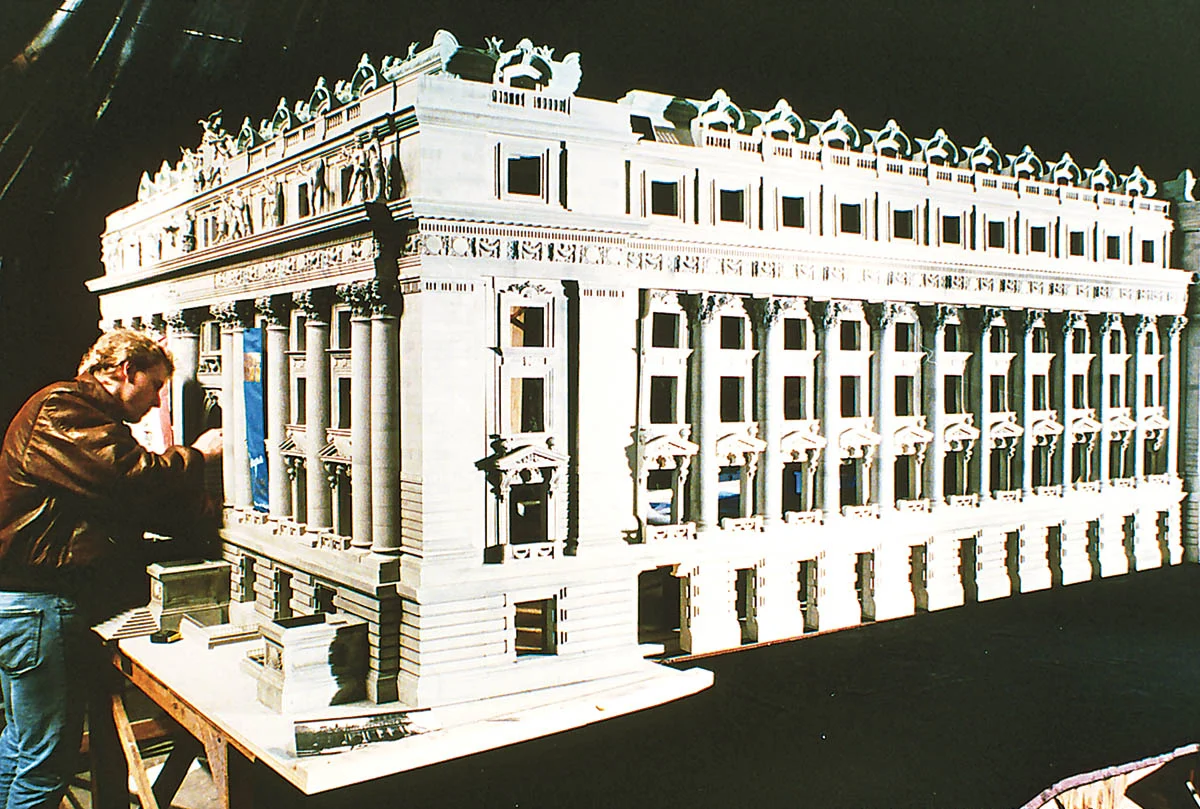
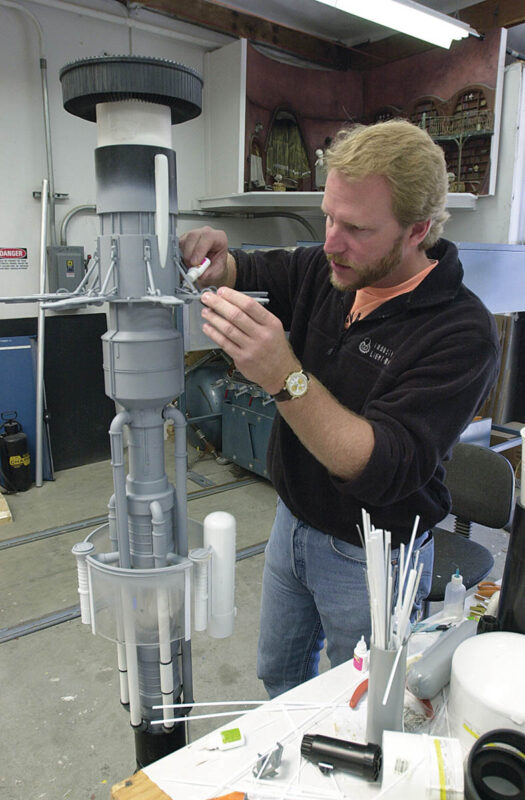
The history of modern visual effects is a chronicle of creative adaptation. At the bleeding edge of this evolution sits IndustrialLight & Magic (ILM), the legendary studio birthed out of necessity by George Lucas in 1975 to realize the WWII-style aerial dogfights and sprawling cosmic vistas of the original Star Wars. For decades, the beating heart of ILM’s tactile wizardry was its Model Shop—a workshop of physical craftsmanship where visionaries shaped plastic, wood, and resin into iconic spacecraft, towering creatures, and cinematic history.
Today, the industry lives almost entirely in the digital ether. Yet, for veteran digital artist and former model project supervisor JohnGoodson, the journey from physical modelmaker to digital painter mirrors the tectonic shifts of Hollywood itself. Spanning nearly four decades of blockbuster filmmaking, Goodson’s career offers a rare, first-hand account of surviving the digital revolution, the bittersweet legacy of the physical Model Shop’s closure, and how the spirit of practical ingenuity continues to breathe life into today’s pixels.
Main Facts: The End of an Era and the Birth of Modern Hybrid VFX
The closure of the ILM Model Shop remains one of the most poignant milestones in modern cinematic history—a transition famously explored in the Disney+ documentary series Light & Magic. For decades, physical miniatures were the gold standard for creating believable, tangible elements on screen. However, as computer-generated imagery (CGI) advanced, practical departments faced systemic downsizing.
John Goodson, whose career bridges the golden age of physical miniatures and the contemporary era of LED volumes and advanced digital rendering, witnessed this seismic shift firsthand.
The Human Toll: The transition from physical to digital eliminated numerous traditional crafts while giving birth to entirely new technical disciplines. Many legacy artisans struggled to cross the digital divide.
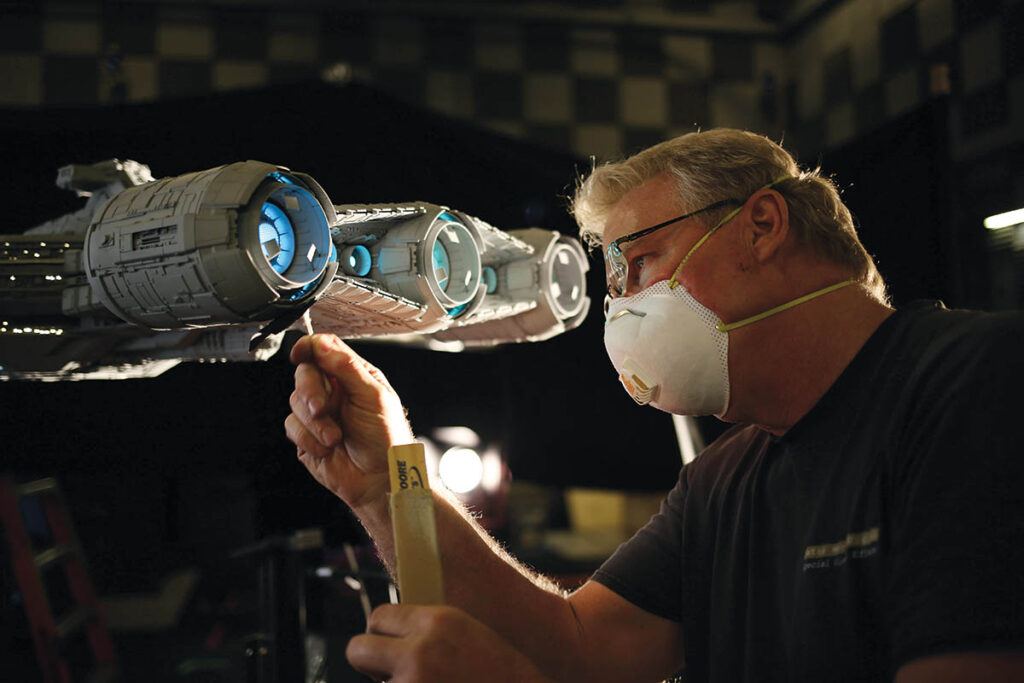
The Hybrid Renaissance: Ironically, physical models have not completely vanished. Recent projects—such as The Mandalorian and Grogu—have married physical craftsmanship with cutting-edge technology, using two-foot and four-foot physical miniatures of the Razor Crest inside modern LED volume stages.
An Accidental Archive: During the dismantling of the Model Shop’s final warehouses, crews uncovered vast troves of cinematic history, ranging from full-sized snowspeeders and Rancor arms to a small cardboard box containing the very fan letters a teenage Goodson had mailed to ILM decades prior.
Chronology: From a 1970s Sci-Fi Fan to an ILM Pillar
Goodson’s pathway to ILM was forged by a lifelong obsession with visual storytelling that began in early childhood and culminated in a decorated career featuring multiple Visual Effects Society (VES) Award nominations.
1. Formative Years (1960s–1970s)
Goodson’s fascination with miniature effects ignited at age three while watching "The Derelict," an episode of the classic sci-fi television series Lost in Space. Seeing the Jupiter II fill the television screen as it was drawn into a giant alien spacecraft left an indelible impression. Raised on an Air Force base alongside neighbors who were fighter pilots, Goodson was soon introduced to Star Trek.
When a copy of The Making of Star Trek fell into his hands, the illusion was shattered—he learned it wasn’t real—but a deeper fascination took hold: this was something a person could actually do for a living. When Star Wars premiered in 1977, a 14-year-old Goodson began writing letters to ILM, eagerly tracking the career backgrounds of the artists listed in the Art of Star Wars books.
2. Education and Industry Entry (1988)
Following the biographical trends of his predecessors—who largely hailed from industrial arts and architecture backgrounds—Goodson studied Product Design at the School of Design at North Carolina State University. Finding that he was already practicing the craft independently, he moved to California in 1988.
His entry into ILM was immediate. Hired for a one-week stint on Body Wars—a theme park simulator attraction akin to Star Tours that shrunk passengers to microscopic sizes to travel through the human body—Goodson hit the ground running, absorbing techniques from master modelmakers.
3. The Digital Leap (Mid-1990s)
When the studio began restructuring toward digital workflows, Goodson received roughly a month of software training before being thrown directly into revisions for the Star Wars Special Editions. Tasked with digital painting—specifically texturing Luke Skywalker’s landspeeder in an unfamiliar software program—he navigated a steep learning curve. The struggle persisted until the industry adopted software like Mari, which allowed artists to paint in intuitive layers of materials that rivaled or exceeded the look of real-world finishes.
4. Contemporary Era: "Three Garages Productions"
Today, the collaborative spirit of the old Model Shop lives on in a decentralized fashion. Goodson, legendary visual effects supervisor John Knoll, and machinist Dan Patrascu collaborate out of their personal workshops—affectionately dubbing themselves "Three Garages Productions"—before bringing their physical builds to ILM’s motion-capture stages to integrate them with cutting-edge virtual production pipelines.
Supporting Data: Selected Filmography and VES Recognition
Goodson’s contributions span some of the highest-grossing and most visually demanding franchises in cinematic history. His work has earned him widespread peer recognition, including multiple Visual Effects Society (VES) Award nominations.
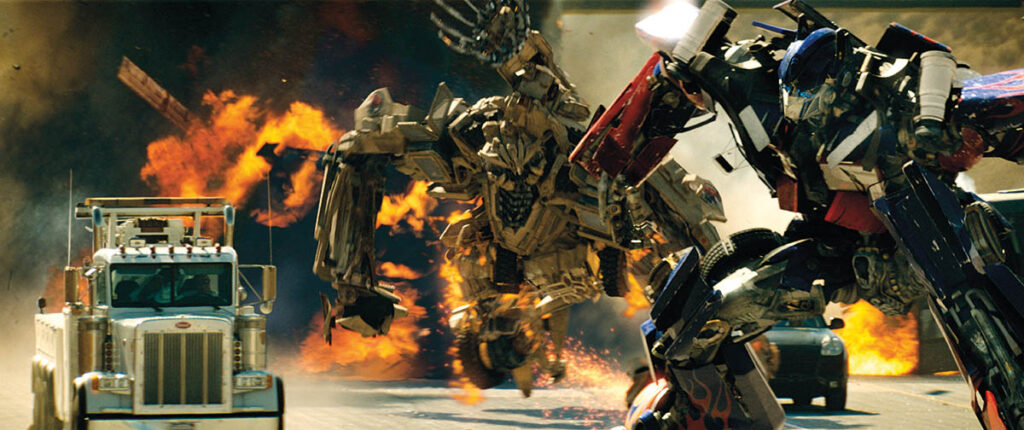
Key Franchise Credits:Star Wars (Special Editions, Prequels, and Disney+ series), The Mandalorian, Ahsoka, Mission: Impossible (1 and Ghost Protocol), Ghostbusters II, Transformers: Age of Extinction, Star Trek Into Darkness, Iron Man 2, and The Day After Tomorrow.
VES Award Nominations: Recognized for his exceptional digital and practical craftsmanship across major tentpole features, cementing his status as a premier tier-one visual effects asset builder.
Official Responses and Industry Reflections
The transition from physical craft to digital rendering was neither easy nor painless, a reality that Goodson does not sugarcoat.
"It was really brutal," Goodson admits, reflecting on the closure of the Model Shop. "The ripples from that are still happening because so many people didn’t make the transition. It is the story of technology. New technology comes in. Older jobs go away. New jobs are created. But for the people caught in the gears, it’s tough."
Despite the hardships of retraining, Goodson emphasizes the deeply collaborative nature of both environments. Whether working among veteran modelmakers in a sprawling industrial warehouse or coordinating with digital look-development technical directors (TDs), artistry remains the core denominator.
"When you’re building a model and painting it, that’s what you’re going to get," Goodson explains, contrasting physical builds with digital counterparts. "When you’re doing the digital work, you’re working hand in hand with the look development technical director… There’s artistry involved in that."
Even legendary improvisation remains a hallmark of his problem-solving ethos. Recalling a frantic weekend during the production of The Day After Tomorrow, when a digital oil tanker asset was deemed unusable, Goodson constructed a physical model out of plywood, styrene plastic, push pins, and fake snow in under 48 hours. Upon seeing the finished practical shot, director Roland Emmerich sent a personal note: "I don’t know how you did it, but thank you so much."
Implications: The Preservation of Craft in the Digital Age
The story of John Goodson and the ILM Model Shop serves as a profound case study in technological disruption and professional resilience. As the entertainment industry hurtles further into generative artificial intelligence, real-time virtual production, and fully digital pipelines, several critical lessons emerge:
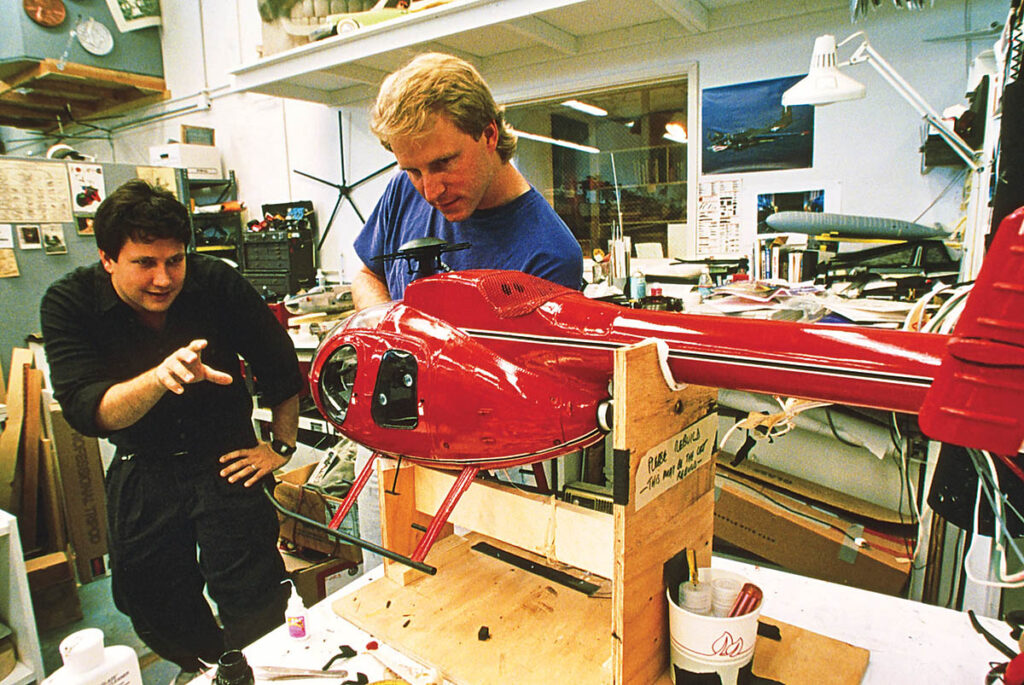
The Value of Tactile Observation: Whether painting a physical miniature to avoid unwanted blue-screen reflections or analyzing the real-world physics of a crashing helicopter for digital animators, foundational observation of the physical world remains mandatory for believable CGI. As Goodson notes, "Artists overall are good observers. You’ve got to study the real world. All that stuff goes into taking these fantasy things… and making them realistic enough for people to believe in."
The Hybrid Future: The industry has discovered that practical builds and digital technology are not mutually exclusive. Utilizing physical models inside modern LED volumes—as seen on The Mandalorian—provides authentic interactive lighting and tactile geometry that elevates the final digital composite.
The Human Element in Technological Shifts: As automation and new software continue to redefine creative jobs, the human cost of technological displacement demands acknowledgment. Mentorship, cross-training, and community resilience—such as the knowledge-sharing culture cultivated at ILM—remain vital for workers navigating industry-wide transformations.
Ultimately, whether working with a two-car garage workshop or a multi-thousand-square-foot facility, artists like John Goodson prove that the soul of visual effects lies not in the tools themselves, but in the relentless ingenuity of the human hand and eye.