
The Architecture of Immersion: Decoding the Principles of Professional Game Design

Video games are more than mere entertainment; they are complex, interactive ecosystems that bridge the gap between human imagination and digital reality. When a player picks up a controller or touches a screen, they enter a meticulously crafted space where every mechanic, narrative beat, and visual cue serves a singular purpose: to sustain engagement. But what separates a forgettable title from a masterpiece? The answer lies in the fundamental principles of game design—a rigorous discipline that balances psychology, logic, and artistry.
The Foundations of Game Design: Beyond the Code
At its core, game design is the systematic process of defining the rules, mechanics, objectives, and internal logic of a virtual world. It is the invisible scaffolding that supports the player’s journey. A game designer does not simply "make a game"; they architect an experience that dictates how a user interacts with obstacles, receives feedback, and perceives progress.
These design principles function as the "laws of physics" for the game world. Without them, a game becomes a chaotic sequence of events lacking direction. By adhering to core tenets—such as balanced progression, clear feedback loops, and meaningful agency—developers transform raw code into a compelling, immersive narrative.

Core Mechanics: The Engine of Gameplay
The "Core Mechanics" are the primary actions the player performs repeatedly throughout the experience. In a first-person shooter like Call of Duty, the core loop is defined by movement, aiming, and firing. In a platformer, it is jumping and timing.
Establishing the Primary Loop
Designers must distinguish between core mechanics, which are essential to the game’s functionality, and non-core mechanics, which serve as supplementary flavor. For instance, in Little Nightmares 2, the core mechanics involve puzzle-solving and stealth, while the collection of cosmetic hats serves as an optional, non-essential layer of personalization.
When building around these foundations, designers aim for "variety within consistency." If a mechanic remains static for too long, the player experiences stagnation. By introducing new environmental challenges or enemy types that require the player to use their core abilities in novel ways, designers keep the gameplay loop fresh and rewarding.

The Equilibrium of Challenge and Frustration
Perhaps the most delicate task in game design is balancing difficulty. A game that is too easy lacks stakes and becomes boring; a game that is too hard breeds resentment and abandonment.
The Flow State
Psychologist Mihaly Csikszentmihalyi coined the term "Flow" to describe a state of deep absorption. In game design, this is the "Goldilocks zone"—the threshold where the challenge matches the player’s skill level perfectly.
Games like Cuphead are famous for their high difficulty. However, they remain successful because they are "fair." The challenge is not random; it is rooted in strict patterns that can be learned, memorized, and overcome through practice. When a player fails in a well-designed game, they understand that the fault lies in their own execution, not the game’s design. This leads to a sense of "mastery" rather than "frustration."
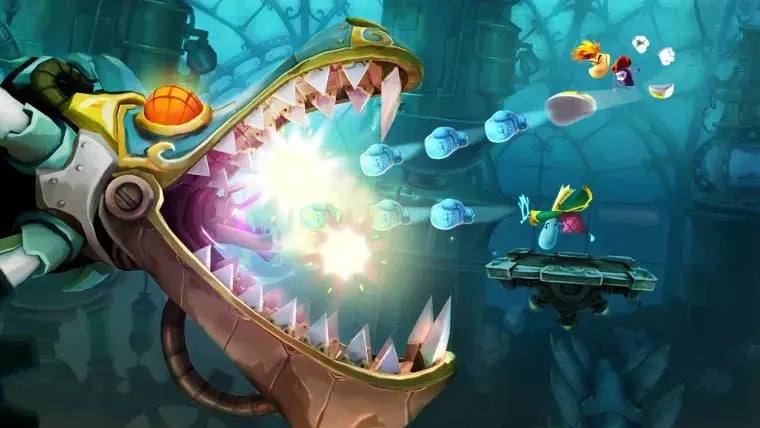
Balancing the Scales
To maintain balance, designers employ several strategies:
- Variable Difficulty Curves: Adjusting the challenge incrementally as the player gains skill.
- Skill-Based Agency: Allowing players to choose their own approach to a problem, such as opting for stealth over combat.
- Underpowered vs. Overpowered: Ensuring that no single weapon or ability renders the rest of the game’s systems obsolete.
Player Motivation and the Feedback Loop
Why do we keep playing? The answer lies in the "Feedback Loop." A feedback loop is a systemic response to a player’s actions that encourages further interaction.
Positive and Negative Loops
- Positive Feedback Loops: These reward success with power. For example, in many RPGs, defeating an enemy yields experience points, which leads to leveling up, which makes defeating the next enemy easier. This cycle provides a sense of growth and accomplishment.
- Negative Feedback Loops: These act as stabilizers. In Mario Kart, the player in last place receives better items (like the Blue Shell) to help them catch up. This prevents the leading player from feeling untouchable and ensures that the game remains competitive until the final moment.
The Art of Environmental Storytelling
While mechanics provide the "how," narrative and environment provide the "why." Modern game design has shifted away from heavy, linear exposition—the "info-dump"—in favor of "Environmental Storytelling."

In titles like The Last of Us, the story is not just told through cutscenes; it is etched into the world itself. The overgrown ruins, the placement of discarded items, and the architectural decay all tell the story of a civilization that has collapsed. This "show, don’t tell" philosophy forces players to engage their curiosity, making them active participants in uncovering the narrative rather than passive observers.
The Evolution of Design: Looking Toward the Future
The principles of game design are not static; they evolve alongside hardware and software capabilities. We are currently witnessing a shift toward:
- Procedural Generation: Using algorithms to create dynamic, ever-changing worlds that provide infinite replayability.
- Adaptive AI: Non-player characters (NPCs) that learn from the player’s strategies, creating a more unpredictable and lifelike experience.
- Cross-Platform Integration: Designing experiences that feel native to both high-end consoles and mobile devices, expanding the reach of interactive storytelling.
Implications for the Industry
The shift toward more sophisticated design principles has professionalized the industry. Game design is no longer a solitary endeavor for hobbyists; it is a collaborative discipline involving psychologists, narrative experts, level designers, and data analysts.

As player expectations rise, the demand for developers who understand these fundamental principles grows. The industry is moving toward a future where "immersion" is not just a marketing buzzword, but a measurable metric of design success.
Conclusion: Crafting the Next Generation
Creating enjoyable video games is an act of empathy. It requires the designer to step into the player’s shoes and anticipate their needs, frustrations, and moments of triumph. By mastering the core mechanics, balancing the difficulty, utilizing feedback loops effectively, and weaving narrative into the very fabric of the environment, designers create more than just games—they create lasting memories.
For those looking to enter this field, the path is clear: study the masters, understand the psychology of play, and never stop iterating. The future of interactive entertainment belongs to those who can balance the technical rigor of systems design with the creative passion of a storyteller. As technology pushes boundaries, the core principles of engagement will remain the bedrock upon which the next generation of digital worlds is built.
