
The Breaking Point: Why the Film Industry’s Labor Model is No Longer Sustainable
As the global appetite for streaming content reaches an all-time high, the machinery of Hollywood—and the people who keep it running—are showing signs of profound structural failure. While audiences enjoy a golden age of prestige television and blockbuster streaming exclusives, the workforce behind the camera is currently locked in a bitter, high-stakes battle for basic human dignity.
At the heart of this conflict are the ongoing, increasingly tense negotiations between the International Alliance of Theatrical Stage Employees (IATSE)—representing over 150,000 film and television workers—and the Alliance of Motion Picture and Television Producers (AMPTP). With an agreement extension expiring on September 10, the industry stands at a precarious crossroads, where the gap between production realities and the standard of living expected by its crew has never been wider.
The Core Conflict: A Matter of Survival, Not Luxury
The demands put forth by IATSE are not rooted in a desire for excessive wealth; they are rooted in the pursuit of safety, health, and fundamental workplace standards. The current industry model, which the AMPTP appears intent on maintaining, relies on a "status quo" that views crew members as expendable line items rather than skilled human capital.
Central to these negotiations are basic needs: reasonable meal breaks, safe turnaround times between shifts, and an end to the "death march" scheduling that has become normalized in modern production. In the eyes of many producers, it is often more cost-effective to pay contractual meal penalties than to pause production for a lunch break. Similarly, the industry frequently favors forcing a "quick turnaround"—shortening the time between one day’s wrap and the next day’s call—over allowing crew members the necessary sleep to safely commute and function. When the cost of a penalty is lower than the cost of a proper schedule, the incentive for studios to prioritize human health vanishes.
A Chronology of Escalating Tensions
The friction between labor and management did not materialize overnight; it is the culmination of years of systemic neglect that reached a boiling point during the COVID-19 pandemic.

- Pre-2020: The culture of the "14-hour day" became standard, despite union rules intended to cap hours. Disorganization and poor planning frequently led to excessive, unnecessary overtime, often masked by the "hustle" mentality of the industry.
- 2020 (The Pandemic Shift): As production resumed under strict safety protocols, the disparity between "above-the-line" talent and "below-the-line" crew became stark. While crews endured constant testing, mandatory masking, and isolation, the perceived indifference of production leadership toward these burdens signaled a deepening divide.
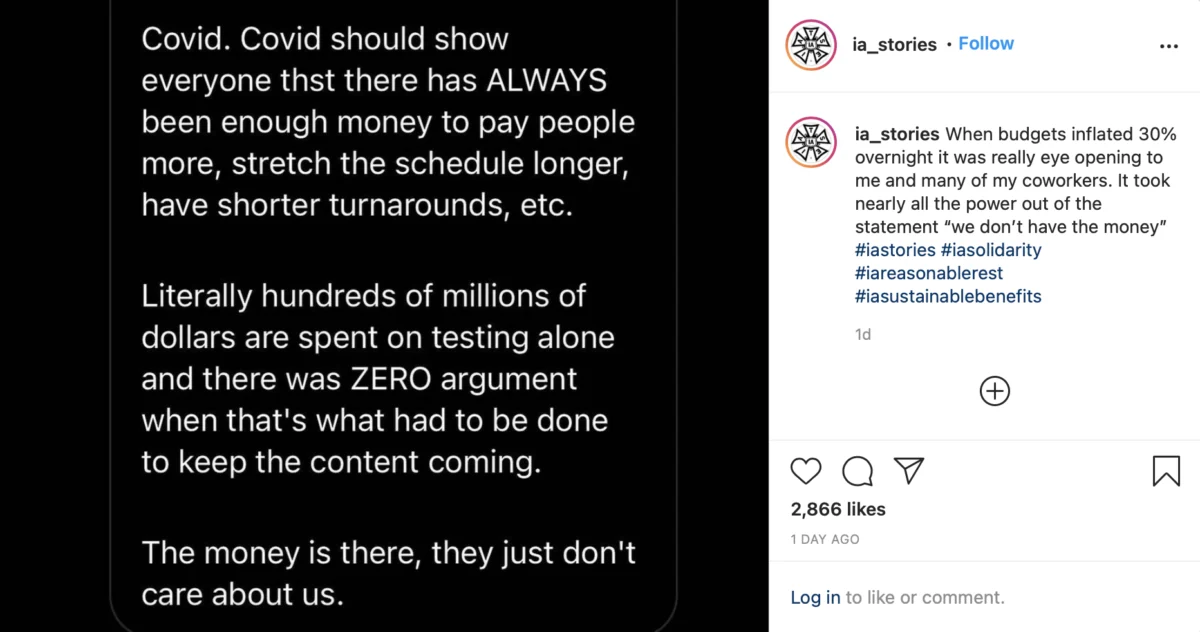
- 2021 (The Breaking Point): With the rise of the @IA_Stories Instagram movement, thousands of anonymous, harrowing accounts of workplace abuse began to surface. These stories ranged from incidents of crew members falling asleep at the wheel after dangerous shifts to the emotional toll of missing family milestones and medical appointments.
- September 2021: Negotiations between IATSE and the AMPTP stalled. The extension of the existing contract provided a temporary reprieve, but the fundamental issues regarding living wages and working hours remained unaddressed, setting the stage for a potential industry-wide strike.
The Economics of Inequity: Supporting Data
The irony of the current labor crisis is that it is occurring during a period of unprecedented profitability. Streaming giants such as Netflix, Amazon, and Apple have poured billions into content libraries, yet the compensation structures for those who build these libraries have failed to keep pace with inflation or the increased intensity of the work.
The reliance on long, consecutive hours is often presented as a necessity of the art form, but veteran crew members argue it is frequently a symptom of poor management. Data from anecdotal industry reports suggests that a significant portion of long days are the result of lack of foresight rather than creative requirements. When productions treat crew members as a "fixed cost" to be squeezed for maximum output, the long-term result is a massive brain drain. Skilled professionals are burning out in their 30s, leaving the industry because they are forced to choose between a career and basic life obligations.
Official Responses and Institutional Inertia
The AMPTP’s position remains largely centered on the preservation of traditional production flexibility. They argue that the nature of film production—which is inherently variable—requires a degree of latitude that strict hourly caps would stifle.
However, IATSE leadership, backed by the growing fervor of its membership, has countered that the "flexibility" currently enjoyed by studios is actually a form of institutionalized exploitation. In statements to the press, union representatives have emphasized that they are not seeking to halt production, but to ensure that the human cost of that production is not borne exclusively by the workforce.
The disconnect is further exacerbated by the "line-item" culture. When a production supervisor treats a 1st Assistant Camera or a gaffer as an easily replaceable spreadsheet cell, the human element of the set is lost. Stories of producers scoffing at industry-standard rates, citing the "privilege" of working during a pandemic, have become a common rallying cry for union members who feel their expertise is being actively devalued by trillion-dollar corporations.

The Wider Implications for the Industry
The implications of these negotiations extend far beyond the immediate contract terms. We are seeing a fundamental shift in the social contract of the entertainment industry.
1. The Death of the "Hustle" Mentality
For decades, the film industry operated on the myth that long hours and physical exhaustion were a "rite of passage." The current generation of workers is rejecting this. There is a growing consensus that being a professional does not require one to sacrifice their mental health, their relationships, or their safety on the road.
2. The Power of Collective Solidarity
The impact of social media in this movement cannot be overstated. By providing a platform for anonymous, transparent reporting of workplace abuses, projects like @IA_Stories have dismantled the industry’s ability to sweep its dirt under the rug. This transparency has forced producers to answer for practices that were once considered "just part of the job."
3. Sustainability and Quality
There is an argument to be made that an exhausted, underpaid, and demoralized crew is an inefficient one. High turnover rates and constant burnout lead to a loss of institutional knowledge. The industry’s insistence on the status quo may be hurting the very product it seeks to create. A sustainable industry—one that prioritizes rest and fair pay—is likely to produce higher-quality work and retain the top-tier talent required to maintain Hollywood’s global dominance.
Conclusion: A Call for a New Standard
As we celebrate Labor Day, it is a fitting time to look at the film industry with fresh eyes. The current model is not a law of nature; it is a choice made by those who control the budgets. It can be, and should be, better.

For the production manager, the executive, and the studio head, the challenge is clear: stop viewing your crew as a cost-cutting measure. Start viewing them as the engine of your business. For the crew, the path forward is equally clear: stand in solidarity. Whether you are union or non-union, the standards set at the negotiating table will eventually define your quality of life.
The industry is at a breaking point, and the status quo is no longer an option. The era of the "overworked, overtired, and underpaid" professional is coming to an end. The question that remains is not whether the industry will change, but how much damage will be done before it finally does.
