
Rewriting Sacred Texts: Why the Scrubs Revival Deliberately Sidesteps Major Canon and Sean’s Past

Main Facts
The Scrubs revival has officially welcomed back fan-favorite guest star Scott Foley, reprising his role as Sean Kelly. However, his return in Season 2, Episode 3 (“My Ex’s Ex”) comes with a massive creative caveat: the series is actively choosing to ignore a major, established storyline from the original run’s eighth season.
Specifically, the revival is erasing the late-series arc where Sean entered into a serious relationship with Kim Briggs (played by Elizabeth Banks), the mother of J.D.’s son, Sam. In the original series chronology, Sean and Kim’s pairing deeply intertwined Sean with J.D. and Elliot’s extended family dynamic. By sidestepping this history entirely, showrunner Aseem Batra and the creative team have made a deliberate choice to trim narrative baggage in favor of streamlined storytelling.
According to Batra, the decision mirrors the strategic narrative leaps taken by classic television transitions—most notably how Frasier jettisoned extraneous elements from Cheers to forge its own comedic identity. While Scrubs previously retconned the widely maligned Season 9 (“Med School”), this marks the first time the revival has aggressively pruned pre-existing continuity from the core era of the show to serve its current pacing and character dynamics.
Chronology of the Character Arc
To understand the weight of the revival’s narrative pivot, one must trace Sean Kelly’s turbulent history across the sprawling timeline of Sacred Heart Hospital and beyond:
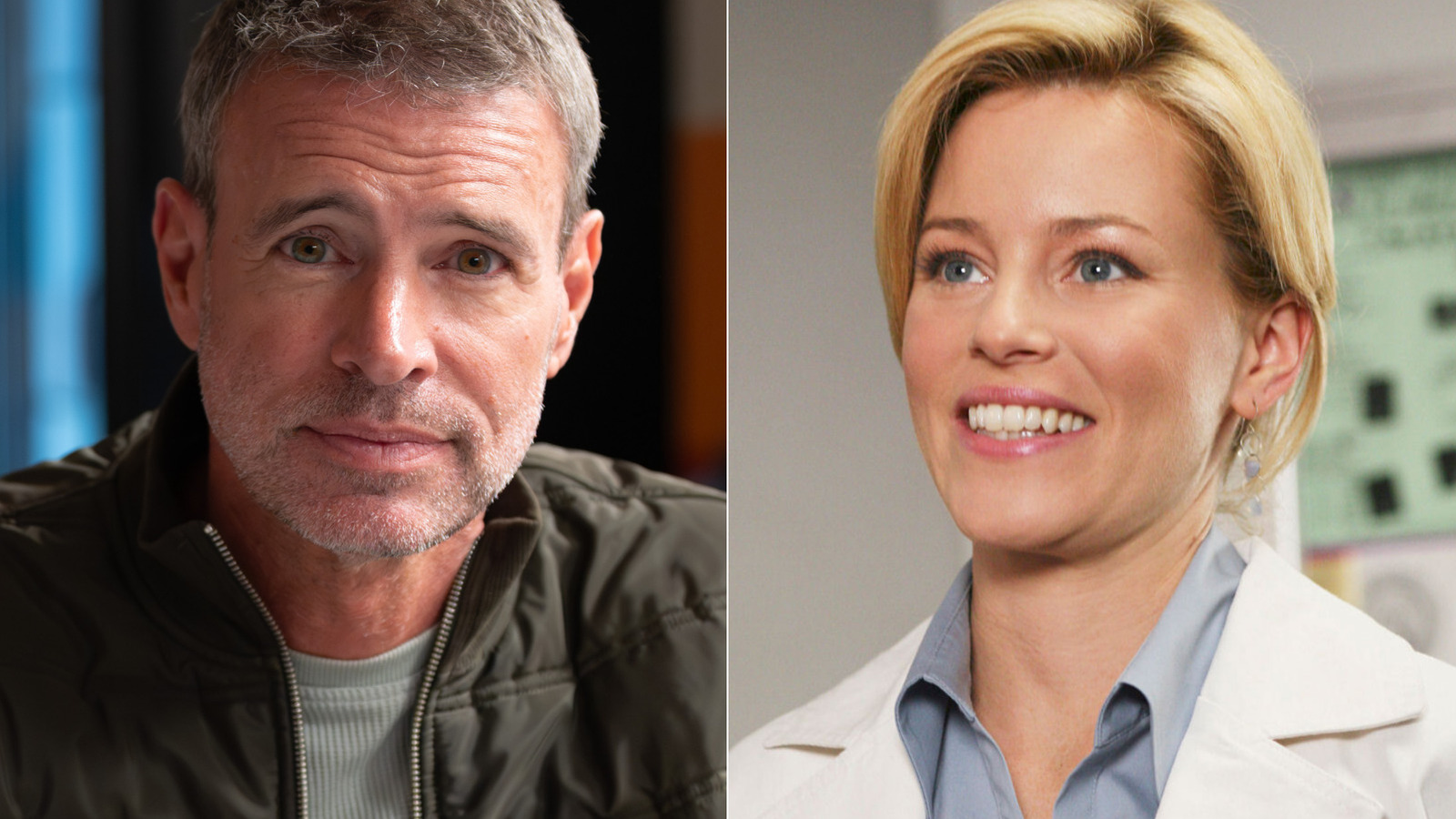
- The Early Seasons (2001–2004): Sean is introduced as a recurring character in Seasons 1 and 3. He forms a steady, if ultimately ill-fated, romance with Elliot Reid. Their relationship repeatedly suffers due to the lingering emotional interference and romantic sabotage of John "J.D." Dorian.
- The Post-Breakup Era: Following his final major breakup with Elliot, Sean’s life shifts away from the hospital orbit, though he remains a legendary fixture of Sacred Heart lore (and the butt of numerous jokes about how easily forgettable he can be to outsiders).
- The Season 8 Finale Curveball (2009): In Season 8, Episode 16 (“My Cuz”), Scrubs drops a narrative bombshell. It is revealed that Sean has unexpectedly struck up a romance with Kim Briggs, J.D.’s ex-girlfriend and the mother of his child, Sam. This development seemingly positioned Sean to remain an unavoidable, permanent fixture in J.D.’s life.
- The Revival Present (2026): Fast-forwarding to the modern Scrubs revival, Sean resurfaces working at an aquarium after quitting SeaWorld (following an epiphany regarding captive orcas). When he crosses paths with J.D., Elliot, and J.D.’s new partner Charlie, the complex history with Kim is completely omitted. Instead, Sean and Elliot awkwardly navigate a potential second-chance romance, completely detached from his prior entanglement with Kim.
Supporting Data and Production Constraints
Behind the creative decision to toss out years of established continuity are strict logistical realities governing modern television revivals. Unlike the sprawling 22-to-24-episode orders of network television’s golden age, modern limited revivals operate under tight constraints:
- Episode Counts: The Scrubs revival features abbreviated seasons consisting of roughly 9 to 10 episodes.
- Runtime: Each episode runs for a tight 21 minutes and 30 seconds.
- Pacing Pressures: With limited screen time, showrunners face an aggressive triage process regarding which narrative threads to prioritize.
According to Batra, spending precious minutes unpacking how Sean helped raise J.D.’s baby or untangling the awkward aftermath of his relationship with Kim would bog down the narrative. With a concise weekly runtime, the focus must remain squarely on the immediate emotional arcs of the core ensemble—namely, J.D., Elliot, Turk, and Carla.
Furthermore, the creative team calculated that audiences would ultimately forgive a minor continuity omission if it resulted in a faster, more emotionally resonant story. The "Frasier model"—discarding cumbersome history for the sake of comedic momentum—was applied directly to the writers’ room whiteboards.
Official Responses and Creative Justification
Showrunner Aseem Batra has been remarkably candid about the deliberate erasure of Sean and Kim’s romance, addressing fan expectations head-on in interviews with entertainment outlets like TVLine.

"I kind of did the Frasier model [where] they had to jettison things that weren’t working and just go ahead with what worked. And I don’t mean the Frasier revival. I mean from Cheers to Frasier," Batra explained, drawing a parallel to legendary television handoffs.
Batra acknowledged that long-term devotees of the series would inevitably scrutinize the omission of canon. "I’m sure there will always be audience members who are like, ‘But they didn’t follow that canon,’" she noted. However, she defended the choice as a necessary sacrifice for story economy: "There are some major things we have to bring back up. But other things, like the Kim thing and [Sean] was [helping raise] J.D.’s baby, I’m like, ‘I don’t want to deal with that. Seems bonkers. I’m going to let that go.’"
Despite completely sweeping Sean and Kim’s history under the rug, Batra has left the door open for Elizabeth Banks to return to the Scrubs universe should scheduling and storylines ever align. "If she ever came and did an episode, the audience, I think, would totally accept it," Batra said. For the time being, however, the official creative mandate is simple: "We’re pretending that [relationship] didn’t… happen."
Implications for the Revival and Fan Reception
The decision to rewrite Scrubs history opens up an ongoing debate regarding the rules of television revivals and the sacredness of established canon.

1. The Death of Strict Continuity in Comedies
In the era of streaming and binge-watching, fans have grown accustomed to meticulous continuity tracking. However, multi-camera and single-camera sitcom revivals (The Conners, Fuller House, Frasier) have increasingly leaned toward a "pick-and-choose" approach to history. By showing that even critically praised character arcs can be casually retrofitted or discarded, Scrubs reinforces that emotional truth and comedic rhythm trump long-term lore continuity.
2. Streamlining Sean and Elliot’s Dynamic
By erasing the Kim entanglement, the writers successfully neutralize potential narrative landmines that could have weighed down Sean’s return. Without the baggage of having dated the mother of J.D.’s child, Sean steps back into the orbit of Sacred Heart characters as a clean slate. This narrative freedom allows his renewed dynamic with Elliot to breathe. Rather than wading through years of complicated co-parenting history, the show pivots straight into a mature exploration of second chances, underscored by the newfound empathy J.D. holds for Elliot following their painful divorce.
3. Fan Sentiment: Pragmatism vs. Purity
While hardcore continuity purists may grumble over the vanishing of Sam-adjacent lore, the broader viewership appears willing to trade historical accuracy for sharp writing and the beloved chemistry of Scott Foley and Sarah Chalke. As long as the revival continues to deliver the signature blend of heart, absurdist fantasy sequences, and rapid-fire comedy that defined Bill Lawrence’s original creation, most fans are content to let a few seasons of minor continuity quietly swim with the orcas.
