
From Revolution to Rhapsody: Inside Andy Serkis’ Unconventional, Animated Vision for George Orwell’s ‘Animal Farm’
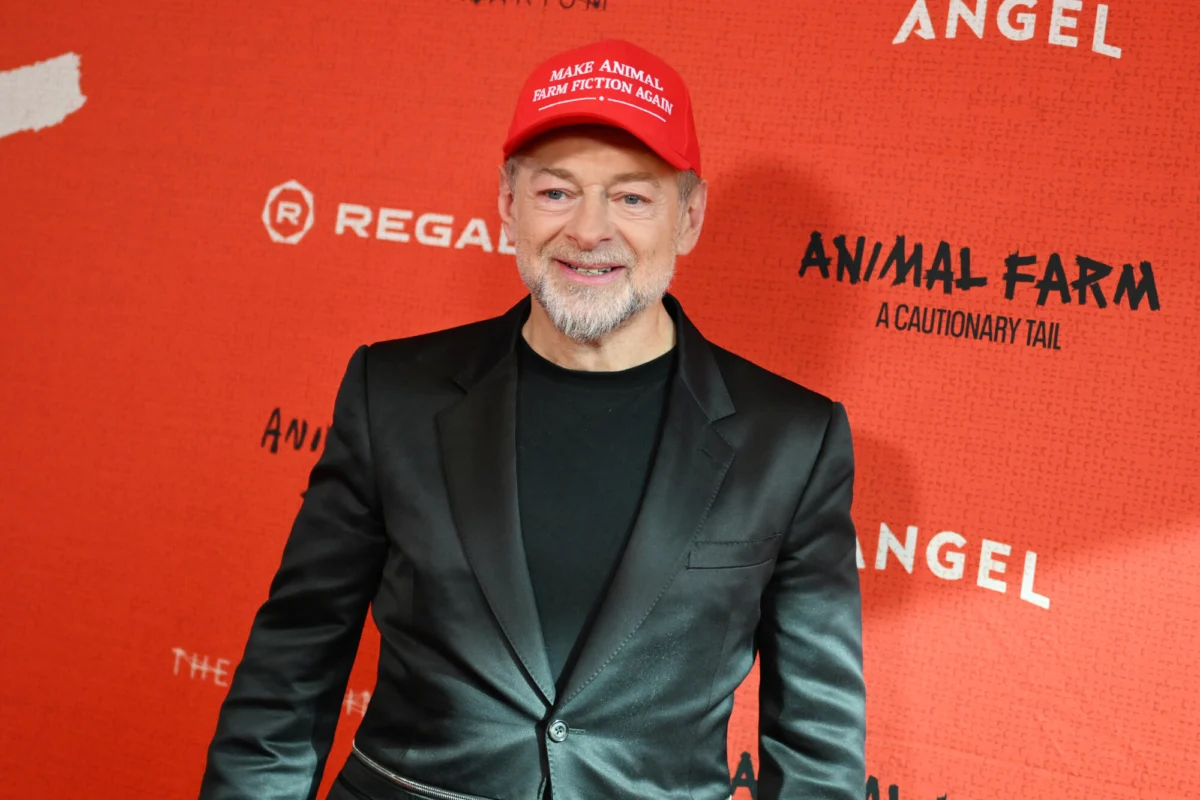
Main Facts: Reimagining a Literary Classic for a New Generation
George Orwell’s Animal Farm has endured for nearly eight decades as literature’s most potent cautionary tale regarding the corrupting nature of absolute power. Traditionally viewed as a biting political satire reflecting the Soviet Union’s descent into mid-20th-century authoritarianism, the text has now been radically reconceived for the modern screen.
Directed by performance-capture pioneer Andy Serkis—renowned for breathing visceral life into digital characters like Gollum, Caesar, and King Kong—this new cinematic adaptation abandons strict political fidelity and photorealism in favor of an expansive, family-friendly animated canvas. Released theatrically by Angel Studios, Serkis’ Animal Farm infuses the bleak allegorical text with unexpected elements, including rap songs, slapstick humor, and an unwavering thematic focus on protecting the innocent.
The film features a star-studded voice cast, starring Seth Rogen as the tyrannical pig Napoleon, Laverne Cox as the revolutionary idealist Snowball, Glenn Close as Freida Pilkington, and Serkis himself voicing the deposed human antagonist, Farmer Jones. While critics note that the film’s political framework is lighter than Orwell’s original text, its transition from a long-gestating motion-capture experiment into a fully realized animated feature stands as a landmark technical and artistic venture for its director.
Chronology: The Long and Winding Road to the Screen
The journey of Serkis’ Animal Farm is a masterclass in Hollywood perseverance, evolving over many years through shifting technological landscapes and production formats.

- Early Development and Motion-Capture Roots: The project initially began its life as a motion-capture venture. Given Serkis’ status as the world’s foremost authority on performance capture through his studio, The Imaginarium, the early ambition was to render the farm animals using hyper-realistic, photo-real visual effects.
- The Pivot to Animation: As early test footage and visual designs took shape, Serkis and his creative team realized that photorealism created an unintended barrier. The early character models depicted starving animals with visible rib cages and gluttonous, menacing pigs. Recognizing that the intense brutality of a photorealistic approach would alienate younger audiences, Serkis made the bold pivot to stylized animation.
- Worldbuilding and Voice Recording: With the animation style locked in, the production transitioned into comprehensive worldbuilding. Collaborating with set designer Amos Sussigan and various layout and story teams, the production began crafting every minute detail of the environment—from individual blades of grass to complex farm machinery. Voice actors were brought in to record scratch tracks, laying the foundational vocal performances for the animators to build upon.
- The Multiphase Animation Pipeline: Unlike live-action filmmaking, where footage is shot on a daily schedule and assembled in an editing suite relatively quickly, the animated production required years of refinement. Scenes passed through numerous hands—storyboard artists, layout technicians, and animators—requiring Serkis to hold complex, incomplete visions in his head for extended periods.
- Theatrical Release: Following years of meticulous multi-departmental collaboration, the finished film made its way to the big screen courtesy of Angel Studios, bringing Serkis’ unique vision directly to audiences.
Supporting Data: Production Insights and Cast Dynamics
Bringing Animal Farm to life as an animated feature required navigating a completely different production ecosystem than Serkis’ previous live-action and hybrid directorial outings, such as Mowgli: Legend of the Jungle and Venom: The Last Dance.
Technical and Creative Collaboration
While animation shares overlapping processes with digital previz, storyboarding, and game engines like Unreal Engine, the sheer scope of worldbuilding required an unprecedented level of microscopic detail. Serkis highlighted the contributions of production designer Amos Sussigan in crafting a believable, handcrafted environment that could support both lighthearted comedy and heavy dramatic beats.
The Voice Acting Advantage
For the ensemble cast—featuring heavyweights like Seth Rogen and Laverne Cox—the voice booth offered a liberating creative environment. Without the logistical constraints of live-action filmmaking (such as resetting camera angles, changing lenses, or adjusting lighting setups), actors were granted the freedom to experiment. Serkis noted that this format allowed performers to deliver multiple distinct takes in rapid succession, enabling a highly organic discovery of their characters’ emotional arcs.
Shifting Demographics
The choice to move away from gritty photorealism was data-driven in terms of audience reach. By softening the unforgiving visual edges of the animal models, the production created a safe emotional margin for younger viewers to process the story’s heavier thematic elements—namely, how revolutionary ideals are slowly dismantled when leadership grows corrupt.

Official Responses: Andy Serkis on Crafting the Animal Kingdom
Speaking candidly about his creative choices, Andy Serkis emphasized that his goal was not to replicate the exact political cynicism of Orwell’s novel, but rather to construct "a cautionary tale that has a whole heap of innocence around it."
Reflecting on why the film had to abandon its original photorealistic trajectory, Serkis explained:
"The very early designs for the animal characters were much more unforgiving and brutal. When animals looked like they were starving, you could see their rib cages; the pigs were a lot more gluttonous and just looked meaner. There is a version of that film that could exist, but we wanted to reach out to a younger audience."
Serkis also addressed the unique emotional intimacy he wanted to achieve through the animation style, noting that close-ups were strategically deployed to make viewers empathize with the characters without requiring animators to over-perform the emotions.

"I wanted the audience to reach out to the characters and to really feel—when the camera’s pushing in on a character’s face—what they’re going through. And not to feel that the animators had to overperform it, as such. That was a really interesting part of the process," Serkis shared.
Discussing the exhausting yet rewarding timeline of animation direction, he added:
"Getting to the end of a scene on an animated movie can take years because it goes through so many different hands and skills. So it was wonderful getting to know all the different departments in the animation team and to work with actors who were animators and be able to direct them in an interesting way."
Implications: A New Benchmark for Classic Adaptations
Andy Serkis’ Animal Farm carries significant implications for how classic, politically charged literature is adapted for modern, multi-generational audiences. By trading the bleak, uncompromising realism of Soviet-era political allegories for a softer, more accessible aesthetic, the film redefines the boundaries of family entertainment.

While purists may debate the dilution of Orwell’s razor-sharp political critique—noting the inclusion of contemporary comedic beats, rap music, and lighter tonal shifts—the film succeeds as a daring technological and artistic experiment. It proves that established directors can leverage their expertise in performance capture and visual effects to cross over into traditional animation, forging new pathways for actor-driven voice performances.
Ultimately, Serkis’ adaptation forces a conversation about how stories of systemic corruption and lost innocence can be communicated to younger demographics without sacrificing emotional resonance. By prioritizing character empathy and creative freedom for its voice cast, Animal Farm stands as a unique cinematic artifact of its era—one that bridges the gap between historical literature and modern, populist animation.
