
The Digital Panopticon and the Celluloid Ghost: Why Found Footage Horror Still Reigns Supreme in the Age of AI
Main Facts: The Enduring Power of Simulated Reality
As the boundaries between authentic human experience and synthetic generation blur at an unprecedented rate, the horror genre finds itself standing at a fascinating crossroads. What is scarier than an omnipresent technological grid recording every inch of the modern world? It is horror cinema that treats that chilling reality as gospel truth.

The widespread, global adoption of artificial intelligence has introduced a paradigm shift in media creation. Soon, audiences may no longer be able to tell the difference between a traditional, practically crafted "found footage" movie and a stream of terrifying images instantly generated by a machine learning algorithm. Until that complete digital assimilation takes hold, however, the cinematic subgenre of recovered evidence, shaky-cam terror, and desktop frights remains uniquely potent.

Whether it is evidence pulled from a ruined crime scene, a corrupted disaster archive, or a continuous live video feed streamed from surveillance networks and social media platforms, found footage remains one of the most effective tools in a genre fan’s arsenal. These films function as year-round entertainment, but they carry a distinct psychological weight during the autumn months—particularly when viewers crave an artistic medium that mimics physical proof of hell on Earth.

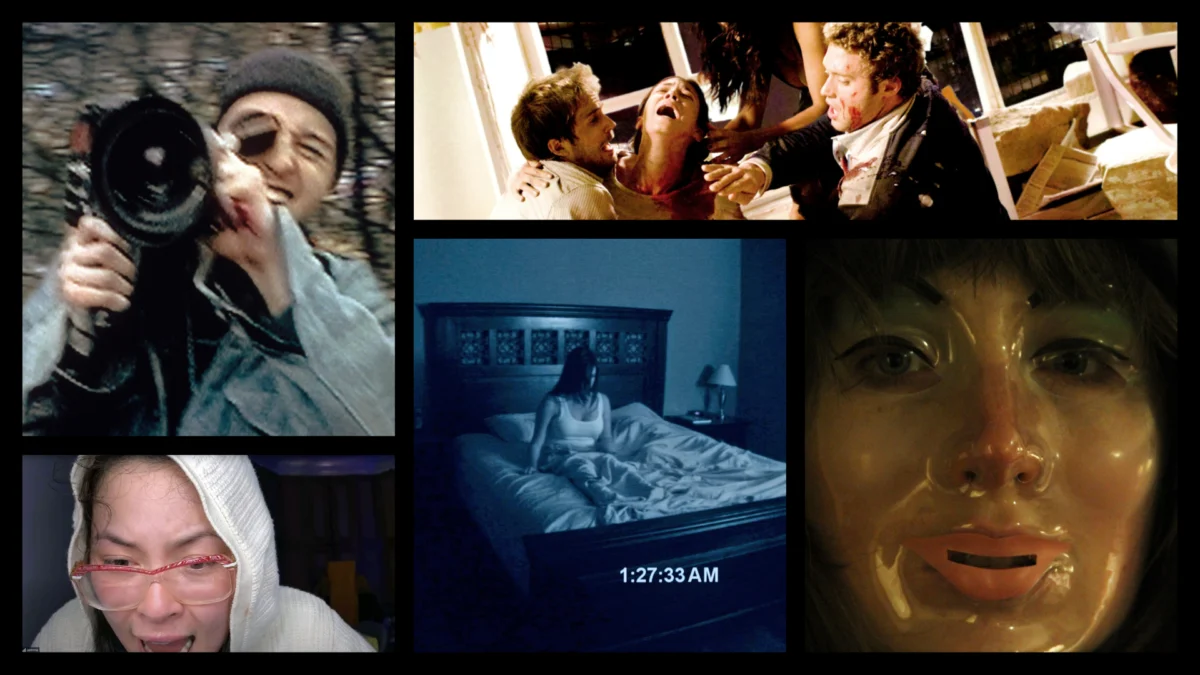
Nearly thirty years after The Blair Witch Project fundamentally altered the landscape of independent cinema, the subgenre continues to thrive through innovation, festival debuts, and a dedicated community of creators. To celebrate this legacy, critics and editors have refreshed their definitive rankings of the 25 best found footage films ever made. This updated compilation ranges from foundational standard-bearers like Cannibal Holocaust, Cloverfield, and Paranormal Activity to under-seen, low-budget masterpieces like Lake Mungo, The Tunnel, and Be My Cat: A Film for Anne.

Chronology: From 16mm Nightmares to Zoom-Room Horrors
To understand why found footage remains so vital, one must trace its evolution from an experimental storytelling gimmick into a dominant global cinematic force.

- The Early Precursors (1980s–1990s): The roots of the subgenre trace back to controversial exploitation and pseudo-documentary shocks. Ruggero Deodato’s 1980 film Cannibal Holocaust pioneered the "lost expedition" framing device, shocking international audiences so profoundly that the director was forced to prove in court that his actors were still alive. Nearly two decades later, in 1999, Daniel Myrick and Eduardo Sánchez released The Blair Witch Project. Shot on a shoestring budget and marketed aggressively via an early internet viral campaign, the film convinced millions of moviegoers that three student filmmakers had actually vanished in the woods of Maryland, grossing nearly $250 million worldwide and proving the commercial viability of simulated reality.
- The Digital Boom and Multiplex Takeover (2000s): Following Blair Witch, the subgenre experienced a quiet period before exploding anew with the advent of cheap, high-definition digital cameras. Oren Peli’s Paranormal Activity (2007) utilized stationary home security footage to generate astronomical profits on a $15,000 budget. Shortly after, Matt Reeves and J.J. Abrams applied the aesthetic to monster movies with 2008’s Cloverfield, proving that the shaky-cam format could scale up to blockbuster proportions. The 2010s saw the birth of groundbreaking anthology franchises like V/H/S, which captured the anxieties of the analog-to-digital transition through a series of corrupted tapes, camcorders, and web-cams.
- The Quarantine Era and Remote Terror (2020s): The subgenre adapted swiftly to global lockdowns. Rob Savage’s 2020 indie hit Host utilized the constraints of the COVID-19 pandemic to craft a terrifying supernatural ordeal played out entirely across a Zoom video conference call. This era proved that found footage does not require deep woods or haunted houses; it only requires a screen.
- The Contemporary Landscape (Late 2025): The subgenre continues to evolve rapidly. Over the summer of 2025, Peter S. Hall and Paul Gandersman released Man Finds Tape, a divisive festival entry later acquired by Magnet Releasing. Meanwhile, institutional support for the format has expanded: Duplass Brothers Productions partnered with the Transgender Film Center to launch a dedicated fund supporting trans artists working within the found footage format. Furthermore, YouTuber-turned-critic Chris Stuckmann prepared for his feature directorial debut with Neon’s Shelby Oaks—a paranormal missing person’s case blending traditional narrative filmmaking with chilling found-footage elements.
Supporting Data: The Anatomy of a Modern Cinematic Movement
The resilience of found footage is not merely a matter of nostalgia; it is backed by shifting industrial trends, shifting audience demographics, and changing technological accessibility.

- The Cost-to-Profit Ratio: Historically, found footage films represent the highest return-on-investment models in Hollywood. Paranormal Activity grossed over $193 million globally against a production budget estimated under $20,000. The Blair Witch Project achieved a staggering 5,000% return on investment.
- Democratization of Production: The lowering barrier to entry has allowed diverse voices to enter the horror space. Initiatives such as the Duplass Brothers Productions and Transgender Film Center joint fund specifically aim to elevate marginalized creators, ensuring that the shaky-cam lens is held by a wider variety of storytellers.
- The Evolution of the Medium: The definition of "found footage" has expanded dramatically over the decades. While early entries relied exclusively on VHS tapes, 16mm film reels, and Hi8 camcorders, contemporary entries routinely incorporate:
- Webcam and desktop interfaces (Host, Unfriended)
- Dashcam and police body-cam footage
- Live-stream broadcasts and influencer video logs (Deadstream)
- Deep-fake and synthetic archival simulations
Official Responses and Industry Perspectives
The enduring appeal of the subgenre has drawn commentary from prominent critics, filmmakers, and industry insiders who have helped shape the critical consensus around these films over the years.

Industry veterans note that the format’s stripped-down aesthetic forces filmmakers to rely on raw tension, sound design, and psychological dread rather than expensive computer-generated effects. Tambay Obenson, Eric Kohn, Kate Erbland, Ryan Lattanzio, and Wilson Chapman—all contributors to major cinematic discourse platforms—have repeatedly highlighted how low-budget wonders like Lake Mungo and The Tunnel achieve emotional resonance precisely because their rough-hewn framing mimics genuine grief and documentary investigation.

Chris Stuckmann, speaking on the transition from film criticism to feature-film direction with Shelby Oaks, emphasized the unique burden of utilizing the missing-person investigation trope: "When you are dealing with a mystery where the primary evidence consists of scattered digital artifacts and recovered files, your job as a director is to make the audience forget they are watching a constructed narrative. You have to weaponize their familiarity with modern media against them."

Furthermore, distribution executives point out that the subgenre thrives precisely because audiences are experiencing fatigue from pristine, over-lit, algorithmically tested blockbusters. The grain, static, and dropouts inherent to found footage provide a tactile, messy counter-programming option that feels dangerous in an era of sanitized corporate entertainment.

Implications: Artificial Intelligence and the Future of Simulated Fear
As we look toward the horizon of horror cinema, the rise of artificial intelligence poses both an existential threat and a fascinating thematic hurdle for the found footage subgenre.

For decades, the core psychological hook of found footage has been authenticity—the implicit or explicit lie that "this really happened." Title cards claiming the footage was recovered from police archives, missing hikers, or doomed scientific expeditions have served as the ultimate gateway drug for horror enthusiasts.

However, as generative AI systems become capable of instantly producing hyper-realistic video, synthetic voices, and convincing photographic evidence of non-existent events, the concept of "proof" is undergoing a profound cultural crisis. If an advanced neural network can generate a photorealistic video of a cryptid attack or a supernatural haunting in seconds, the old Blair Witch-style framing device loses its unique footing in reality. Audiences will no longer assume that rough-cut, jittery video is genuine; instead, they may default to skepticism, wondering if the entire nightmare was synthesized by a prompt engineer.

Yet, this exact anxiety might breathe new life into the genre. Rather than running away from the age of synthetic media, visionary horror directors are beginning to lean directly into it. The fear is no longer just about what lurks in the dark woods or an abandoned hospital basement; it is about the inability to trust our own digital eyes and ears.

As technology marches forward and the line between truth and fabrication dissolves entirely, horror cinema will have to push itself harder than ever to keep pace. Whether through desktop thrillers, corrupted algorithmic archives, or traditional handheld terror, the shaky-cam aesthetic reminds us that deep down, human beings love to be tricked—even if the monsters waiting in the dark are entirely of our own making.
