
A Dangerous Act of Creation: Inside the Covert Production of The Friend’s House Is Here
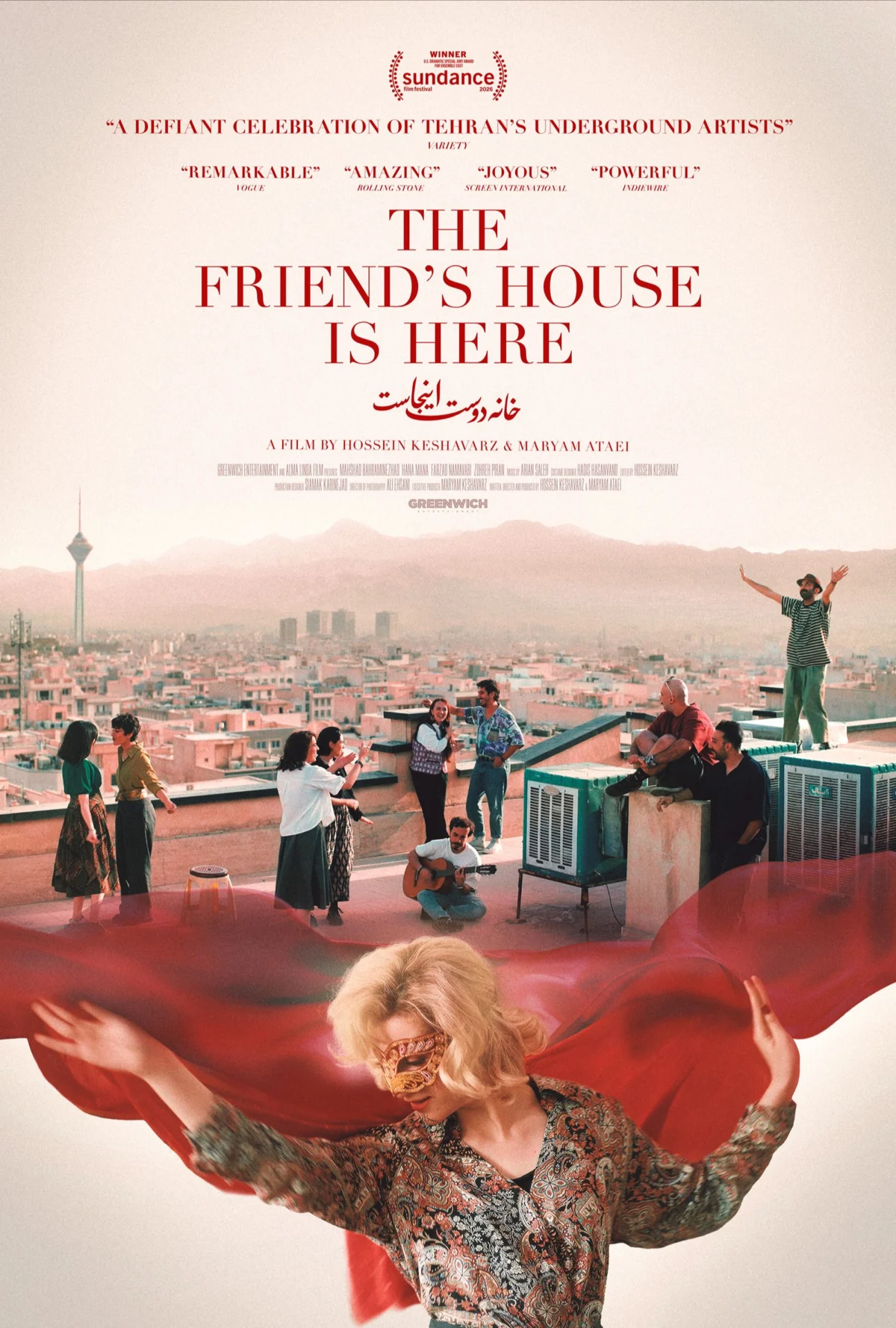
Main Facts
The cinematic landscape is occasionally pierced by a work of such extraordinary courage that the circumstances of its creation overshadow traditional metrics of critical evaluation. The Friend’s House Is Here, a gripping new feature film written, directed, and produced by the creative duo Hossein Keshavarz and Maryam Ataei, stands as a visceral testament to this phenomenon. Offering an unprecedented, unvarnished look inside Tehran’s clandestine underground art scene, the drama was shot entirely in secret, under the immediate and persistent threat of state detection, severe interrogation, and imprisonment.
The film’s journey from the shadows of Iran to the global stage has been nothing short of meteoric. Following its critically acclaimed festival run, The Friend’s House Is Here captured the prestigious US Dramatic Special Jury Award for Ensemble Cast at the 2026 Sundance Film Festival, stunning audiences and industry insiders alike with the raw authenticity of its performances. Recognizing both its artistic brilliance and its urgent cultural relevance, Greenwich Entertainment acquired the film for distribution, scheduling a high-profile theatrical U.S. release beginning December 4.
At its core, the narrative centers on two women whose lives, art, and survival are inextricably linked: Pari, a visionary theater director, and Hanna, a fiercely expressive dancer. Sharing a home as roommates and best friends, they also operate as professional partners, navigating the labyrinthine pressures of underground rehearsals, clandestine performances, and the quiet, stolen rituals of everyday life in the Iranian capital. Their delicate existence is upended when their secret creative circle is inevitably discovered by authorities, transforming their artistic endeavors into a high-stakes battle for survival.
Rather than leaning into familiar, externalized cinematic tropes of oppression often associated with Western depictions of Iran, Keshavarz and Ataei have crafted a luminous, intimate portrait of sisterhood. The film deliberately blurs the boundaries between theatrical performance and lived experience. In doing so, it posits a profound cinematic argument: when living authentically is criminalized, art becomes inseparable from life, and even the smallest, most fleeting creative choices transform into revolutionary acts of resistance.
Chronology
The genesis, execution, and subsequent emergence of The Friend’s House Is Here form a timeline defined by calculated risk, clandestine operations, and eventual international acclaim.
The Pre-Production and Covert Development Phase
Long before the cameras rolled, directors Hossein Keshavarz and Maryam Ataei faced the monumental task of conceptualizing a feature film that could be realized safely within a hostile infrastructure. In a society where the Ministry of Culture and Islamic Guidance tightly controls all cinematic output—requiring strict script approvals, modesty laws, and ideological vetting—producing an independent, unsanctioned drama required an unorthodox approach. Casting had to be conducted through whispered networks of trusted artists, and locations were selected based on their acoustic and visual isolation from prying eyes and neighborhood informants.
The Underground Shoot
Principal photography took place under conditions that could best be described as guerrilla filmmaking in a totalitarian state. Operating with a skeletal crew and minimal equipment to maintain mobility and avoid drawing suspicion, the production team functioned with the discipline of a covert intelligence cell. Every day on set carried the existential dread of a sudden raid by state security forces. The actors and crew members understood that a single intercepted message, a careless transport of gear, or a suspicious noise could result in immediate arrest, heavy fines, or long-term imprisonment. Despite these harrowing parameters, the filmmakers prioritized the emotional and psychological truth of their subjects, capturing the vibrant pulse of Tehran’s hidden youth culture frame by frame.
Post-Production in the Shadows
Once wrapping production, the filmmakers faced the equally perilous task of smuggling the digital footage out of Iran. Post-production work had to be handled with extreme digital discretion, utilizing encrypted communications, decentralized editing suites, and secure international file transfers to ensure that the raw materials and final cuts did not fall into the hands of state censors.
The Sundance Breakthrough (January 2026)
The veil of secrecy was finally lifted at the 2026 Sundance Film Festival, where The Friend’s House Is Here made its world premiere. The festival screening sent shockwaves through the independent film community, not only for its artistic merits but for the revelation of how it was made. The film’s emotional resonance and the palpable vulnerability of its actors culminated in a major victory: the US Dramatic Special Jury Award for Ensemble Cast.
Distribution and Commercial Rollout (December 2026)
Capitalizing on the momentum from Sundance, Greenwich Entertainment moved quickly to secure distribution rights. Announcing a December 4 theatrical release in the United States, the distributor positioned the film as both a major awards-season contender and a vital cultural artifact, bringing the clandestine voices of Tehran’s artists directly to North American audiences.
Supporting Data
To fully understand the weight of The Friend’s House Is Here, one must examine the socio-political and industrial context from which it emerged. The following data points highlight the stark realities facing independent artists in Iran and the critical reception of the film upon its public debut.

- Production Constraints: 100% of the film’s principal photography was executed without state permits, functioning entirely outside the legal framework of Iran’s official cinematic regulatory bodies.
- Festivals and Accolades: World-premiered at the 2026 Sundance Film Festival, securing the US Dramatic Special Jury Award for Ensemble Cast.
- U.S. Theatrical Distributor: Greenwich Entertainment.
- Release Date: December 4, 2026 (U.S. theatrical rollout).
- Cultural Context Statistics: According to human rights organizations monitoring Iranian arts and culture, dozens of independent filmmakers, actors, and musicians face travel bans, professional blacklisting, or prison sentences annually for producing works that lack official state clearance or challenge conservative social codes.
- Cast Dynamics: The film features a tightly knit ensemble cast portraying the interwoven lives of underground theater practitioners, reflecting the real-life communal bonds required for survival among dissident artists in Tehran.
Official Responses
The filmmakers have been remarkably candid about the duality of their creation—balancing the terror of state repression with the profound joy of artistic expression. In a joint statement released following the announcement of the film’s distribution, Hossein Keshavarz and Maryam Ataei reflected on the philosophy driving their work:
"The story of the film is also the story of making the film," the directors shared. "It is about the power of art to speak truth in a society where misinformation is the official narrative. It is about artists who risk everything to live authentically."
Detailing the harrowing physical conditions of the shoot, they added:
"We shot the film underground, under the threat of arrest if caught. Indeed, the threat of imprisonment is the reality every artist in Iran faces. But this reality does not define us. It is a part of our lives. But we focus on the sweet today."
Industry executives have similarly rallied around the project, recognizing its unique status as a triumph of human resilience. Representatives from Greenwich Entertainment noted during the acquisition announcement that The Friend’s House Is Here transcends traditional cinematic categories, serving simultaneously as an electrifying work of fiction, a documentary-like capture of a hidden subculture, and a courageous political statement.
Festival programmers at Sundance echoed these sentiments, praising the ensemble cast not merely for their technical skill, but for channeling their lived experiences into performances that crackle with dangerous, authentic energy. The collective win for the ensemble cast was widely interpreted by festival jurors as an acknowledgment of the shared risk assumed by every individual whose name—or pseudonym—appears on the project’s invisible payroll.
Implications
The release of The Friend’s House Is Here carries profound implications for global cinema, international human rights discourse, and the evolving nature of resistance art in the 21st century.
Redefining Iranian Cinema on the Global Stage
For decades, international audiences have grown accustomed to a specific cinematic export from Iran—often characterized by poetic rural dramas, allegorical children’s tales, or minimalist social realist films that successfully navigate the labyrinth of state censorship. While these masterworks have earned global acclaim, they represent only a sanitized, officially sanctioned fraction of Iranian creativity. The Friend’s House Is Here shatters this paradigm. By exposing the vibrant, pulsing, and heavily criminalized urban underground—where contemporary youth consume illicit media, stage avant-garde theater, and practice modern dance—the film expands the cinematic vocabulary of Iranian life. It proves that a burgeoning, rebellious subculture exists far away from the rigid moral gaze of the regime.
The Weaponization of Everyday Art
The film forces audiences to re-evaluate the true cost of artistic expression. In democratic societies, art is often consumed as entertainment, comfort, or commercial product. Through the lens of Keshavarz and Ataei, art is restored to its most primal function: a vital life-support system. When dancing, rehearsing a play, or gathering with friends can lead to a cell block, every creative choice becomes an act of political defiance. The film suggests that totalitarian regimes ultimately fail because they cannot police the human imagination; even in the deepest subterranean spaces, the desire to create and connect remains unquenchable.
Safety, Security, and the Ethics of Covert Filmmaking
As The Friend’s House Is Here receives a high-profile theatrical rollout in the United States, it also brings to the forefront pressing ethical questions regarding the safety of artists who remain in repressive nations after their work is exported. The international success of such a project provides a double-edged sword: while global visibility offers a measure of protection through public spotlight, it also draws the ire of state censors who view international acclaim as an act of subversion. The film’s distribution serves as a litmus test for how the global film community can support, champion, and protect creators who work on the razor’s edge of personal safety.
Ultimately, The Friend’s House Is Here is much more than an award-winning indie drama. It is a cinematic flare shot into the dark sky of state censorship, illuminating the resilience of human creativity and proving that when the state demands silence, art will find a way to speak.
