
Bringing Homer’s Epic to IMAX: Inside the Practical Magic and Visual Effects of Christopher Nolan’s The Odyssey

Main Facts
In the cinematic landscape of 2026, visionary director Christopher Nolan has once again pushed the boundaries of filmmaking with his $250 million adaptation of Homer’s ancient epic, The Odyssey. Starring Matt Damon as the legendary Greek hero Odysseus, the feature chronicles the harrowing, decade-long voyage home from the Trojan War. True to Nolan’s signature directing style, the production rejects heavy reliance on green screens in favor of tactile realism. However, The Odyssey presents a unique cinematic paradox: how does a filmmaker famous for practical effects bring gods, monsters, and the supernatural into the physical world?
The answer lies in a meticulous blend of old-school moviemaking and cutting-edge visual technology. Notably, The Odyssey is the first feature film in history to be shot entirely on IMAX 70mm film cameras. Under the guidance of Visual Effects Supervisor Andrew Jackson and the digital artistry of studio DNEG, the production married live-action photography, physical plates, and "invisible" digital effects.
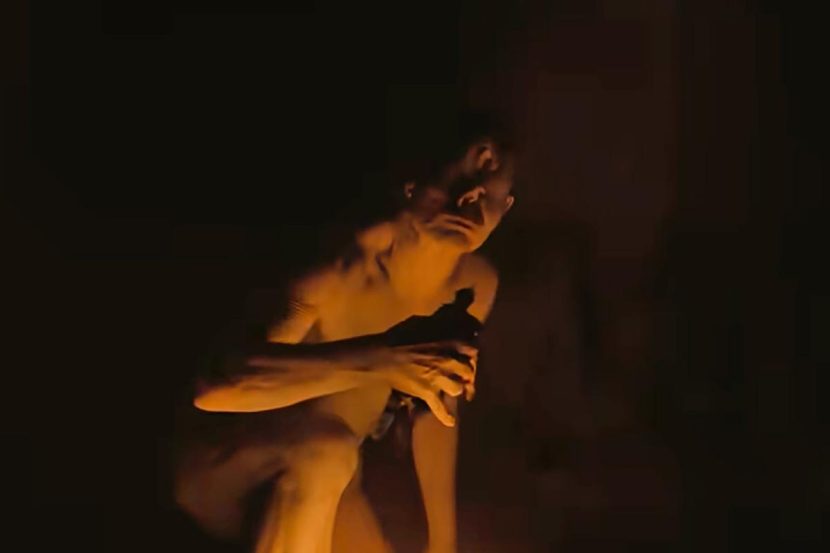
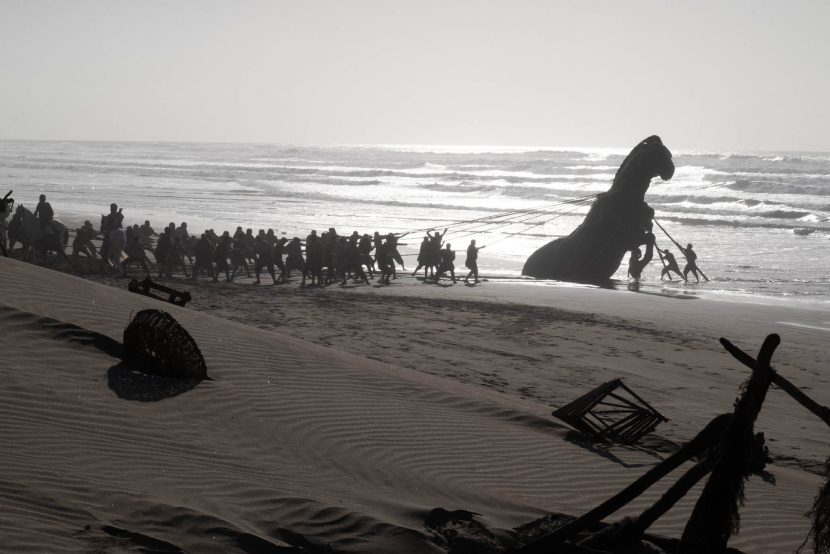
Rather than relying entirely on computer-generated imagery (CGI), the creative team constructed tangible elements directly on set. For instance, the terrifying Cyclops, Polyphemus, was brought to life through a hybrid of actor performance, full-body prosthetics, puppetry, and forced perspective. Veteran theatrical clown and actor Bill Irwin—who previously helped physicalize the robots in Nolan’s Interstellar—portrayed the giant in full prosthetics, supplying the creature’s voice in real time while performing separately and from below to establish a towering sense of scale. Similarly, the grotesque Laestrygonian giants were realized using a combination of seven-foot stunt performers, undersized doubles, and optical tricks.
By grounding mythological elements in natural phenomena—interpreting the wrath of the gods through violent, real-world weather and geological events—Nolan bridged the gap between Homeric fantasy and physical reality.

Chronology: From Page to IMAX Celluloid
The journey of bringing The Odyssey to the silver screen spans centuries of literary history, but its modern cinematic timeline is rooted in the meticulous pre-production and shooting schedules typical of a Christopher Nolan masterclass.
- Early Development and Pre-Production (2023–2024): Following the massive success of Oppenheimer, Nolan turned his attention toward the foundational text of Western literature. Pre-production centered heavily on how to adapt creatures of myth without alienating audiences through cartoonish CGI. Technical tests began for shooting an entire narrative feature on IMAX 70mm, a format previously deemed too bulky and unwieldy for comprehensive, multi-environment storytelling.
- Principal Photography (2025): Production took place across various international locations, prominently utilizing rugged coastal environments and historical settings, including Nestor’s Cave in Greece. During this phase, actors interacted with physical stand-ins, massive custom puppets, and actors in full prosthetics rather than staring into empty space.
- Post-Production and VFX Integration (Late 2025–Early 2026): DNEG stepped in to seamlessly weave together live-action plates, erase safety rigs, and enhance environmental scale. The post-production timeline focused heavily on invisible effects, ensuring that the digital enhancements supported—rather than overtook—the physical photography captured on IMAX film stock.
- Theatrical Release (July 2026): The Odyssey premiered in global IMAX theaters, sparking immediate industry-wide acclaim for its technical achievements, alongside the customary passionate debates among film critics and podcast analysts regarding its narrative execution.
Supporting Data and Production Metrics
To fully comprehend the sheer scale of Christopher Nolan’s The Odyssey, one must look at the quantitative data defining its production:
- Budget: Estimated at $250 million, positioning it among the most expensive original-concept or literary adaptations of the decade.
- Camera Format: 100% shot on IMAX 70mm film cameras—a cinematic first that required specialized lens development and physical endurance from the camera operators navigating treacherous coastal and cave terrain.
- Creature Design Mechanics:
- Polyphemus: Portrayed by Bill Irwin via full-body prosthetics, paired with a physical, colossal puppet on location in Greece for actor eye-lines and interaction.
- Laestrygonians: Utilized a mix of 7-foot stunt performers and forced-perspective framing to manipulate spatial ratios on set.
- Post-Production Partner: DNEG, managing the complex integration of visual effects plates with physical photography.
Official Responses and Industry Reception
The release of The Odyssey has dominated entertainment media, eliciting diverse responses from filmmakers, critics, and visual effects professionals alike.
Industry veterans have widely praised Nolan’s commitment to physical media. Special effects supervisors have noted that the decision to use physical puppets and live prosthetics for Polyphemus fundamentally shifted the actors’ performances, eliciting genuine tension and fear that digital ball-markers on green screens rarely achieve.
However, as is customary with any major Christopher Nolan release, the film has also sparked intense critical debate. Industry podcasts—such as the recurring analysis on VFXShow featuring hosts Matt Wallin, Jason Diamond, and Mike Seymour—highlighted the deep divisions among cinephiles. While some critics hailed the approach as a triumph of tactile filmmaking, others questioned whether physical constraints occasionally hindered the boundless, dreamlike scope inherent in Homeric poetry.
Despite differing artistic interpretations, consensus remains strong regarding the technical milestone achieved by shooting an entire epic narrative on IMAX 70mm film.
Implications for the Future of Filmmaking
The Odyssey serves as a watershed moment for modern blockbuster filmmaking, carrying significant implications for how studios approach visual effects and large-format cinema.
1. The Renaissance of Practical Hybrid Effects
For over a decade, Hollywood leaned heavily toward fully digital environments and computer-generated creatures. Nolan’s success with The Odyssey proves that audiences still respond profoundly to weight, texture, and physical presence. By utilizing theatrical clowns, specialized puppetry, and forced perspective alongside modern digital cleanup, productions can achieve a heightened sense of reality that purely synthetic characters often lack.
2. Pushing the Limits of IMAX Technology
By proving that an entire narrative feature can be successfully shot on IMAX 70mm—navigating complex interior cave systems, open seas, and sprawling landscapes—Nolan has rewritten the logistical rulebook for large-format cinematography. This milestone is expected to encourage other auteurs and cinematographers to lobby for expanded use of high-resolution analog film formats, challenging camera manufacturers to build lighter, more adaptable large-format rigs.
3. Redefining the Supernatural Through Naturalism
By reinterpreting ancient mythological phenomena through the lens of heightened naturalism, The Odyssey offers a masterclass in adaptation. Translating the intervention of the gods and the horrors of monsters into physical forces—storms, geology, and biological monstrosity—provides a blueprint for adapting fantasy literature into grounded, prestige cinema. Ultimately, the film challenges the industry to look beyond pixels and rediscover the magic of what can be built, lit, and captured right in front of the lens.
