
From Box-Office Bomb to Streaming Phenomenon: How HBO Max Resurrected Anne Hathaway’s Mother Mary

Main Facts: The Great Streaming Reversal
In the unpredictable ecosystem of modern Hollywood, box-office receipts no longer tell the definitive story of a film’s cultural or commercial lifespan. This reality has been underscored once again by Warner Bros. Discovery’s streaming platform, Max (formerly HBO Max). Director David Lowery’s polarizing psychodrama Mother Mary, starring Academy Award winner Anne Hathaway alongside Michaela Coel and Hunter Schafer, has officially found its redemption arc.
Released theatrically in April 2026 by indie powerhouse A24, the film was widely labeled a commercial failure. Operating on a reported production budget of $20 million, Mother Mary grossed a meager $3 million globally during its theatrical run, instantly cementing itself as a rare misstep for A24 in an otherwise triumphant 2026 fiscal year.
However, according to recent global streaming metrics provided by FlixPatrol, the tables have turned dramatically. Upon its recent debut on Max, the modish pop-star drama surged past high-profile competitors to claim the number-one spot worldwide on the platform. For a film that initially returned barely a fraction of its theatrical investment, its immediate domination of home screens highlights a growing disconnect between theatrical-going habits and at-home viewing appetites for ambitious, avant-garde cinema.
Chronology: A Troubled Theatrical Path and Contextual Rebirth
To understand how Mother Mary transitioned from a catastrophic theatrical release to a streaming crown jewel, it is necessary to examine the peculiar arc of 2026—a monumental year for Anne Hathaway that paradoxically featured both staggering triumphs and rare misfires.
Hathaway’s Mixed 2026 Box-Office Ledger
Anne Hathaway’s commercial viability in 2026 has been a study in contradictions. On one hand, she has shared the screen with some of the industry’s heaviest hitters—including Zendaya, Tom Holland, Jon Bernthal, and Robert Pattinson—in cultural juggernauts. Most notably, Hathaway featured in Christopher Nolan’s historical-epic blockbuster The Odyssey, which shattered records on its way to a staggering $1.8 billion worldwide haul. She also enjoyed immense commercial success headlining The Devil Wears Prada 2, a legacy sequel that brought in roughly $700 million globally, as well as holding down roles in the sci-fi feature The End of Oak Street ($120 million) and the psychological thriller Verity ($160 million).
Yet, these massive commercial victories contrasted sharply with the release of Mother Mary in April 2026. Distributed by A24, the film was positioned as a major spring event. Instead, it stalled out at the box office, bringing in just $3 million. This performance temporarily extended what critics had noted as a decade-long commercial lull for Hathaway in smaller, independent, or prestige dramas—a stretch that included indie releases like Eileen, Armageddon Time, She Came to Me, and Mothers’ Instinct.
The A24 Paradox of 2026
For A24, Mother Mary stood out as an uncharacteristic outlier during a banner year. While the studio enjoyed record-breaking heights in 2026—such as the massive success of Backrooms, which hauled in an unprecedented $400 million globally, alongside strong performances from The Drama and Primetime—Mother Mary was its most significant financial disappointment. The studio even stunned industry insiders later in the year by releasing Nathan Fielder’s three-hour documentary You Can See Everything, which quietly pocketed $50 million in a mere ten days.
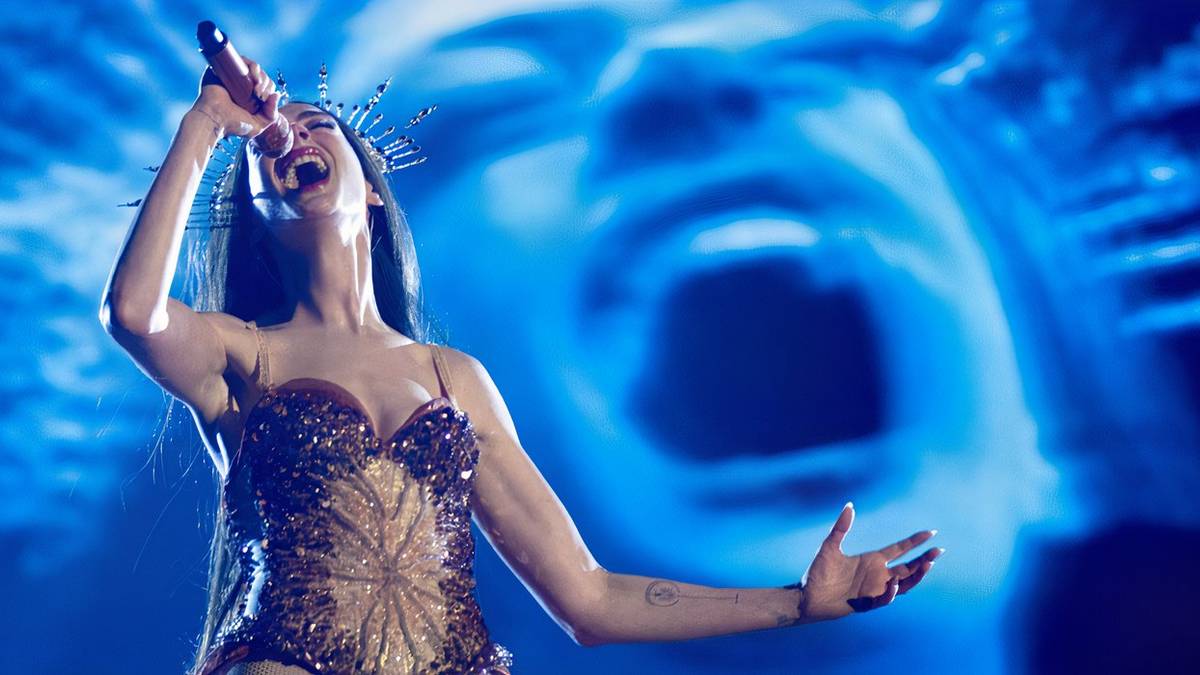
Against this backdrop of hyper-lucrative studio wins, Mother Mary lingered as a critical and commercial question mark. That is, until its migration to Max flipped the narrative entirely.
Supporting Data: Critical Reception and Production Metrics
While audiences initially stayed away from ticket booths in April, the film’s underlying artistic merits have begun to receive a fairer assessment now that viewers can engage with the material from the comfort of their homes.
Critical Consensus
Mother Mary currently holds a 59% approval rating on the review aggregator website Rotten Tomatoes. The site’s official critics’ consensus offers a nuanced view of the polarizing picture:
"Anne Hathaway acquits herself well as a believable pop star in Mother Mary, a modish psychodrama that can be frustratingly obtuse but has style to spare."
While reviewers were divided on David Lowery’s signature stylistic flourishes and intentionally opaque storytelling—hallmarks of the director’s previous atmospheric works—Hathaway’s performance as a complex, tortured pop icon was almost universally singled out as a high point.
Production and Technical Profile
- Release Date: April 17, 2026 (Theatrical) / Late October 2026 (Max Streaming Debut)
- Runtime: 112 minutes
- Director & Writer: David Lowery
- Producers: David Lowery, James M. Johnston, Jeanie Igoe, Jonas Katzenstein, Jonathan Saubach, Maximilian Leo, and Toby Halbrooks
- Production Budget: Estimated $20 million
- Theatrical Gross: ~$3 million worldwide
- Streaming Peak: #1 Movie Worldwide on Max (Week of October 27, 2026)
Official Responses and Industry Reactions
The sudden resurrection of Mother Mary on streaming has reignited debates among entertainment analysts regarding the changing definitions of "success" in Hollywood. Executives and streaming curators have increasingly noted that audiences are willing to take risks on challenging, obtuse, or style-heavy psychological dramas at home—genres that often struggle to command theatrical ticket sales in a marketplace dominated by four-quadrant IP blockbusters.
While neither A24 nor Warner Bros. Discovery has released proprietary viewership figures detailing exact subscriber watch-hours, FlixPatrol’s tracking data confirms that the film captured the top spot across multiple international territories within days of its platform launch. Industry insiders suggest that Hathaway’s massive visibility throughout 2026—bolstered by ubiquitous hits like The Odyssey and The Devil Wears Prada 2—created a "spillover effect," driving curious subscribers to seek out her more challenging, lesser-seen work.

Implications: The Evolution of Windowing and VOD/Streaming Redemptions
The journey of Mother Mary from a $3 million box-office disaster to a global streaming champion carries several critical implications for the future of film distribution:
-
The Decoupling of Box Office and Artistic Value:
The commercial failure of an independent film in theaters no longer dooms it to total obscurity. With dedicated streaming ecosystems hungry for diverse prestige content, films with niche appeal or difficult narrative structures can find their ideal audiences post-theatrically. -
The "Halo Effect" of Mega-Stardom:
Anne Hathaway’s heavy presence in the 2026 pop-culture consciousness proved invaluable. Even though Mother Mary was buried earlier in the year, her concurrent dominance in massive commercial hits gave casual home viewers a recognizable anchor, prompting them to explore a film they otherwise bypassed in theaters. -
A24’s Portfolio Strategy:
For studios like A24, which balance commercial behemoths like Backrooms with risky auteur-driven projects, streaming revenues and platform licensing agreements continue to serve as vital financial safety nets. Even when a film underperforms theatrically, long-tail monetization ensures that ambitious art-house films can eventually recoup their prestige and financial deficits.
Ultimately, Mother Mary stands as a definitive proof-of-concept for the modern streaming era: what dies at the box office can easily be reborn on your television screen.
