Navigating the Crucible: AI, Global Co-Productions, and the Future of Independent Filmmaking
As the entertainment industry grapples with sweeping structural transformations, two pressing anxieties continue to dominate conversations in the heart of Los Angeles: the rapid integration of artificial intelligence into creative workflows, and the escalating economic pressures challenging the viability of living and working in Southern California.
Yet, despite an atmosphere charged with uncertainty, recent panel discussions hosted by Film Independent offered a resilient path forward. The overarching thesis of the forum was clear: while technological and economic paradigms are shifting at a breakneck pace, the bedrock of sustainable filmmaking remains rooted in human relationships, genuine partnerships, and cross-cultural collaboration.
Main Facts: The Dual Crises Facing Modern Filmmakers
The contemporary landscape of independent cinema is defined by two intersecting crises. On one front, generative AI tools are fundamentally altering job descriptions, streamlining administrative burdens, and threatening entry-level employment pipelines. On another front, soaring operational costs and economic contractions in Southern California have driven a massive exodus of production work, forcing creators to look overseas for financial viability.
According to data presented at the forum, California has experienced a staggering loss of approximately 118,000 creative jobs since 2022. While global technological adoption often correlates with workforce expansion as humans are reallocated to manage new systems, the local California market faces unique headwinds—including severe macroeconomic pressures, prohibitive costs of living, and shifting global tax incentives that make domestic production increasingly unsustainable.
Simultaneously, creators are wrestling with the moral and professional implications of artificial intelligence. While veterans and newcomers alike acknowledge that AI can alleviate tedious tasks, concerns persist over devalued labor, diminished mentorship opportunities, and the erosion of communal creative spaces.
Chronology: The Evolution of Industry Anxiety and Global Adaptation
To understand the current state of independent film, it is helpful to trace how these challenges have materialized over recent years:
Post-2022 Economic Contraction: California begins seeing a sharp decline in creative sector employment, diverging from national tech-adoption trends.
The AI Integration Wave: Generative AI tools transition from speculative novelties to embedded workspace applications, prompting widespread industry strikes and intense debates over copyright, job displacement, and artistic integrity.
The Global Pivot: Faced with soaring domestic expenses—where even major production hubs like Atlanta find themselves undercut by international alternatives—producers increasingly look abroad to bridge financing gaps.
The 2026 Film Independent Forum: Industry leaders converge in Los Angeles to address these dual realities head-on, concluding that human-centric collaboration is the ultimate survival mechanism for the modern auteur.
Supporting Data and Expert Insights: AI in the Workplace
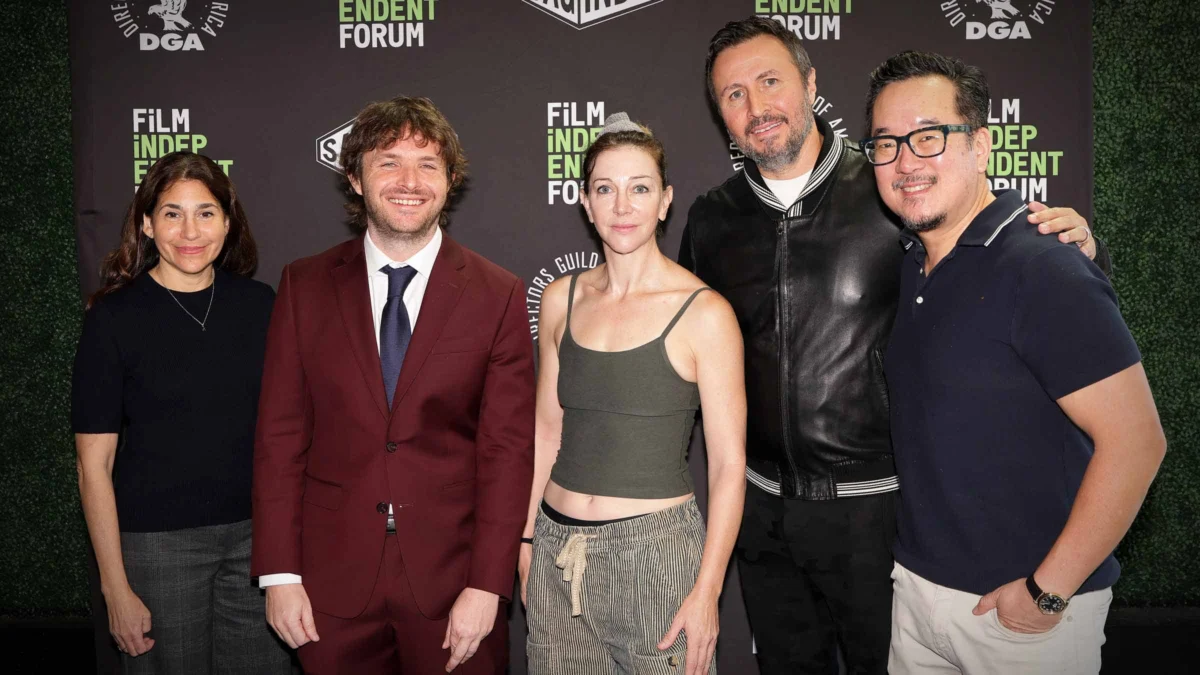
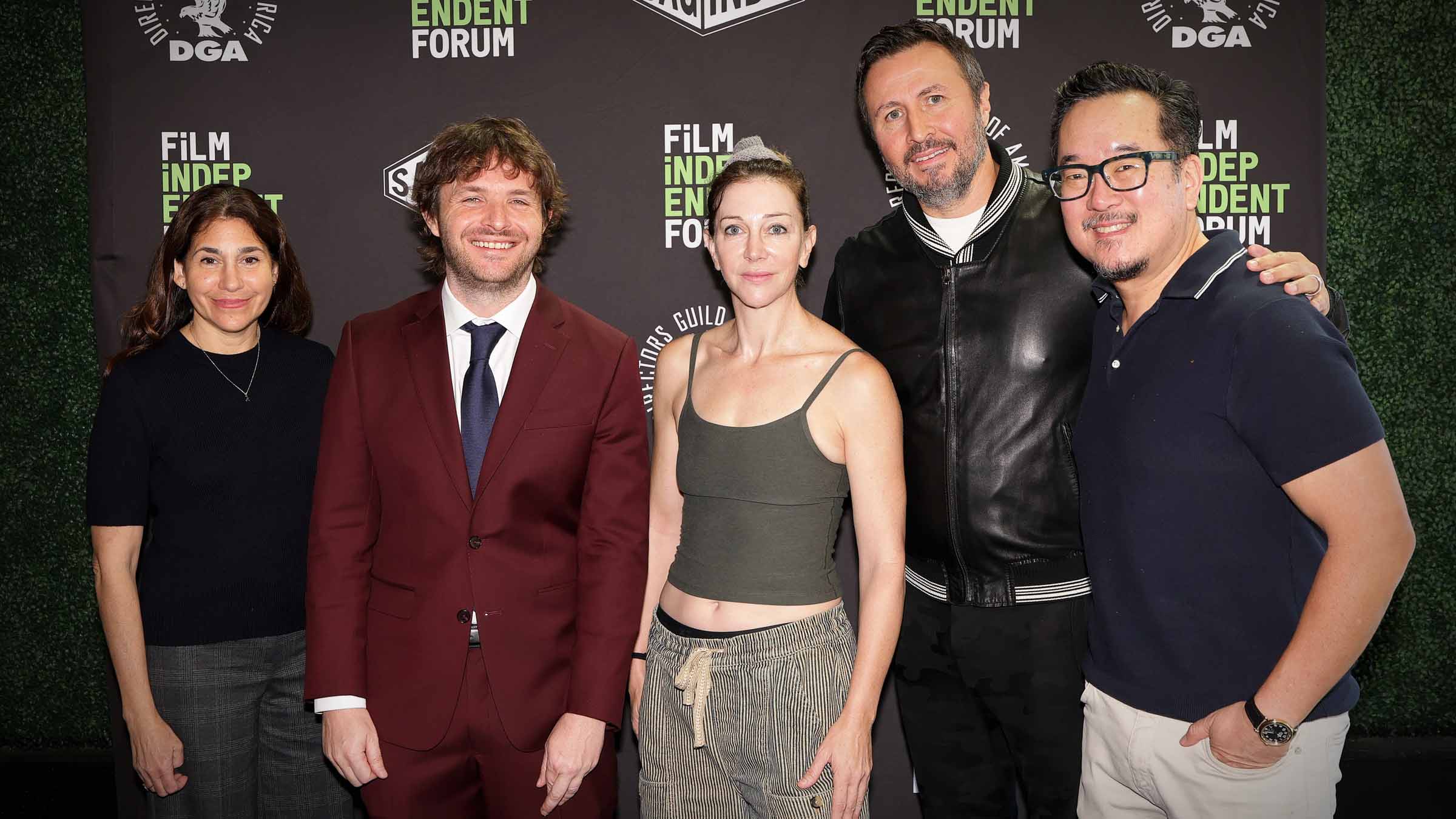
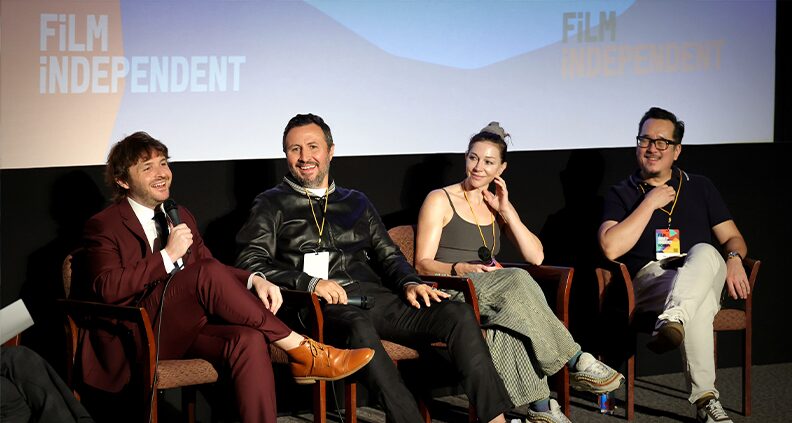
The panel Reality Check: AI in the Workplace, moderated by journalist Carolyn Giardina, brought together a multidisciplinary group of industry professionals and economic analysts to evaluate the true impact of automation.
Patrick Adler, founding partner of Westwood Economics, provided a sobering look at California’s creative job market. His team’s research highlights a persistent mystery: why industries adopting AI nationally have managed to grow their human workforces, while California’s creative sector has suffered massive contraction. Adler suggested that while management and implementation of AI tools should create new oversight roles, the confluence of localized recessions and severe livability crises in Los Angeles has exacerbated job losses.
From a practical production standpoint, the panel revealed a nuanced divide between efficiency and artistry. Harry Yoon, editor of Spider-Man: Brand New Day, noted that AI has successfully streamlined "soul-crushing" chores. Tasks like transcription, rough sound design, and building preliminary automated dialogue replacement (ADR) drafts to test new lines can now be executed with unprecedented speed. This frees human creators to focus on higher-level storytelling.
Mathew Cullen, founder of Mirada Studios and Motion Theory, agreed that workflows are faster, but warned against client misconceptions.
"You can’t just prompt your way to a cinematic and artistic result," Cullen asserted. "The role of human experience, human skill, and human interaction is still vital."
However, this efficiency comes at a hidden cost. Ruth Fowler, a writer for Rules of the Game and Little Disasters, pointed out that writers are increasingly pressured to perform uncompensated speculative labor—such as taking extra meetings and generating complex development documents—before securing employment. Furthermore, Fowler expressed concern that AI isolates writers, robbing them of the organic friction and critical feedback traditionally provided by human peers.
This sentiment was echoed by Yoon and Cullen regarding the destruction of the traditional mentorship pipeline. Routine, repetitive tasks historically served as the training ground for interns and entry-level staff. Cullen reflected on starting his company in 2003:
"My intern at the time is now the head of creative at my company. I think about all those interns, and I think about all those people… you’re kind of creating that space for them to show up and figure it out."
When receptionists can rise to become Emmy-winning producers simply through the osmosis of working alongside imaginative teams, automating those stepping stones threatens the future health of the industry.
To help creators navigate these turbulent waters, VFX supervisor Jim Geduldick—founder of the Creators Coalition on Artificial Intelligence (CCAI)—introduced new industry resources. The CCAI website now offers an AI terms glossary, an impact survey, and visualizers designed to help filmmakers track technological shifts in real-time.
Official Responses and Strategic Pivots: Crossing International Borders
As domestic production costs soar—with production expenses scaling upward to the point where even London undercuts traditional American hubs like Atlanta—independent filmmakers are increasingly forced to look abroad. The panel Crossing Borders: The International Landscape for Indies, moderated by producer Tatiana Kelly, explored the intricacies of global co-productions.
Because the United States lacks formal international co-production treaties, American indie filmmakers must rely heavily on grassroots relationship-building. Anna Rólalska, executive producer of Who Will Write Our History and co-producer of Arbitrage, emphasized that finding foreign partners goes far beyond financial calculations.
Recalling a production in Lithuania, Rólalska explained that she solicited budget proposals from multiple companies, but ultimately chose her partners based on emotional investment and shared vision.
"It wasn’t about eventually the budget, but about a company that really cared about the project… we could really tell they were very much involved," she noted.
Shih-Ching Tsou, director and producer of Left-Handed Girl, shared her experiences returning to her native Taiwan after years of working in New York. Navigating a domestic film industry that felt entirely foreign required proving her creative authority from scratch.
"It’s not really that exotic, because it’s really scary," Tsou admitted, detailing how local professionals initially doubted her execution. "You kind of have to jump in there and prove to them, like, this is the way."
Claire Brooks, executive director of the Association of Film Commissioners International (AFCI), underscored the often-overlooked value of local film commissions. Far from being mere bureaucratic hurdles, regional film offices frequently provide free location scouting services, script evaluations, and pathways to national funding opportunities. Brooks also cautioned producers to pay meticulous attention to cultural nuances and administrative calendars—such as France shutting down operations for the month of August—which can completely derail a shooting schedule.
To illustrate how deeply cultural alignment matters, Brooks shared the example of The Substance, which successfully secured a French tax incentive in part because Demi Moore’s character prepares a traditional French dish in a key scene.
Implications: The Long View for Independent Cinema
The dual explorations of artificial intelligence and international co-production ultimately arrive at the same philosophical conclusion: technology and geography are merely tools, but human connection is the engine of cinema.
While international financing offers lucrative tax incentives and fresh perspectives, panelists offered practical warnings. Public financing can take two to three years to materialize, and tax rebates are typically issued only as reimbursements for expenses already incurred. Filmmakers must meticulously calculate the cost of carrying high-interest bridge loans during the interim. As Claire Brooks advised, regional film offices should be consulted immediately to map out cash flow realities.
Similarly, while Mathew Cullen acknowledged the disruptive encroachment of AI, he maintained an optimistic outlook on the broader creative economy.
"From short-form to long-form to interactive form to experiential… longevity is living in that river of change, you know?"
Ultimately, whether bridging the cultural divides of international co-production or integrating algorithmic efficiencies into the writer’s room, the future belongs to those who prioritize collaboration. As Anna Rólalska aptly reminded attendees from her perspective as an expatriate European working in Hollywood:
"You all live in Hollywood and the whole world is looking up to you… I do believe the best way to make films is to really find different ways to collaborate and really take what’s best from both worlds."
In an era defined by automation and globalization, the human element remains Hollywood’s most indispensable asset.