
Scaling the Heights: How Koala FX Transformed Mount Kwan for Fall 2: Deadpoint
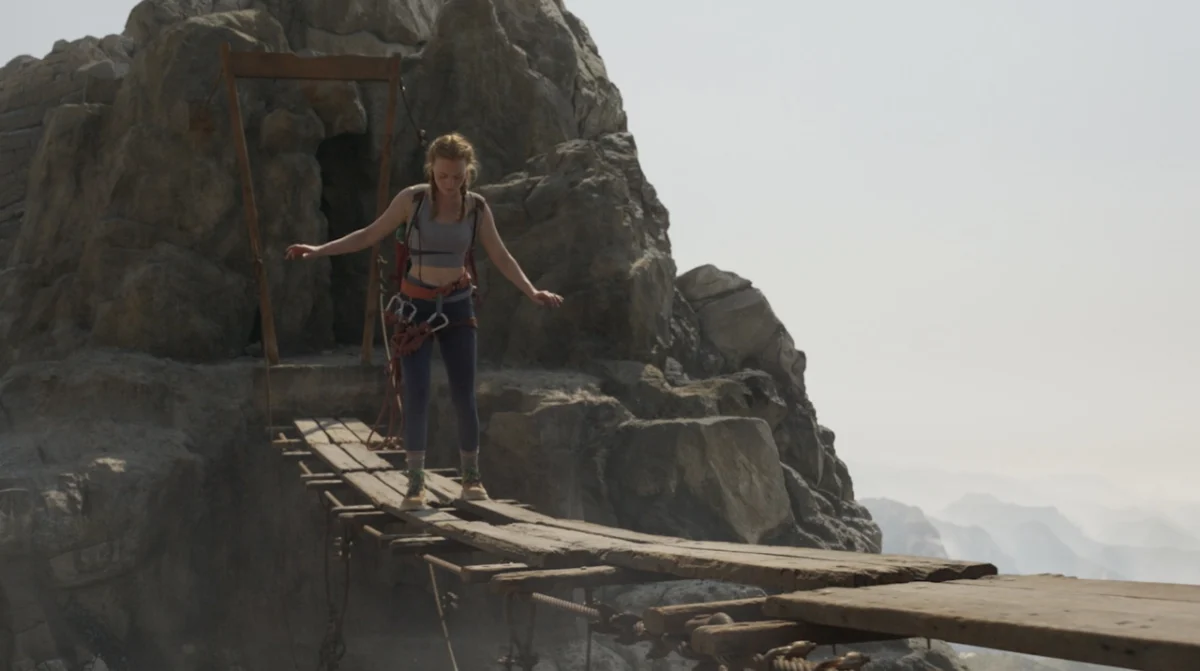
The vertigo-inducing success of the 2022 survival-thriller Fall set a high bar for independent cinema, proving that a singular, claustrophobic location—in that case, a desolate 2,000-foot TV tower—could generate immense tension. For the highly anticipated sequel, Fall 2: Deadpoint, directors Michael and Peter Spierig, working from a screenplay by Scott Mann and Jonathan Frank, have shifted the goalposts. Instead of a lone metallic structure, the narrative now unfolds across the sprawling, jagged expanse of Thailand’s Mount Kwan.
The film follows Jax Hunter (Harriet Slater), a woman still reeling from the tragic death of her sister, as she embarks on a memorial climb with her sister’s friend, Luce (Arsema Thomas). What begins as a cathartic journey quickly descends into a fight for survival when a catastrophic rockslide leaves the pair stranded on a precarious mountain ledge. To bring this terrifying descent to life, Koala FX was tasked with delivering over 400 visual effects shots, transforming a quarry in Thailand into a lethal, immersive mountain environment.
The Evolution of Terror: From Single Pole to Mountain Range
The shift from the original film’s verticality to the sequel’s vast, multi-directional geography presented a massive technical hurdle. Managing Director and co-founder of Koala FX, Dasha Sherman, notes the fundamental difference in spatial complexity.
“The difference between Fall and Fall 2 is that you’ve got one point for Fall with a 360-degree horizon around it,” Sherman explains. “But on Fall 2, we had all the rock formations. It’s much less straightforward. It’s a completely different beast for us because it has left and right, it has up and down, in comparison to that one point.”
Creative Director and VFX Supervisor Menelaos Pampoukidis highlights the specific challenges of matching digital assets to physical rock faces. “It became more complex to align all these convolutions of the rocks. You want to find sub-edges that allow you to do seamless rotoscoping. Any small bump that is not aligned with your CG model makes the environment feel like it’s floating. It becomes exponentially more complex than a single pole.”
Chronology of Production: Bridging the Gap Between Reality and VFX
The production strategy relied heavily on the concept of "practical grounding." To maintain a sense of realism, the crew physically constructed plank structures on a quarry wall in Thailand. These sections were raised roughly six meters above the ground, allowing actors to perform their stunts in natural light with authentic wind and environmental cues.
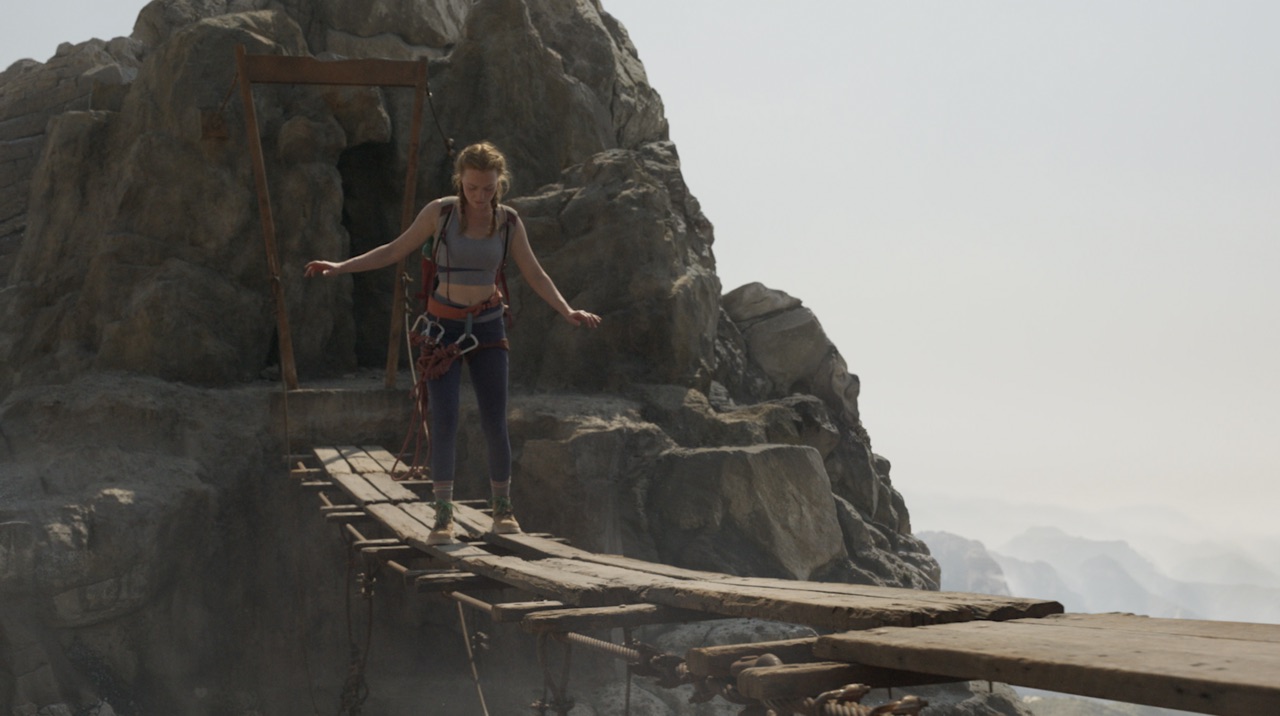
Phase 1: Physical Anchoring and LiDAR Integration
The initial phase involved scanning the quarry using LiDAR technology. By capturing the exact geometry of the physical sets, the VFX team could ensure that their digital extensions were perfectly calibrated to the real-world footage. This data became the foundation for the 2.5D set extensions that would later define the film’s vast scale.
Phase 2: Building the CG Ecosystem
Once the physical anchors were established, Koala FX began the grueling process of creating a full CG representation of Mount Kwan. This involved developing multiple Levels of Detail (LODs). As Pampoukidis explains, the team utilized a clever trick to handle the close-up shots of rock surfaces: “If you take a rock and zoom in, it can look like a huge mountain. We used smaller assets for close-ups, but smoothed and wore down their edges. This allowed us to keep the high fidelity required for tight shots without the visual artifacts of tiling textures.”
Phase 3: Lighting and Continuity
One of the most challenging aspects of the production was maintaining visual continuity across changing weather and lighting conditions. Because the production was not a "VFX-first" movie—meaning the priority was always on the actors’ performances and the directors’ camera work—the team had limited access to large-scale bluescreens.
“If I could, I would have had a few more bluescreens,” admits Pampoukidis. “However, it was not always in our control. To put up a huge bluescreen behind them for every set-up would have required cherry pickers and hours of labor. Instead, we focused on matching the lighting scenario perfectly. By maintaining the lighting on set, we ensured that the edges of our actors remained consistent, allowing us to perform high-quality rotoscoping in post-production without needing to reconstruct those complex light-edges.”
Supporting Data: The Complexity of 400 Shots
The scale of the VFX work for Fall 2: Deadpoint is a testament to the maturation of the Koala FX pipeline. With over 400 shots, the environment is treated not just as a background, but as a living, breathing antagonist.
- Total VFX Shots: 400+
- Environment Strategy: Combination of physical quarry builds, LiDAR-mapped extensions, and full CG mountain landscapes.
- Asset Management: Tiered Level of Detail (LOD) system for seamless transitions between long shots and macro-level rock textures.
- AI Implementation: Integration of Flawless’s AI toolkits for high-volume wire removal.
Official Responses and the Rise of AI Integration
A noteworthy aspect of the Fall franchise’s production is its close partnership with the tech company Flawless. During the first film, Scott Mann’s team used the AI tool TrueSync to perform ADR (Automated Dialogue Replacement) adjustments to meet rating classifications. This relationship has deepened for the sequel.

"We’ve become almost a testing platform for them," says Sherman. "On Fall 2, it was more like an R&D process. We were working on a lot of wire removals. They’re usually considered the ‘easy’ part, but when you have to do them across hundreds of shots, it becomes a volume challenge. Flawless would be perfecting the tool, and we would provide the professional VFX feedback."
Pampoukidis believes this symbiotic relationship is the future of the industry. “A lot of times, I’ve seen people who develop AI tools struggle to perfect something that we have already mastered in the traditional VFX world. By being front and center with these developers, we can stress-test these tools in real-world situations, addressing things like light flicker, de-graining, and plate reconstruction that AI often gets wrong.”
Implications for Future Filmmaking
The methodology employed by Koala FX on Fall 2: Deadpoint signals a broader shift in how mid-budget, high-concept thrillers are produced. By combining practical, on-location physical builds with sophisticated CG environments and iterative AI-driven cleanup, the production team has maximized their budget without sacrificing the "big movie" feel.
The implication for the industry is clear: the divide between physical production and digital post-production is shrinking. With Fall 3 already in development, the team at Koala FX is poised to further refine these workflows. As the characters move into increasingly dangerous and vertically ambitious scenarios, the technical team at Koala FX has proven that they can not only keep up but can actively shape the tools used to create those heart-stopping moments.
For audiences, the result is a seamless experience where the danger feels tangible. Whether it is a single tower or a massive mountain range, the "magic" of the Fall franchise lies in the ability to make the audience feel the height, the cold, and the sheer terror of being suspended in the air. As the film hits theaters, the work of Dasha Sherman, Menelaos Pampoukidis, and the entire Koala FX team stands as a masterclass in modern, efficient, and deeply effective visual effects artistry.
