
The Philosophical Genius of Bill Watterson: Revisiting the Timeless Wisdom of ‘Calvin and Hobbes’
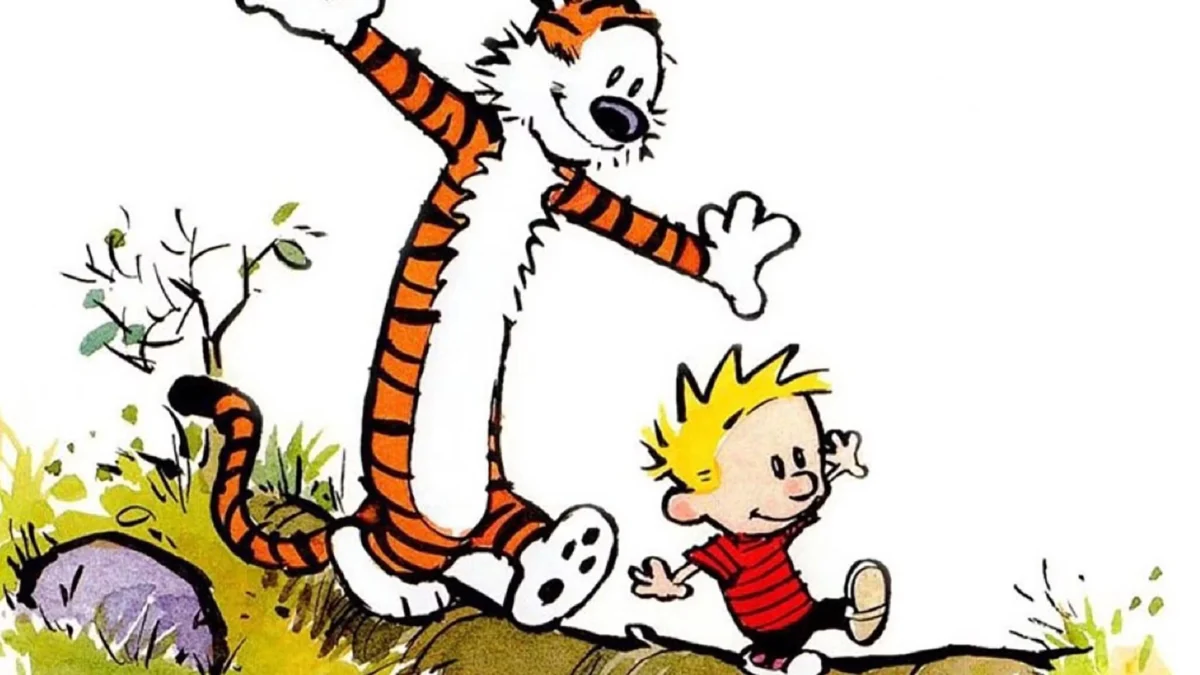
For a decade, from 1985 to 1995, Bill Watterson’s Calvin and Hobbes occupied a singular space in the landscape of American journalism and pop culture. It was more than a syndicated comic strip; it was a daily meditation on the human condition, disguised as the antics of a precocious, rambunctious six-year-old and his anthropomorphic stuffed tiger. Today, nearly thirty years after the final strip was published, the work remains a cultural touchstone, cited as frequently in university philosophy departments as it is in the breakrooms of office workers.
By analyzing the enduring resonance of Watterson’s writing, we find that the strip’s brilliance lay not in its humor alone, but in its ability to marry the trivial frustrations of childhood with the crushing, beautiful weight of existential inquiry.
The Architecture of a Masterpiece: Main Facts and Context
Calvin and Hobbes centers on the relationship between Calvin, an imaginative and defiant boy, and Hobbes, a tiger who is perceived by the world as a stuffed toy but exists as a living, breathing companion in Calvin’s reality. The strip’s premise is deceptively simple: it follows their shared adventures, schoolyard dilemmas, and domestic friction with Calvin’s parents.
However, Watterson, a famously reclusive artist, utilized the medium to explore complex themes including environmentalism, the nature of art, the ethics of corporate commodification, and the inevitable encroachment of adulthood on the innocence of youth. Unlike many of his contemporaries who relied on recurring gags or slapstick, Watterson viewed the newspaper strip as a canvas for high-concept storytelling. The "main fact" of the strip’s legacy is its consistency; in its ten-year run, it never faltered, never utilized ghostwriters, and maintained a singular, uncompromising voice.

Chronology: The Evolution of a Cultural Icon
The chronology of the strip reflects a steady maturation of its core themes. In its early years (1985–1987), Calvin and Hobbes functioned largely as a domestic comedy. Readers were introduced to Calvin’s alter-egos—Spaceman Spiff, Stupendous Man, and Tracer Bullet—which served as escapist mechanisms for a child feeling powerless in the face of homework, bullies, and parental authority.
As the series progressed into the late 80s and early 90s, the scope expanded. Watterson began experimenting with the layout of the Sunday strips, breaking the traditional panel structure to depict surreal landscapes and philosophical dialogues that pushed the boundaries of what a newspaper strip could achieve. By the time the strip concluded on December 31, 1995, with the famous final panel of the duo venturing out into a fresh, snowy landscape with the words, "It’s a magical world, Hobbes, ol’ buddy. Let’s go exploring," the strip had transitioned from a simple comic to a poignant farewell to childhood wonder.
Supporting Data: Why the Wisdom Persists
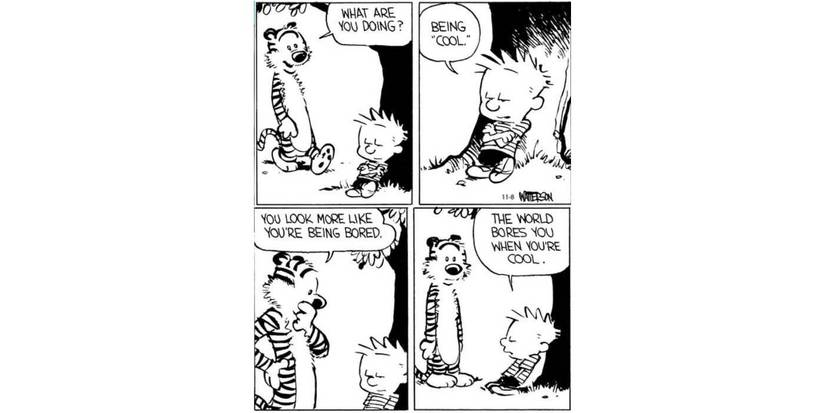
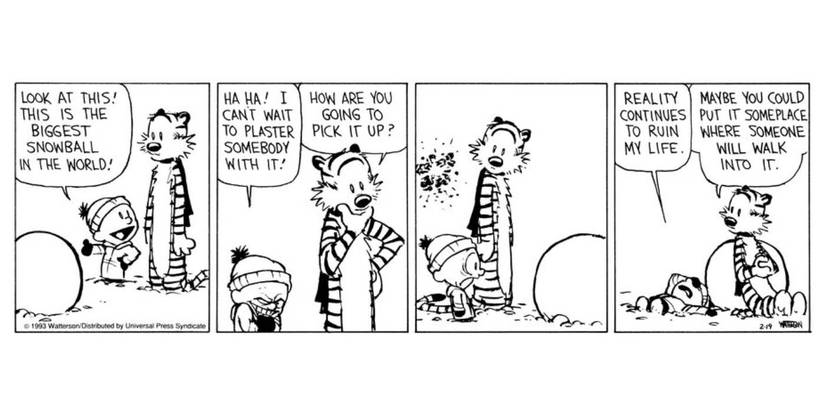
The enduring nature of Calvin and Hobbes is reflected in the continued demand for its collected editions, which consistently outperform newer graphic novels in library circulation and bookstore sales. But the "data" of its success is also found in the cultural lexicon. Quotes like, "The world bores you when you’re cool," and "Reality continues to ruin my life," serve as shorthand for the human experience of disillusionment.
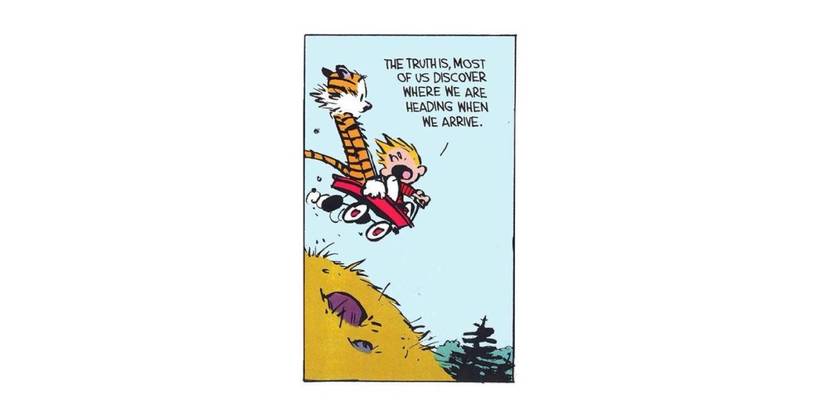
Watterson’s mastery was in the inversion of expectations. By placing these profound, often melancholic observations in the mouth of a child, he forced readers to confront truths they had buried under the veneer of adulthood. Whether it is the observation that "most of us discover where we are heading when we arrive" or the existential punchline, "I’m significant! Screamed the dust speck," Watterson provided a vocabulary for the anxiety of existence.
Official Responses and the "Anti-Merchandising" Stance
Perhaps the most significant aspect of the Calvin and Hobbes story is Bill Watterson’s firm refusal to license the characters for animation, toys, or mass-market merchandising. While this might have seemed like a loss of revenue, it is the primary reason the strip has maintained its integrity.
Watterson argued that putting Calvin on a t-shirt or a coffee mug would strip the character of his context and cheapen the bond he shared with the reader. "If I had licensed the strip," Watterson famously noted in retrospective interviews, "the characters would have become caricatures of themselves." This stance turned the strip into a "pure" product—a rarity in a world where intellectual property is often stretched to the point of exhaustion. It is this decision that has allowed the strip to retain its "timeless" quality; it does not feel dated by the branding of the 90s, because it never entered the commercial arena.
Implications: The Lasting Impact on Storytelling
The implications of Calvin and Hobbes for the art form are profound. It proved that a comic strip could be "high art." It encouraged future creators to trust their audience, showing that readers are willing to engage with complex, non-linear, and deeply introspective content.
The Philosophy of "Nothing"
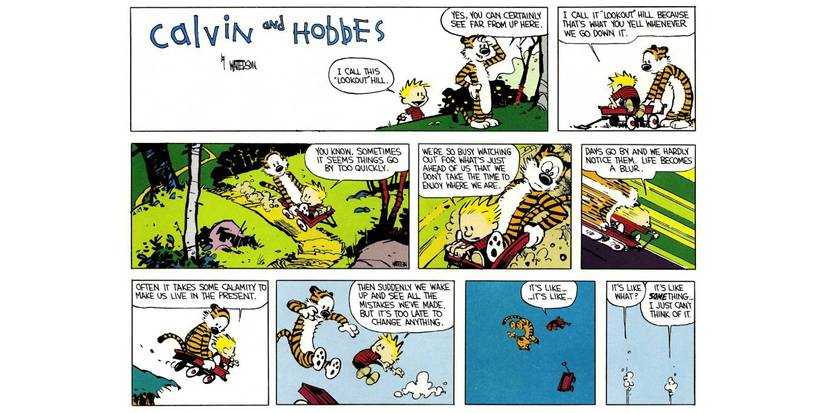
One of the most powerful threads in the series is the value of doing "nothing." In an era of constant connectivity and productivity, Calvin’s insistence that "there’s never enough time to do all the nothing you want" feels more relevant today than ever. Watterson was an early critic of the "busyness" culture, suggesting that the most vital human experiences happen in the margins, during the quiet moments of boredom that allow for true imagination.
Stargazing and Mindfulness
The strip’s recurring motif of stargazing remains its most enduring image. The sentiment that "if people sat outside and looked at the stars each night, I’ll bet they’d live a lot differently" is a call to perspective. Watterson recognized that humanity’s greatest flaw is its tendency to look at the immediate, the trivial, and the frightening, while ignoring the vast, silent expanse of the universe. By looking up, he suggested, we gain the humility necessary to be better people.
Friendship as an Anchor
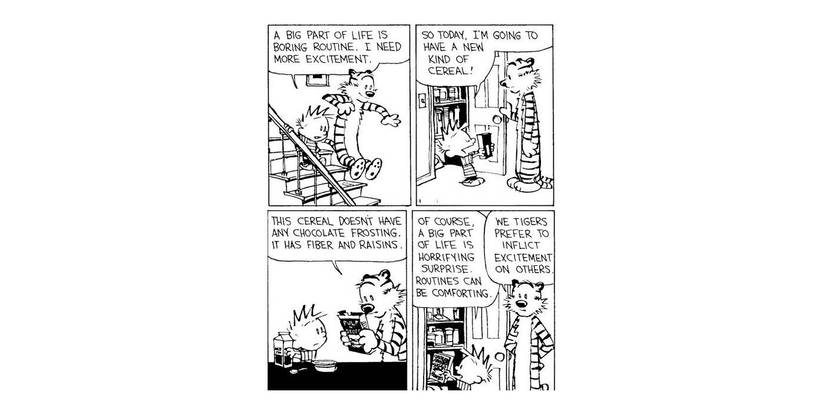
Ultimately, the strip is a study in companionship. Hobbes, whether he is a hallucination or a manifestation of Calvin’s subconscious, represents the psychological support needed to face the world. The line, "Things are never quite as scary when you’ve got a best friend," summarizes the emotional core of the series. It serves as a reminder that the "horrifying surprises" of life are manageable if one has an anchor—a partner in crime, an ear for one’s existential ramblings, and a companion for the descent down a snowy hill.
Conclusion: An Invitation to Explore
Bill Watterson’s work continues to offer a sanctuary for those feeling overwhelmed by the velocity of modern life. It does not offer easy answers, nor does it promise that the world will become less confusing as we grow older. Instead, it offers a framework for how to live within that confusion: with humor, with a healthy dose of defiance toward the mundane, and with the persistent courage to keep exploring.
As we look back on the ten years that defined the series, we see that the wisdom of Calvin and Hobbes was never really about the characters themselves. It was about the reader. By inviting us to witness the world through the eyes of a six-year-old, Watterson reminded us that we are all, in some sense, still children—frightened of the dark, excited by the snow, and desperately searching for a friend to help us make sense of the infinite mystery of the stars. In an age where digital noise threatens to drown out our inner voice, the quiet, ink-on-paper wisdom of Watterson’s masterpiece stands as a testament to the power of observation, reflection, and, most importantly, the refusal to stop playing.
